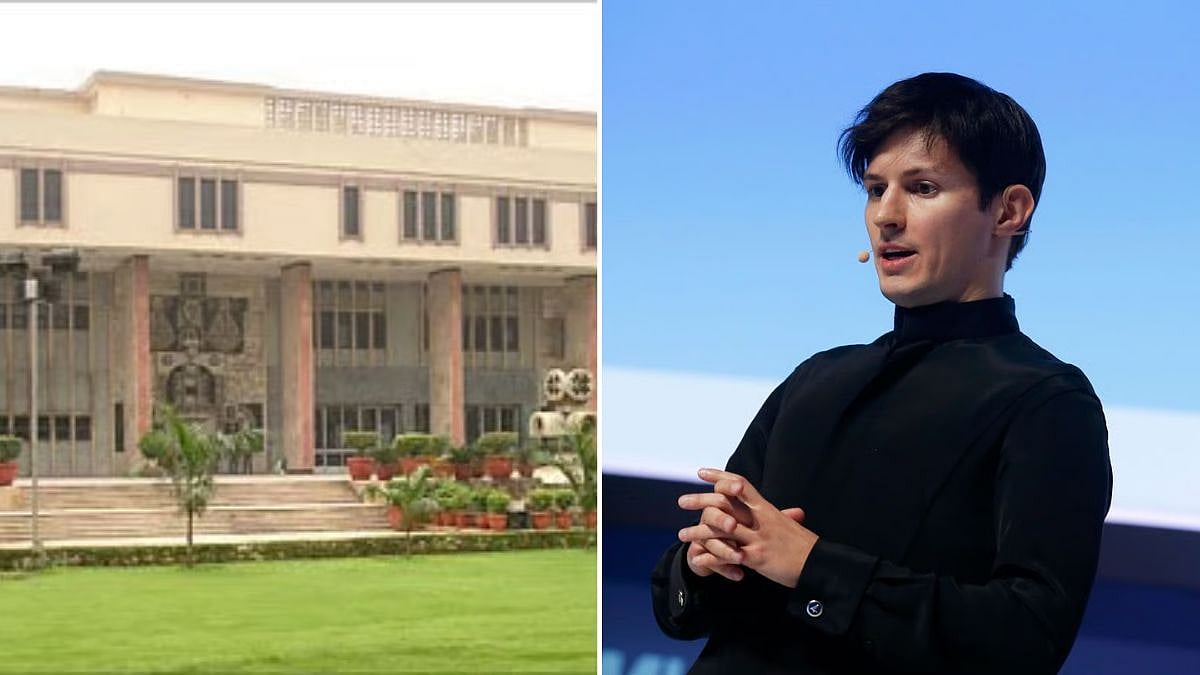
The Central Government on Thursday informed the Delhi High Court that Telegram is now seen as a platform being used in multiple forms of criminal activity, such as terrorism communications, cyber-crimes, drug trafficking, child exploitation, and fraudulent activities.
This statement was made while addressing the court proceedings regarding the government’s move to suspend the functioning of Telegram in India prior to the NEET-UG 2026 re-exam slated for June 21. Solicitor General of India (SGI), Tushar Mehta, representing the Central government, emphasized that issues connected to this messaging application were not limited to exams but had national security implications as well.
Government flags security risks
During the hearing process, the SGI revealed to the court that, according to official reports, the Telegram application is used by terrorists as a preferred mode of communication.
He made it clear that what the Government wants to address in the current case is not only the terrorism aspect but rather the overall technology structure of the platform. According to the SGI, law enforcement authorities in some jurisdictions have expressed similar concerns about Telegram’s operation and the difficulty in enforcing laws related to it.
Focus on platform architecture
According to the Centre, the main problem lies in the basic design of Telegram, especially those elements which depend upon the use of bots and automation. The government explained to the court that this technology could be used to propagate leaked information, spread extremism, coordinate illegal activities, and perpetrate other acts of cyber-vandalism.
Officials maintained that such capabilities create significant challenges for monitoring and enforcement efforts, especially when users seek to evade conventional detection mechanisms.
Centre describes Telegram as “new dark web”
While explaining its concerns, the government described Telegram as functioning in many cases like a “new dark web,” alleging that threat actors increasingly use the platform to communicate and distribute content outside traditional monitoring channels.
According to the Centre, the platform’s structure has made it attractive for individuals and groups involved in activities ranging from cyber fraud and illegal financial operations to more serious security threats.
The government argued that these concerns must be viewed in the context of public safety and the need to protect the integrity of critical national processes.
Case linked to NEET-UG re-exam
The arguments were presented as part of the ongoing legal challenge to the government’s decision to temporarily block Telegram’s operations before the NEET-UG 2026 re-examination.
The matter remains under consideration before the Delhi High Court, which is hearing arguments from all parties before deciding on the legality and proportionality of the government’s action.
The court is expected to continue examining the balance between security concerns raised by the Centre and issues relating to access, communication, and platform operations raised during the proceedings.

