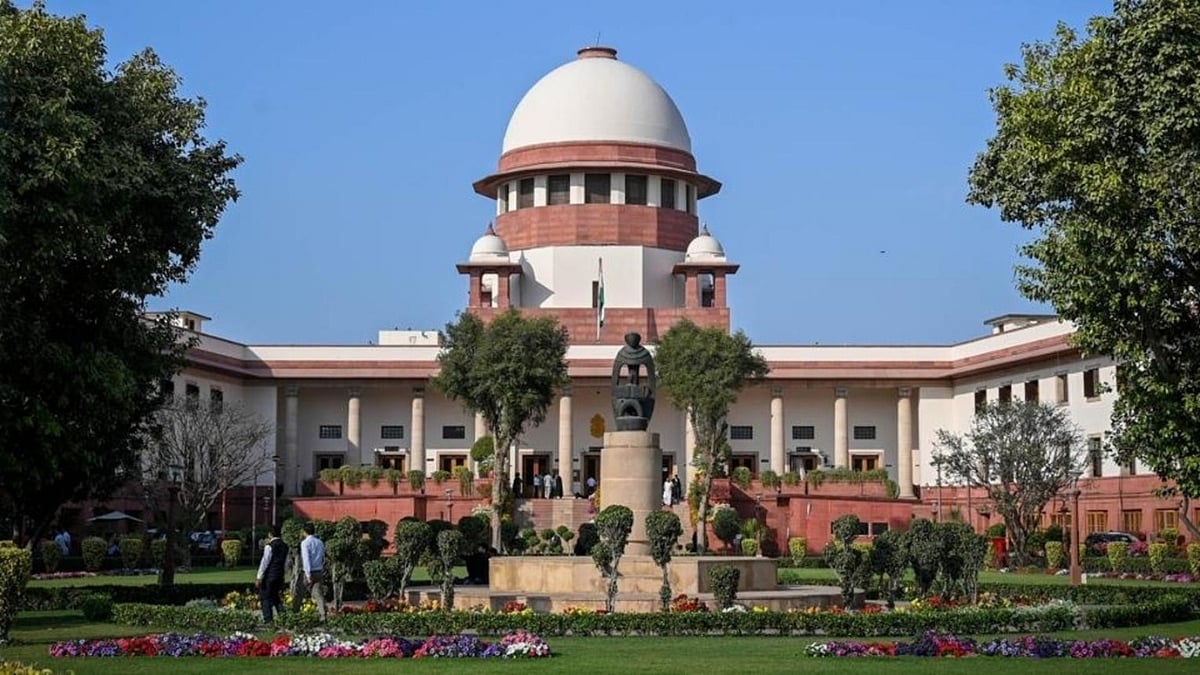
The Supreme Court on Tuesday issued notice on a contempt petition filed by advocate Ashwini Kumar Upadhyay against Union Education Secretary T.K. Anil Kumar, alleging non-compliance with an earlier direction to consider his representation seeking regulation of institutions imparting religious education to children below 14 years of age.
A Bench comprising Justice Dipankar Datta and Justice Sheel Nagu issued the notice and dispensed with the personal appearance of the Education Secretary. The matter has been directed to be listed after four weeks.
Contempt plea over earlier court direction
The contempt petition relates to a representation submitted by Upadhyay seeking the registration and monitoring of institutions providing secular or religious education to children below 14 years.
According to the Live law report, the plea states that the Union Education Secretary failed to take a decision on the representation despite the Supreme Court's earlier direction to consider it.
Upadhyay has now approached the Court alleging non-compliance with that direction and seeking appropriate action through contempt proceedings.
Plea raises concerns over unregistered institutions
In his petition, Upadhyay has alleged that thousands of non-registered institutions are operating without adequate State supervision while imparting religious instruction to children, as reported by Livelaw.
The petitioner has claimed that such institutions could have implications for internal security, fraternity, unity and national integration. He has further alleged that young children could be vulnerable to being influenced or "brainwashed" in the name of religion.
These are allegations made by the petitioner and have not been adjudicated by the Supreme Court.
Challenge to scope of Article 30
The plea also seeks directions concerning the interpretation of Article 30 of the Constitution, which deals with the rights of minorities to establish and administer educational institutions of their choice.
Upadhyay has argued that semi-religious minority and non-minority educational institutions should not fall within the protection of Article 30, contending that the provision does not confer additional rights beyond those available under Article 19(1)(g).
He has further argued that the expression "educational institutions of their choice" under Article 30(a) should refer to secular or professional educational institutions and not religious educational institutions.
According to the petition, institutions imparting religious instruction for promoting a particular religion would instead fall within the scope of Article 26(a). The Supreme Court has now directed that the contempt matter be listed after four weeks.

