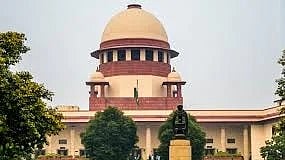
New Delhi: The Supreme Court on Monday sought the responses of the Centre, states and all union territories on a PIL seeking implementation of RTE law which mandates free and compulsory education for children aged 6 to 14 years.
A bench comprising Chief Justice Surya Kant and Justice Joymalya Bagchi took note of the submissions of a lawyer, representing PIL petitioner Haripriya Patel, who also sought implementation of the new education policy across all states and UTs in the country.
“We are issuing notices. We would like to examine the issue,” the CJI said.
At the outset, the lawyer said one of the key issues was the enforceability of pre-primary education to children across the country.
Besides, he also raised the issue of implementation of the National Education Policy (NEP) 2020, which has been updated from time to time.
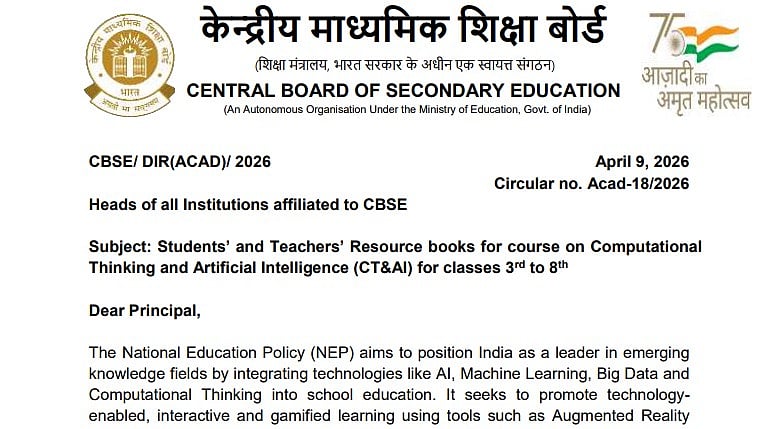
The NEP is a comprehensive framework transforming the education system to focus on flexibility, skill development, and holistic learning.
It replaces the 10+2 structure with a 5+3+3+4 model (ages 3–18), introduces vocational training from Grade 6, and emphasises AI, coding, and multi-lingualism to foster a "knowledge superpower".
The PIL also sought complete implementation of the Right of Children to Free and Compulsory Education Act, 2009.
This law mandates free and compulsory education for children aged 6 to 14 and ensures foundational education in a neighbourhood school and mandates that private schools reserve 25 percent of seats for economically weaker sections.
Besides the Centre, all the states and the UTs have been made parties to the PIL.
(Except for the headline, this article has not been edited by FPJ's editorial team and is auto-generated from an agency feed.)
