The National Testing Agency (NTA) has launched a fresh awareness campaign warning students and parents about online scams that falsely promise access to leaked question papers.
In a series of posts on social media, the agency urged candidates to remain vigilant and watch an explanatory video detailing how fraudsters are using Telegram channels to exploit exam-related anxiety. The warning comes ahead of the NEET-UG re-exam scheduled for June 21.
NTA issues warning ahead of re-exam
"To every NEET candidate and parent, please watch this. A few minutes that could save you serious money and stress this week," the NTA said in one of its posts, cautioning students against falling for claims of leaked examination papers circulating online.
According to the agency, scammers have been operating through Telegram groups and channels, demanding anywhere between ₹14,000 and ₹25,000 for alleged access to the re-exam paper. In some cases, candidates were reportedly asked to pay as much as ₹10 lakh. The NTA stressed that no leaked paper exists and warned that students who transfer money are not only likely to lose it but may also expose their personal information to fraud networks.
Officials said many victims unknowingly share details such as admit card information and WhatsApp numbers while engaging with such groups. Once obtained, this information can be used to target other students through similar scams.
Fake proof and message manipulation tactics
The agency also highlighted a second tactic increasingly being used to make fake paper leak claims appear credible. Fraudsters circulate videos and screenshots that seem to show examination papers being shared before the test. However, according to the NTA, these so-called "proofs" are often fabricated using Telegram's message-editing feature.
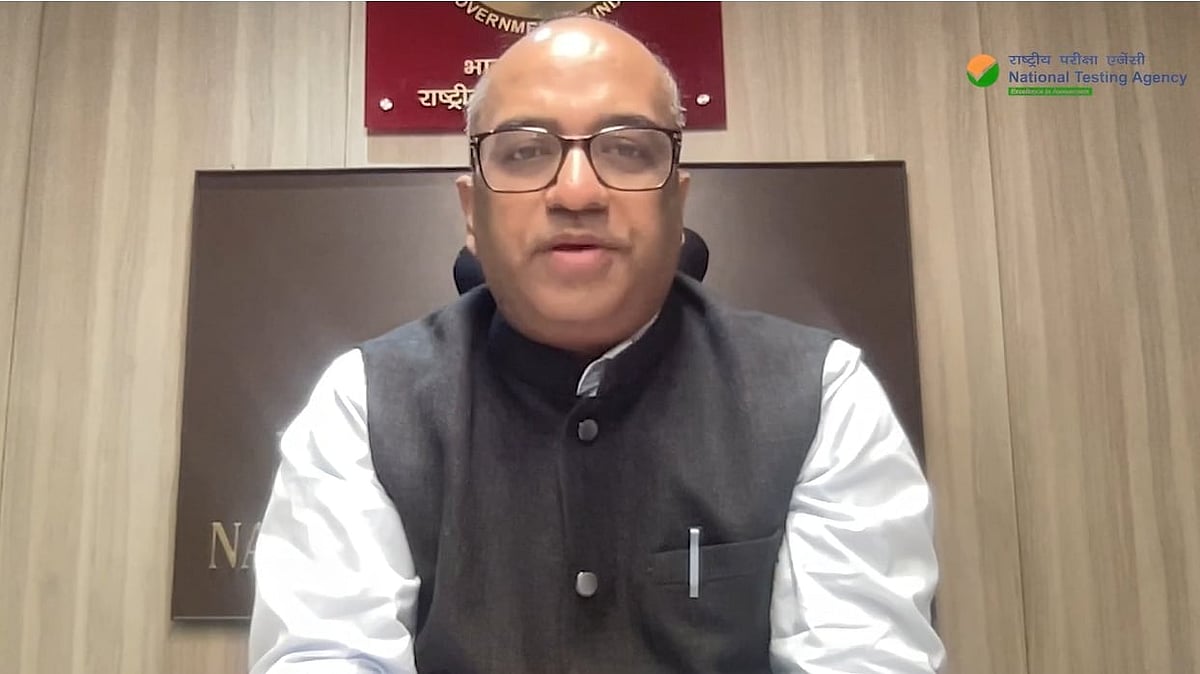
To explain how the manipulation works, the agency shared videos featuring Prof. V. Kamakoti, Director of Indian Institute of Technology Madras and a member of the National Security Advisory Board.
In one video, Kamakoti explains how Telegram administrators can edit older messages while retaining the original timestamp, creating the false impression that a document was shared before an examination. He noted that similar methods had previously been used to spread fake leak claims related to other competitive examinations, including JEE Advanced and the IISER Aptitude Test.
In a follow-up demonstration, he showed how a file sent through Telegram could later be replaced with an entirely different document while continuing to display the original sending time. Such edits, he explained, can be made for up to 48 hours after a message is posted. While demonstrating the issue, he deliberately avoided revealing the exact process, saying the objective was to raise awareness rather than provide a guide for misuse.
In one video, Kamakoti explains how Telegram administrators can edit older messages while retaining the original timestamp, creating the false impression that a document was shared before an examination. He noted that similar methods had previously been used to spread fake leak claims related to other competitive examinations, including JEE Advanced and the IISER Aptitude Test.
“Don’t fall for it,” says NTA
"The same trick will be tried again after June 21," the NTA warned. "Don't fall for it. Don't forward it. Don't pay anyone."
The agency has advised candidates to rely only on information published through official channels and to verify any examination-related updates through the NTA website and verified social media handles.
Government action against Telegram misuse
The awareness drive coincides with broader measures announced to tackle misinformation and cyber fraud linked to the examination. The NTA has welcomed a series of steps taken by the Ministry of Electronics and Information Technology (MeitY), saying they are aimed at protecting students from organised online scams.
According to the agency, access to Telegram in India will be temporarily restricted until June 22, covering the examination period and its immediate aftermath. The messaging platform has also been directed to disable its message-editing feature in India until June 30.
The NTA said these measures were introduced following concerns that coordinated groups were using Telegram channels to spread false paper leak claims and deceive candidates into making payments.
Several channels allegedly operated under names such as "PAPER LEAKED NEET", "Re-NEET 2026" and "Private Mafia", claiming to have access to examination material and offering guaranteed success in exchange for money.
Appeal to students and parents
Reiterating its position, the agency said no individual, institution or online platform has access to the NEET-UG 2026 question paper before the examination is conducted.
As the re-exam approaches, the NTA has appealed to students to stay focused on preparation rather than rumours circulating online. Candidates and parents have also been asked to report suspicious messages, demands for money or fake paper leak claims through the National Cyber Crime Helpline at 1930 or the government's cybercrime reporting portal.
"Your hard work is what will get you through this exam. Not a Telegram channel," the agency said, urging students not to let misinformation distract them in the final days before the test.

