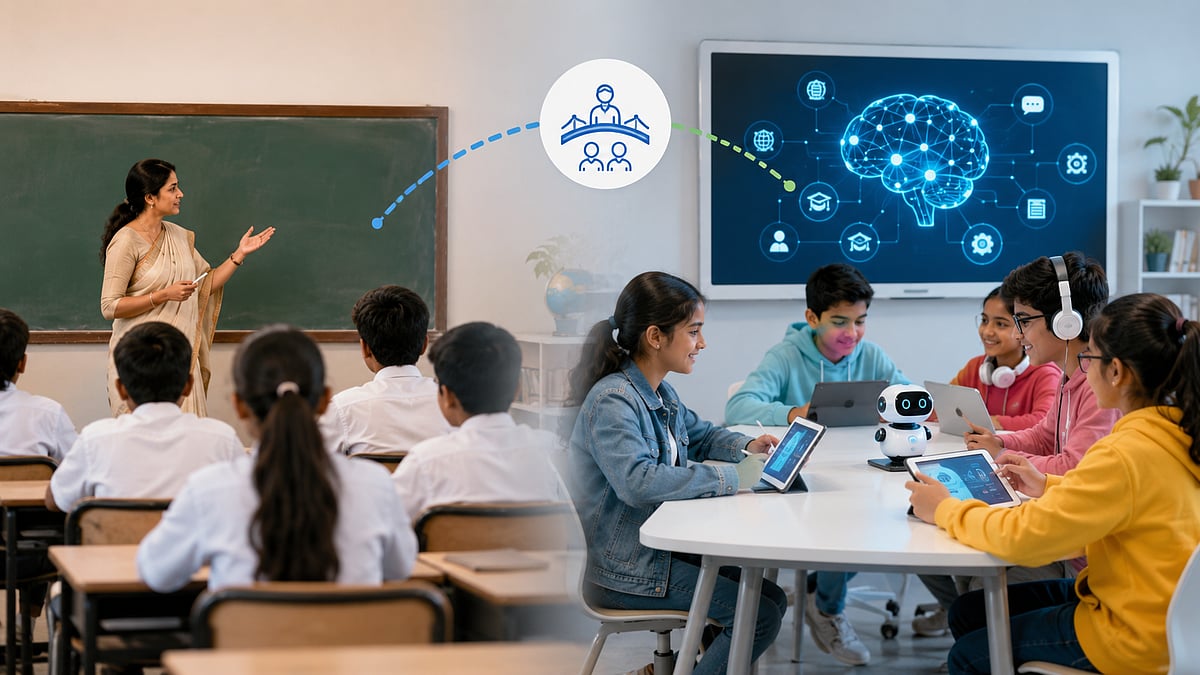
In educational parlance, we often come across two terms: Gen Z and Gen Alpha. They denote two distinct age groups of learners: those born between 1997 and 2012 (Gen Z) and those born from 2013 onwards (Gen Alpha). Both are products of the digital revolution, with Gen Alpha being the first generation to be born into an AI-driven world. While Gen Z currently dominates higher education, the younger school-going children belong to Gen Alpha.
Many educators today are in their thirties, forties or older and belong to earlier generations. Consequently, there exists a significant cultural and technological gap between teachers and learners. Managing the emotions, aspirations and expectations of these digitally empowered students has become one of the greatest challenges confronting educators today.
Unlike previous generations, today's learners have grown up with smartphones, social media, instant messaging, online gaming, and artificial intelligence. Information is available at their fingertips. They are highly connected, visually oriented and accustomed to receiving immediate responses. This has transformed not only the way they learn but also the way they think, communicate, and interact with authority.
Challenges being Faced:
One of the defining characteristics of Gen Z and Gen Alpha is their preference for engagement over passive listening. The traditional model of a teacher delivering a one-hour lecture while students quietly taking notes is gradually losing its effectiveness. Young learners seek interaction, participation, collaboration, and real-life relevance. If classroom experiences fail to capture their attention within a few minutes, distractions are only a click away.
Another significant challenge is the shrinking attention span. Continuous exposure to short videos, social media feeds and rapid digital content has conditioned many learners to process information in brief bursts. Long theoretical explanations often fail to sustain their interest. This does not necessarily imply that they are less intelligent; rather, they process information differently. Educators therefore need to redesign their teaching methods to accommodate these changing learning behaviours.
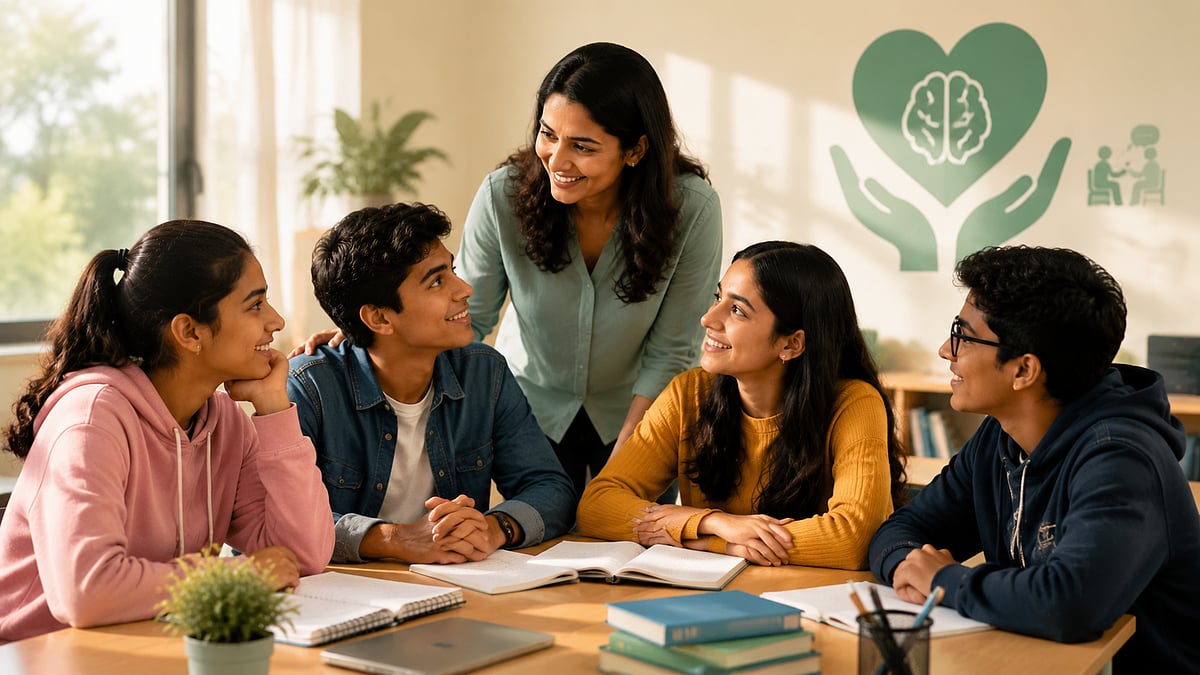
Mental health has emerged as another area demanding greater sensitivity. Despite appearing confident and technologically competent, many young people struggle with anxiety, loneliness, fear of failure, and social / economic comparison. The pressure to perform academically while maintaining an attractive online identity often creates emotional stress. Teachers are increasingly expected to act not merely as instructors but also as mentors who can identify emotional distress and create psychologically safe classrooms.
The arrival of Artificial Intelligence has added another dimension to the educational landscape. Students can now use AI tools to generate assignments, summarise books, solve mathematical problems and even write computer programs. The challenge before educators is not to prohibit these technologies but to teach students how to use them ethically and responsibly. Assessment methods must gradually move away from testing memory towards evaluating creativity, critical thinking, problem-solving, and the ability to apply knowledge in real-life situations.
What Then Should Educators Do?
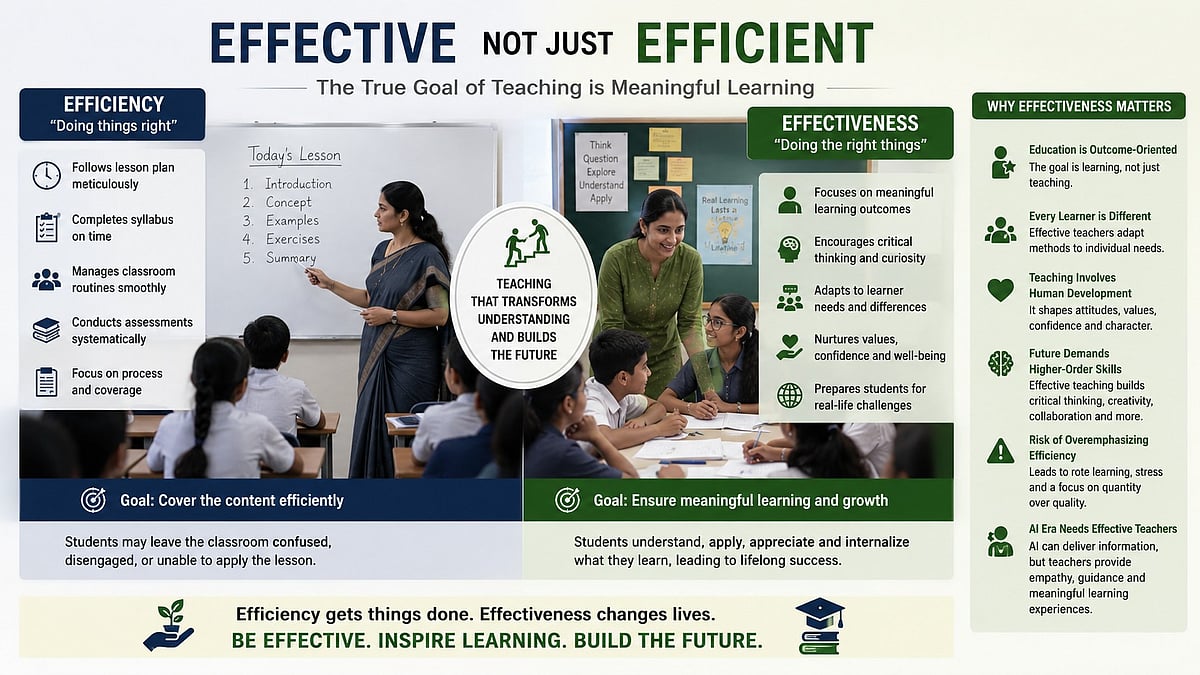
Learner centric classroom: Classrooms need to become more learner centred. Active learning strategies such as case studies, project-based learning, simulations, role plays, group discussions, and experiential learning should occupy a central place in teaching. These approaches encourage participation and make learning meaningful.
Adoption of technology: Technology should become an ally rather than an enemy. Multimedia presentations, educational videos, online quizzes, virtual laboratories, and AI-assisted learning platforms can significantly enhance student engagement when used judiciously. The objective is not to replace teachers with technology but to strengthen teaching through technology.
Building relationships: Educators need to build stronger relationships with students. Today's learners respond positively to teachers who are approachable, empathetic, and respectful. Mutual trust often contributes more to effective learning than rigid discipline. Listening to students, acknowledging their concerns, and providing constructive feedback help establish an environment where learning flourishes.
Focus on life skills: Education must focus on developing life skills alongside academic knowledge. Communication, collaboration, emotional intelligence, adaptability, ethical reasoning, and resilience are becoming as important as subject expertise. In a rapidly changing world, success depends not merely on what students know but also on how effectively they can apply that knowledge.
Change in evaluation methods: Assessment practices require rethinking. Excessive emphasis on rote learning and memory-based examinations does little to prepare students for the future workplace. More weightages should be given to projects, presentations, portfolios, reflective writing, and problem-solving assignments that assess higher-order thinking skills.
Teacher development: Equally important is the need for continuous faculty development. Many educators themselves require systematic training in digital pedagogy, AI literacy, student psychology, and innovative teaching-learning strategies. Professional development can no longer be treated as an optional activity; it has become an essential investment in educational quality.
Parental role: Parents also have a crucial role to play. Effective education today demands a partnership between teachers and parents. Open communication, realistic expectations, and consistent support at home contribute significantly to the emotional and academic well-being of young learners.
Moving Ahead:
It is equally important to remember that every generation has often been misunderstood by the one preceding it. What appears to be indiscipline may sometimes be curiosity. What appears to be impatience may reflect a desire for faster learning. Rather than criticising young learners for being different, educators should strive to understand their worldview and harness their strengths.
Managing Gen Z and Gen Alpha is undoubtedly one of the defining educational challenges of our times. However, it also presents an unprecedented opportunity to reimagine education. By combining technological innovation with empathy, flexibility and learner-centred pedagogy, educators can prepare students not only for successful careers but also for responsible citizenship and meaningful lives.
Ultimately, the future of education will not depend on how effectively teachers preserve old methods, but on how successfully they inspire new generations to learn, think, innovate, and contribute to society. Irrespective of their biological age, new age teachers must adopt the strategies for evolving into new generation teachers.

