New Delhi: Delhi University’s Hansraj College has suspended multiple students amid an escalating campus controversy that began earlier this year over the alleged use of college premises for the Principal’s son’s wedding and has since widened into disputes over fest management, disciplinary action and student dissent.
The latest action has triggered protests on campus, with students claiming that those who questioned administrative decisions are being targeted. The college, however, has said the suspensions were based on misconduct, indiscipline and actions that harmed the institution’s academic environment.
Students suspended; who were they?
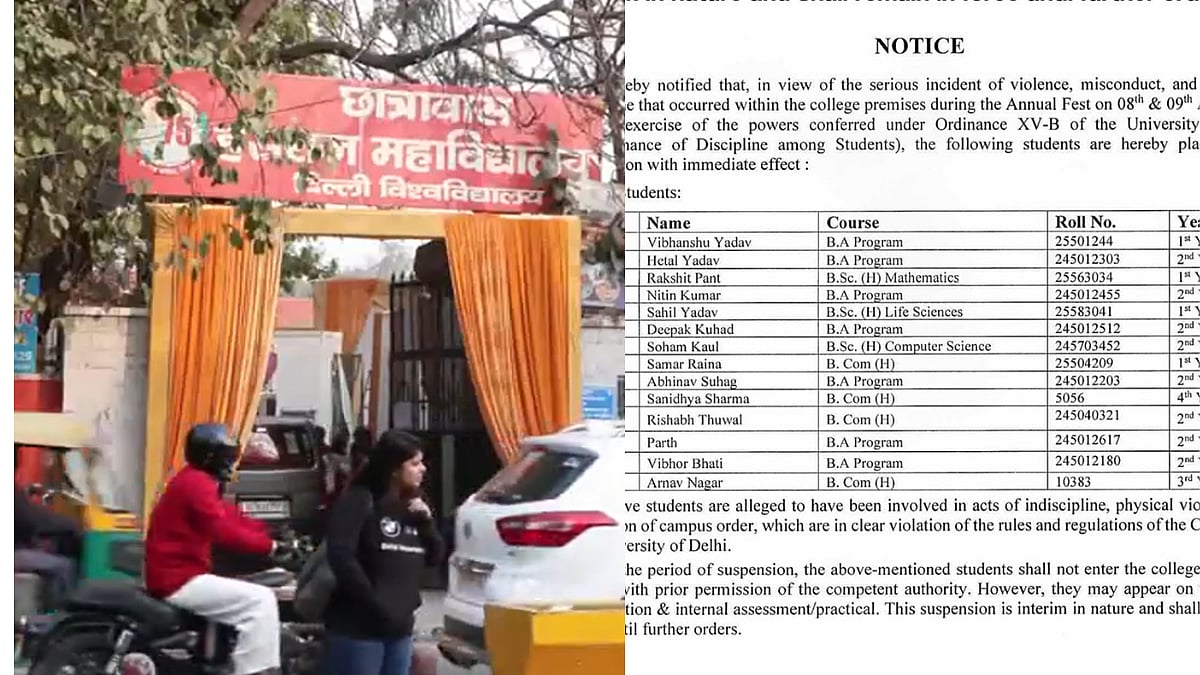
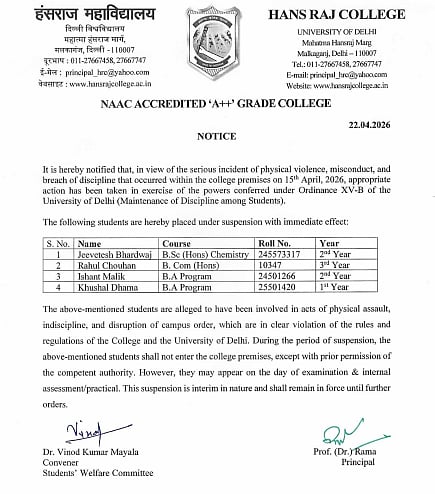
According to notices issued by the college, several students have been placed under interim suspension with immediate effect. One set of suspensions involved students allegedly linked to violence and disorder during the annual fest held on April 8 and 9, along with another reported incident on April 15.
Another group of seven students was suspended for allegedly defaming the college through social media platforms. Their suspension bars them from entering the campus until further orders, though they may appear for examinations and internal assessments.
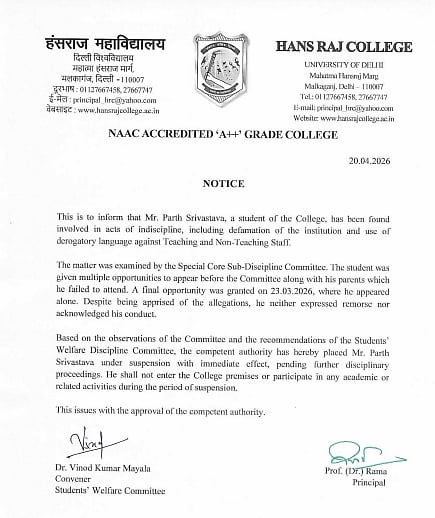
Student activist Parth Srivastava was also suspended separately. College authorities said he was found involved in acts of indiscipline, including alleged defamation of the institution and use of derogatory language against teaching and non-teaching staff.
Why were they suspended?
The college has cited violations under discipline rules, including misconduct, disruption of campus order, defamation and behaviour considered prejudicial to the institution’s functioning.
Students opposing the move argue that criticism of administrative decisions, RTI-based questions and peaceful protest cannot be treated on par with physical violence.
How the row began?
The dispute traces back to February, when students raised objections after parts of the Hansraj College campus were allegedly used for a private wedding connected to the Principal’s family. Students claimed lawns were decorated, access to some areas was restricted and normal campus activity was affected.
The matter became more sensitive because students had earlier been told that hostel spaces were unsuitable for occupation, while claims later surfaced that the same premises were used for wedding guests. These allegations fueled accusations of double standards.
The administration reportedly defended the use of campus facilities as routine, but the issue quickly became a flashpoint.
NIRF ranking questions added to tension
Soon after, fresh controversy emerged over Hansraj College’s National Institutional Ranking Framework (NIRF) data. Some students and student representatives questioned faculty numbers and other submitted figures.
Parth Srivastava, who had filed RTI applications seeking clarity, became one of the most visible voices in the matter. His later suspension deepened mistrust among sections of students, who saw it as action against transparency efforts.
Tensions resurfaced during preparations for the college fest, Confluence 2026. Students claimed they had been asked months in advance to secure sponsorships and make arrangements, including booking an artist.
However, according to protesting students, restrictions were imposed shortly before the event, including curbs on outside performers and early closing timings. Students then staged an overnight protest demanding that prior approvals be honoured. After nearly 20 hours of demonstrations, the administration reportedly relaxed some conditions.
Violence during fest, police called in
The fest on April 8 and 9 later descended into chaos as large crowds gathered on campus. Students alleged crowd control arrangements failed and outsiders entered the premises.
Videos circulated online showed clashes in which chairs, tables and other objects were allegedly used. Police were called to restore order. Rumours of a stabbing also spread on social media, though police later denied such claims.
On April 24, students gathered again in a rare show of unity, demanding withdrawal of suspensions against those they say were punished for dissent rather than violence.
Many students maintain that those involved in physical clashes should face due process, but insist that protest, questioning decisions and posting criticism online should not attract the same disciplinary response.

