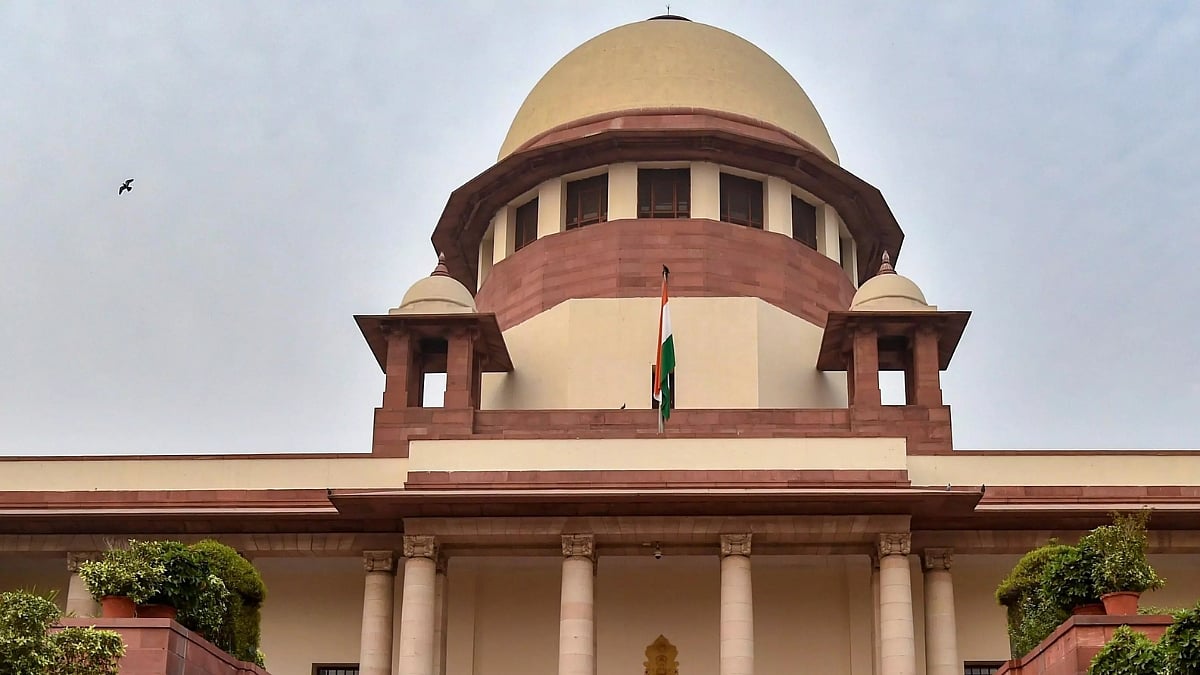
The Supreme Court on Wednesday questioned the Greater Noida Executive Magistrate over a notice issued to a university student under the Bharatiya Nagarik Suraksha Sanhita (BNSS), requiring him to explain why he should not be asked to furnish a personal bond of ₹5 lakh to maintain peace.
The notice was issued after a police report alleged that the student was encouraging others to participate in proposed student protests by the Cockroach Janata Party (CJP).
The matter was brought before a Bench led by the Chief Justice of India through oral mentioning by Senior Advocate Bishwajit Bhattacharyya. The lawyer pointed out that the notice was issued despite an earlier Supreme Court order quashing FIRs related to the CJP student protests and directing that no coercive action be taken against students in connection with those protests.
Supreme Court Questions Magistrate's Action
According to the livelaw reports, Bhattacharyya told the Court that the notice had been issued to a second-year student of Gautam Buddha University based on inputs from the Noida Police. He said the notice was reportedly later withdrawn after the matter came to public attention.
The senior advocate argued that the issuance of the notice amounted to a prima facie violation of the Supreme Court's directions and created a climate of fear among students.
Reacting to the submission, the CJI questioned how the Executive Magistrate could issue such a notice when the Supreme Court had expressly barred coercive action against students.
The CJI observed: “How could a Magistrate dare to issue notice? We made clear no coercive action against any student! No Magistrate could violate that order", as reported by Live law.
Justice Joymalya Bagchi asked whether any cause of action survived if the notice had already been withdrawn.
Bhattacharyya responded that withdrawing the notice would not necessarily erase the alleged contempt, arguing that contempt is committed when an order of the Court is violated.
₹5 Lakh Personal Bond Notice Issued To Student
The notice was issued by the Court of the Executive Magistrate III, Greater Noida, against Akshat Tripathi, under Sections 126 and 135 of the BNSS. The proceedings were initiated after a police report alleged that Tripathi was attempting to mobilise students for a proposed protest.
The police alleged that Tripathi was “spreading and instigating anti-government misleading talks” among university students and encouraging them to participate in a proposed dharna by the CJP.
The police report further claimed that his alleged activities had created considerable tension and could result in fighting, quarrelling and a breach of peace and public order.
The Executive Magistrate recorded satisfaction with the contents of the police report and found sufficient grounds to initiate preventive proceedings under Sections 126 and 135 of the BNSS.
The order, issued under Section 130 of the BNSS, directed Tripathi to show cause why he should not be required to execute a personal bond of ₹5 lakh, along with two sureties of ₹5 lakh each, to ensure the preservation of peace.
Lawyer Says Withdrawal Does Not End Contempt Issue
Bhattacharyya told the Supreme Court that the notice was initially in the process of being executed and was withdrawn only after the issue was reported in the press.
He described the action as an attempt to create a “fear psychosis” among students and argued that authorities in Noida and Uttar Pradesh could not take steps contrary to the Supreme Court's directions.
The lawyer also submitted that contempt of court cannot simply be purged by withdrawing an order after it has been issued.
The CJI asked the counsel to place the notice on record through an appropriate petition. The Court indicated that it would seek an explanation from the concerned authority.
Supreme Court Had Earlier Barred Coercive Action
The issue assumes significance because the Supreme Court had earlier dealt with FIRs registered across the country in connection with the CJP-related student protests.
The Court had quashed those FIRs and directed that no future coercive action be taken against students in relation to the protests.
Against this backdrop, the Bench has now sought to examine how the Greater Noida Executive Magistrate proceeded against a student based on allegations concerning participation in a proposed protest.
The matter is expected to be considered further after the notice and other relevant material are formally placed before the Supreme Court.

