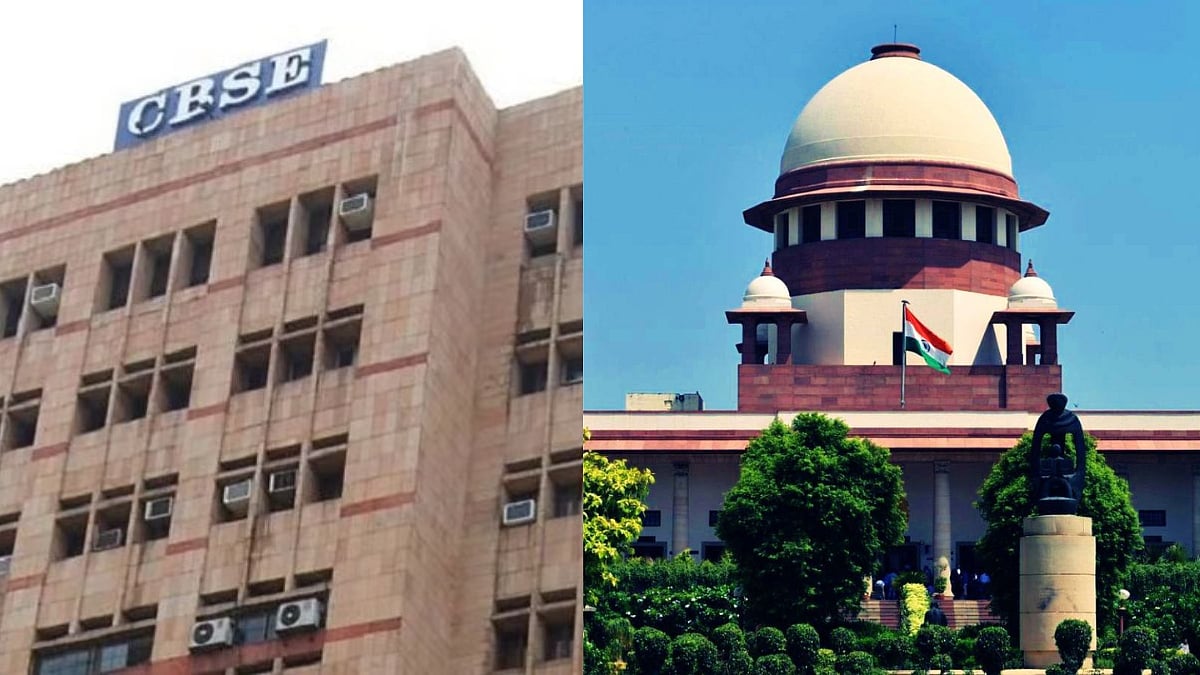
CBSE Class 9 Three-Language Policy: A new language policy introduced by the Central Board of Secondary Education for Class 9 students has now reached the Supreme Court of India, after a public interest litigation (PIL) was filed challenging the move.
According to ANI, the plea was mentioned before the apex court on Thursday by Senior Advocate Mukul Rohatgi, who urged the court to hear the matter at the earliest, saying the policy could create confusion among students and schools.
The PIL has reportedly been filed by a group of students, parents and teachers who have objected to the new language framework introduced by CBSE earlier this month.
During the mentioning, Rohatgi told the court, “Suddenly, in the 9th standard, two languages have been made compulsory. Very different from what is happening. This will create chaos.”
A bench led by Chief Justice of India Surya Kant agreed to list the matter for hearing next week, as reported by ANI.
What is the New CBSE language policy?
The controversy revolves around a CBSE circular issued on May 15 regarding the implementation of a revised three-language structure for students entering Class 9 from the 2026-27 academic session.
According to the board, the policy will come into force from July 1, 2026.
Under the new framework, the study of three languages, referred to as R1, R2 and R3 will become compulsory for Class 9 students. The board has also stated that at least two of these languages must be native Indian languages.
The circular states, “With effect from 1st July 2026, for Class 9, the study of three languages (R1, R2, R3) shall be compulsory, with at least two languages being native Indian languages.”
Foreign language option faces restrictions
As per the revised policy, students who wish to study a foreign language will be allowed to do so only if the remaining two languages are Indian languages. CBSE has also provided another option under which the foreign language can be taken as an additional fourth language.
The board has clarified that the third language will not be part of the board examination system and will instead be assessed internally by schools.
(Inputs from ANI)

