Asha Bhosle, one of India’s most iconic and versatile voices, passed away on Sunday (April 12) at the age of 92 in Mumbai. With her death, the country lost a legendary artist whose musical career spanned over eight decades. She had been described as one of the greatest and most influential singers in Hindi cinema
Educational Qualification
As per various media reports, Asha Bhosle did not pursue formal higher education due to financial constraints following the death of her father, Deenanath Mangeshkar, when she was nine years old. She entered the film industry at a young age to support her family, leaving little time for formal education.
Instead, she received classical music training at home, which served as the foundation for her professional career. Her education was primarily practical and experience-based, shaped by constant singing and performances.
Expresses Regret Over Not Receiving Formal Education
As reported by Hindustan Times, Asha Bhosle has expressed regret over not receiving formal education. She shared that she wishes she had studied more, especially to improve her English singing abilities. The legendary singer stated that “I really wish that I had studied more but back in those times, in my generation, 80 years back, there was no use of educating women; they said women are supposed to do simple household chores and deliver babies, so why make her study? So, the education never happened. And now I really regret that if we were made to study or given our education, then we would have been at different heights in our lives, and I would have gone way ahead in English songs because our style and English words would have taken me to greater heights.”
According to The Times of India report, she recalled her school days at Balmohan Vidya Mandir in Mumbai, where she studied alongside her siblings, and expressed similar sentiments. She admitted that she was not a strong student and frequently struggled with studies, particularly multiplication tables. She admitted that she would sometimes avoid reciting tables in class due to fear.
Reflecting on her schooling, she stated that she was not very attentive in academics and was eventually unable to continue her studies. She also expressed regret later in life, stating that if she had been fluent in English, she could have pursued global opportunities, particularly in Western music.
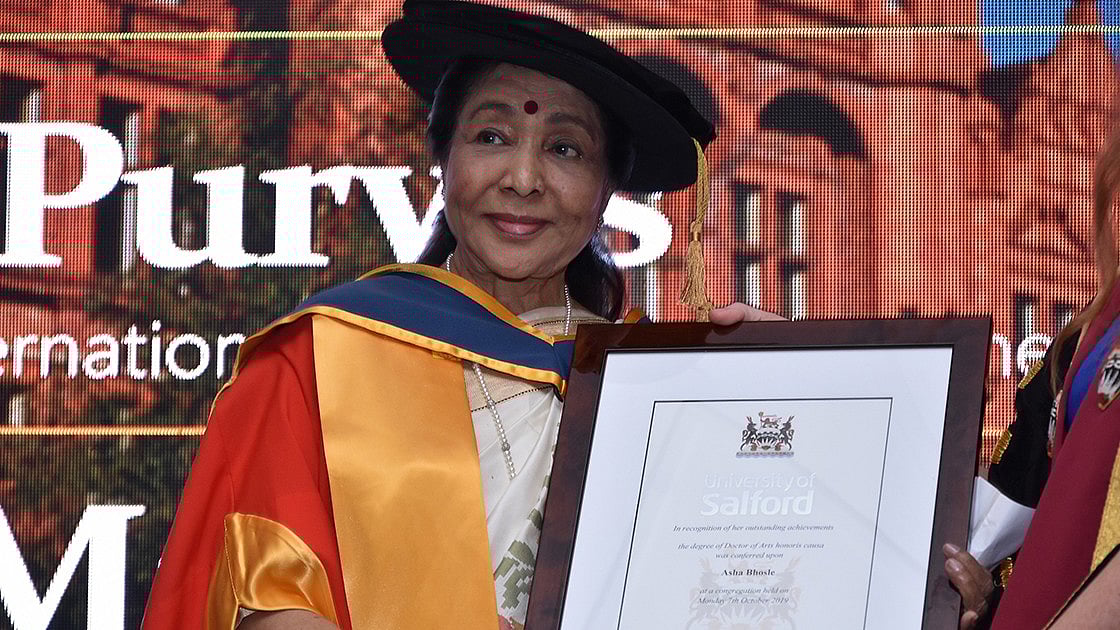
She later received honorary doctorates from several universities, including the University of Salford, Amravati University, and North Maharashtra University.
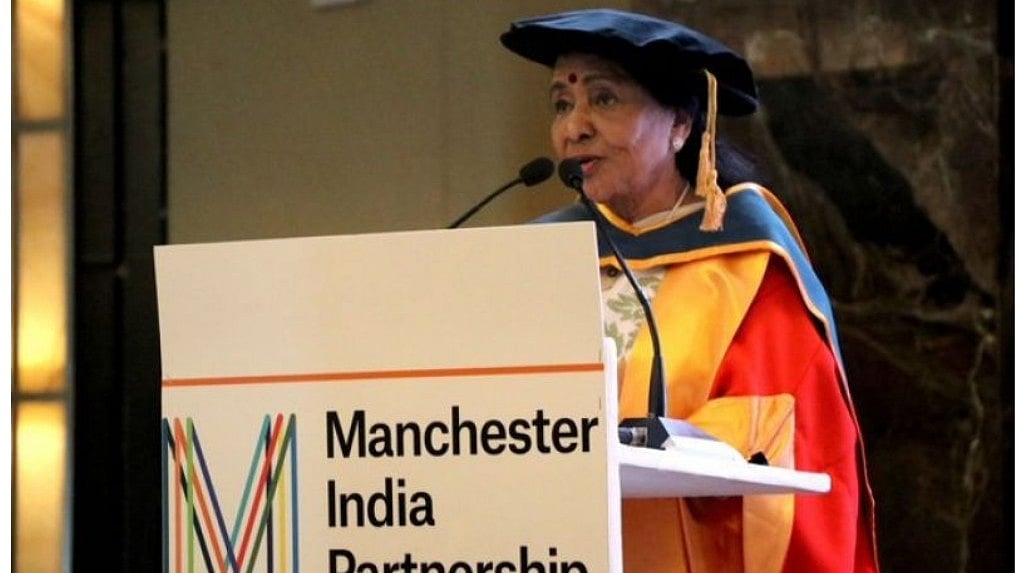
The University of Salford awarded Asha Bhosle an Honorary Doctor of Arts degree on October 7, 2019 in recognition of her outstanding contribution to music and her influence in inspiring future generations. Reacting to the honor, Asha Bhosle commented: “This is my first PhD from a major UK university and I feel overjoyed that my contribution to music has been recognised by an international educational institution. I hope it inspires musicians all over the globe.”
Career Journey
Asha Bhosle began singing at the age of 10, making her debut with “Chala Chala Nav Bala” in the Marathi film Majha Bal (1943). She entered Hindi cinema with “Saawan Aaya” from Chunariya (1948).
Her breakthrough came with Naya Daur, where songs like “Maang Ke Saath Tumhara” and “Uden Jab Jab Zulfein Teri” brought her widespread recognition.
Linguistic Versatality
She recorded songs in a number of Indian languages, including Marathi, Bengali, Tamil, Telugu, Kannada, Malayalam, and Punjabi, making her linguistic versatility one of her greatest assets. She became one of the most recorded musicians in history thanks to her prolific output, which earned her a spot in Guinness World Records.
She has collaborated with leading composers and adapted to changing musical trends such as cabaret, pop, ghazals, and classical. Her ability to reinvent herself helped her remain relevant across generations.
She was also honored with some of India’s highest awards, including the Dadasaheb Phalke Award and the Padma Vibhushan, recognizing her immense contribution to Indian music.
Asha Bhosle’s legacy will continue to live on through her timeless songs and unmatched contribution to the world of music.

