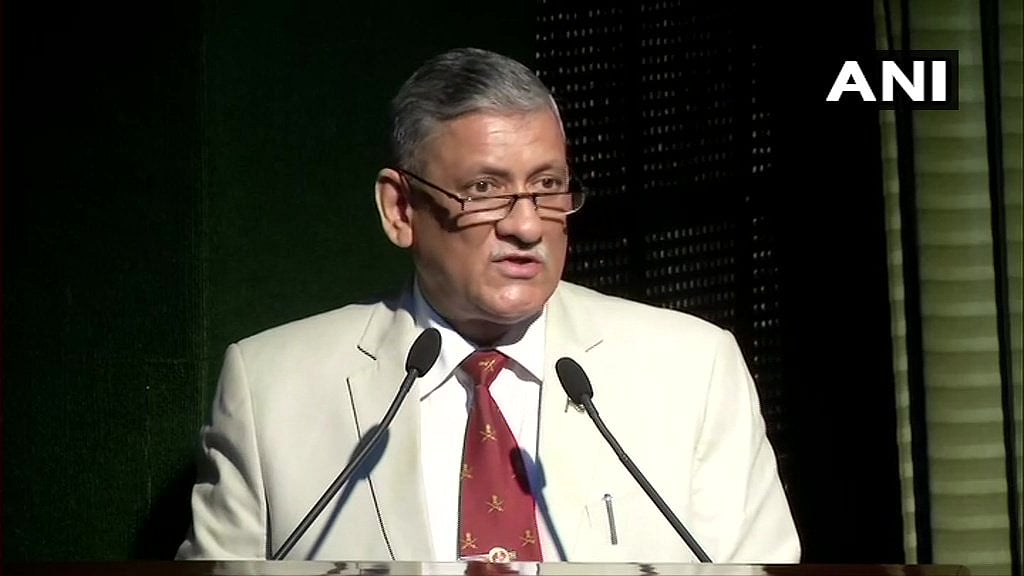
For once we can endorse P Chidambaram’s rebuke of the Army chief, General Bipin Rawat. Speaking at a Congress rally in Thiruvananthapuram, Kerala, on Saturday he rightly said the army generals are not expected to wade into divisive politics.
The political neutrality of the army, as also of other armed forces, is a given in a democratic country. Even though General Rawat’s remarks at a recent function were meant to express his unhappiness at the acts of violence and destruction of public property during the anti-CAA protests these were prone to be misconstrued by the Government’s critics.
This is precisely what happened. Sections of the media joined the Opposition to excoriate the General for his gratuitous criticism of the rioting mobs. Yet, it is undeniable that such a criticism is best left to politicians, not serving generals.
Indeed, there were some who were quick to suggest that by breaching the thin line of discipline that divides the armed forces from partisan politics the General may have been currying favour with the Modi Government.
It is notable that the Government in a salutary move decided to create the post of a Chief of Defence Staff for the tri-services who will act as the principal adviser on military affairs to the Defence minister. The proposal was pending for decades.
Immediately there was speculation that General Rawat, who retires on December 31 and whose successor has already been named, had an eye on the post of the Chief of Defence Staff. Regardless of whether he gets the coveted post, the General should steer clear of anything that smacks of partisanship.
Although what he said was unexceptionable, saying a good leader ensures that there is no violence and destruction of public property, his remarks did imply criticism of the anti-CAA leaders.
Meanwhile, it is a matter of satisfaction that Uttar Pradesh is fast returning to normalcy after widespread violent protests last week against the new citizenship law. Credit for this must go to the state government which directed the police and civilian administration to deal sternly with the mischief- makers.
After two days of violence and arson in large parts of the state, the police arrested over a thousand people and bound down over 5,000 for strict watch. This was followed by notices for penal punishment and financial penalties for the destruction of public property.
It may be that on the occasion the police were high-handed in pursuing trouble-makers in their homes, damaging their belongings in the process in some cases, but this has had the desired effect. Indeed, Chidambaram speaking at the same Thiruvananthapuram protest meeting singled out the top police officer in the state for ‘supporting’ the Government.
Clearly, the former Union home minister did not seem to be happy that the situation in UP had been brought under control so soon after widespread public protests over the citizenship law. Instead of commending the UP Police, Chidambaram’s specific naming of the officer implied a not-so-veiled threat of retribution should his party return to power.
This was unbecoming of a former Home Minister. Considering that a senior Odisha Congress leader had been caught on a videotape directing partymen to join the protest carrying cans of diesel oil, Chidambaram’s ticking off of a senior UP Police officer who brought the situation under control should not cause any surprise.
Meanwhile, the Government would help its own cause if it launched a nationwide campaign to allay peoples’ doubts and mistrust over the CAA. A well-meaning law needs to be defended publicly without it causing unfounded fears and apprehensions among the minority.

