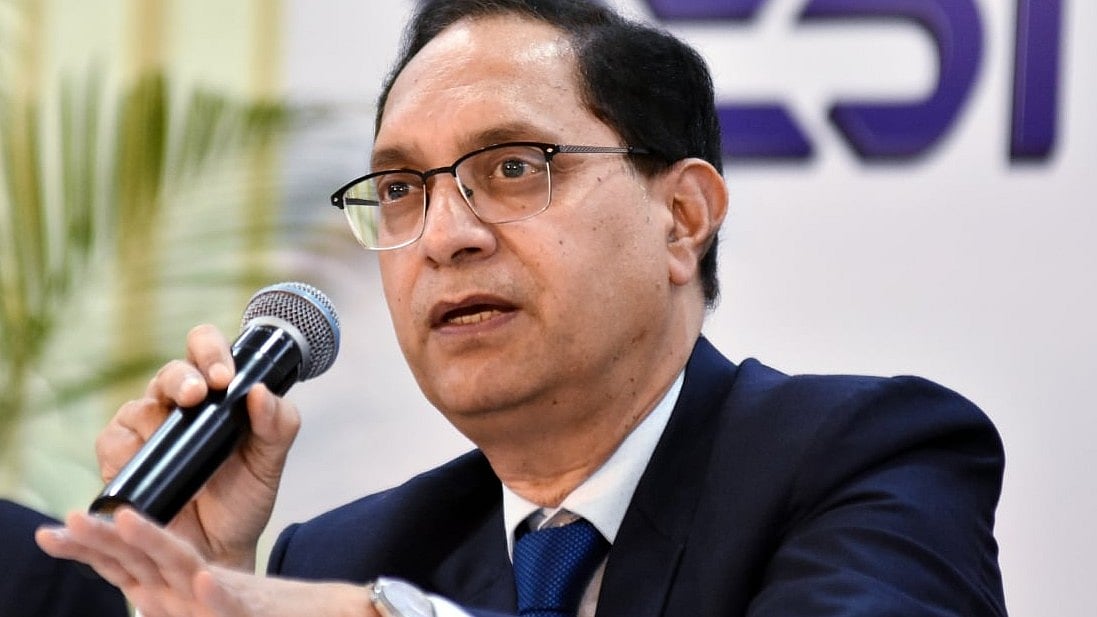
Foreign portfolio investors (FPIs) compare investment opportunities across global markets and consider returns after costs when deciding where to deploy capital, Securities and Exchange Board of India (SEBI) Chairman Tuhin Kanta Pandey said.
According to a report by Moneycontrol, Pandey said the regulator’s role was to understand investors’ concerns and simplify processes wherever possible.
The SEBI chief was attending the Commodity and Capital Market Participants Association of India’s 12th international convention in New Delhi.

SEBI seeks to ease FPI access
Pandey said SEBI had already simplified the onboarding process for FPIs and improved their market access. The regulator is also working with the Reserve Bank of India (RBI) on further measures, he said, emphasising the need for coordination between the two institutions.
SEBI has also recently permitted FPIs to participate in non-agricultural commodity derivatives. Pandey said FPI inflows had reached $800 billion in FY27 so far, while reiterating that overseas investors compare returns across markets on a net basis.
He noted that benchmark yields in other emerging economies can also influence investment decisions. If treasury yields in competing developing economies are higher, FPIs may adjust their benchmarks and allocation strategies accordingly.
Pandey also commented on the surge in investments linked to artificial intelligence, saying the sector could be witnessing excessive activity and that it remained to be seen whether a balancing phase would follow.
Corporate bond futures gain regulatory push
The SEBI chairman also highlighted the introduction of futures contracts linked to corporate bond indices as an important development for India’s debt market. He said the regulator had completed the necessary regulatory and technical groundwork, although wider participation would take time.
Corporate bond index futures derive their value from an index of corporate bonds. Unlike transactions involving individual debt securities, these derivatives allow market participants to manage exposure to movements across the broader corporate bond market.
The contracts could provide investors with an additional tool to manage risk. For instance, holders of corporate bonds could potentially hedge against adverse market movements without selling their underlying securities.
The National Stock Exchange (NSE) received a no-objection certificate from SEBI on October 1 to launch futures contracts linked to a corporate bond index.
Pandey said SEBI was seeking to strengthen the corporate bond market by enabling new instruments and improving the infrastructure needed for greater participation.

