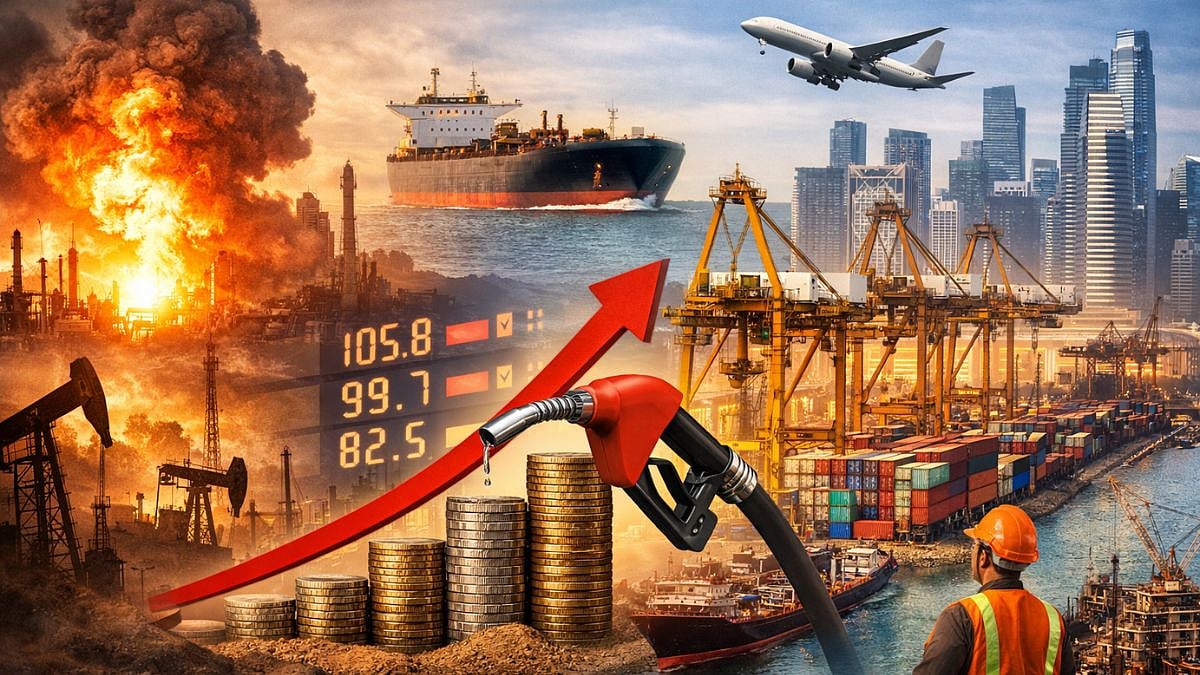
Singapore, April 14, 2026: Singapore's central bank on Tuesday warned that the West Asia conflict is impacting the city-state's status as the world’s top refuelling port and industries due to shipping disruptions and a rise in global energy prices.
The impact of conflict will ripple through the entire economy, reported The Straits Times, citing the Monetary Authority of Singapore (MAS) report.
Multiple sectors face rising costs
Beyond transport operators, industries like construction, real estate, and food and beverage (F&B) are expected to face both direct and indirect cost increases, it said.
The latest MAS macroeconomic review warns that a long-term energy disruption could hurt the labour market, which relies heavily on migrant workers, including those from India.
This could lead to slower hiring and stagnant pay, alongside broader risks of higher inflation and weaker economic growth.
Global energy supply disruptions intensify
Global oil and natural gas prices have surged since February 28, when the United States and Israel launched an air campaign against Iran. Iran, in turn, has effectively blocked the Strait of Hormuz that, in peacetime, allowed the flow of a fifth of global oil and natural gas supplies from the Persian Gulf, according to media reports.
Economic impact expected in stages
The disruption to supplies and maritime trade routes could result in a near-term negative impact on the Singapore economy, said MAS in its report. MAS said prices of a wider range of imported goods and services are expected to increase in the months ahead.
Top energy-dependent industries here include petroleum, gas and electricity, petrochemicals, transportation services for land, air and sea, and water and waste services.
First, their production volumes may be affected. Second, higher production costs would squeeze profit margins and discourage investment, which in turn could result in these industries passing down the costs to consumers.
According to MAS, the impact will occur in two stages. First, production volumes could drop. Second, higher production costs will likely thin profit margins and deter investment, leading businesses to pass these costs to consumers.
Also Watch:

Households likely to feel the pinch
This chain reaction would reduce household real incomes and lower overall consumer demand. This would erode household real incomes and dampen aggregate demand, said MAS.
MAS said most directly impacted would be the land transport operators, who are confronted with significant hikes to petrol and diesel prices.
(Disclaimer: Except for the headline, this article has not been edited by FPJ's editorial team and is auto-generated from an agency feed.)

