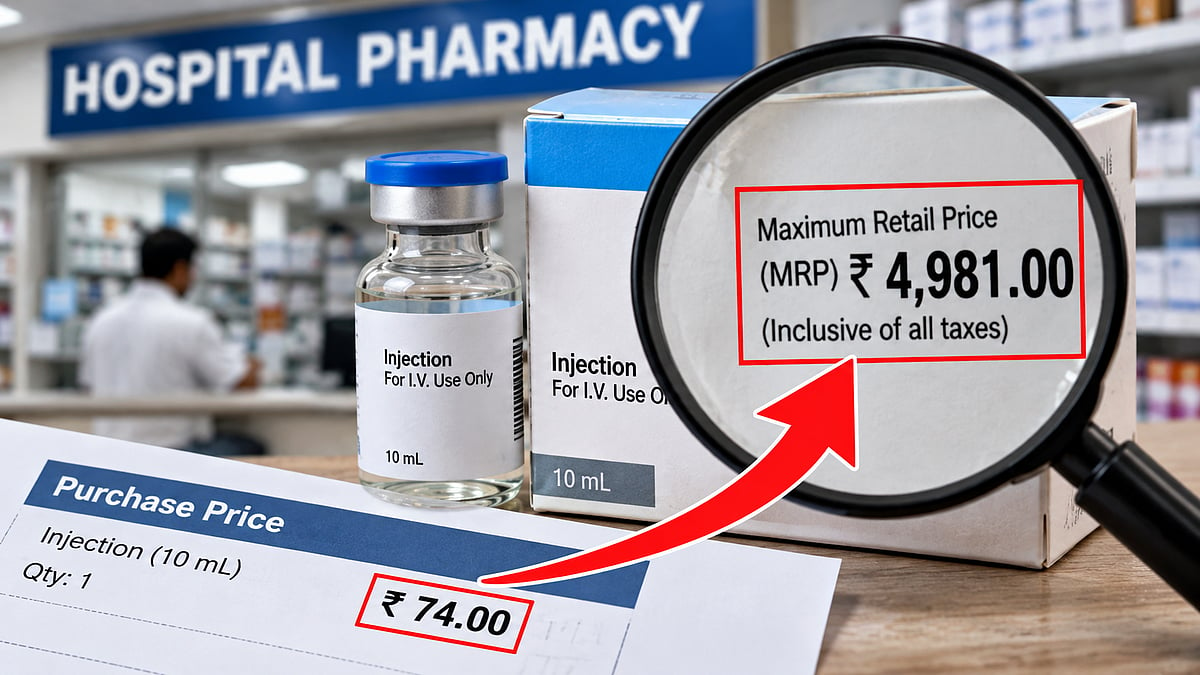
Lucknow: A medicine procured for Rs 74.09 is being sold with a maximum retail price of Rs 4,980.94 in Uttar Pradesh—a 67-fold gap between its purchase cost and printed price.
Polymyxin-B injection, used to treat serious bacterial infections, was among 36 of 130 medicines identified by the Uttar Pradesh Food Safety and Drug Administration (FSDA) whose MRPs exceeded their purchase prices by more than 10 times.
The findings followed an FSDA examination of 214 pharmacies in medical colleges and private hospitals across the state. The department found the widest disparities among injectable drugs used in intensive care and other critical conditions.
Polymyxin-B shows widest disparity
The Polymyxin-B case was the most striking. The injection was procured for Rs 74.09 but carried an MRP of Rs 4,980.94. Another injection used to treat serious liver disease was purchased for Rs 56 and had an MRP of Rs 3,050—more than 54 times the purchase price.
Large gaps were also found in medicines for severe bacterial and fungal infections. Meropenem 1 gram, used for serious bacterial infections, showed significant brand variation, with MRPs ranging from 5.31 to 9.98 times their respective purchase prices.
Caspofungin 70 mg, used to treat fungal infections, was purchased for Rs 800 but carried an MRP of Rs 21,230—about 26.5 times the procurement cost. Another brand was purchased for Rs 897.75 and had an MRP of Rs 19,892.
Price gaps raise concerns
The analysis also found substantial price differences in medicines used for cancer treatment and other life-saving conditions, raising concerns for patients undergoing serious or prolonged treatment, when comparing prices or seeking alternatives is difficult.
The FSDA said unusually high MRPs may allow substantial trade margins and discounts. A high printed price can create room for discounts while preserving sizeable margins across the supply chain.

Medical devices show disparities
Medical devices sold through hospital pharmacies showed similar disparities. A three-way stopcock was purchased for Rs 6.40 but carried an MRP of Rs 163—nearly 25 times the purchase price. Another device was procured for Rs 20.95 and had an MRP of Rs 500, nearly 24 times the purchase cost.
The issue is more serious in private hospitals where some medicines are available only through the hospital pharmacy. Described in the departmental assessment as monopoly medicines, these products may not be readily available in the open market. During emergencies, intensive care or treatment for serious illnesses, patients and their families have little opportunity to compare prices or seek cheaper alternatives, potentially increasing the final treatment bill.
Also Watch:
Questions over pricing margins
The FSDA findings do not mean the entire difference between a medicine’s procurement price and MRP represents profit for a hospital or pharmacy. The final price may include taxes, distribution costs, margins and other expenses. However, the scale of several disparities raises questions about how MRPs are determined and how much margin is built into the pricing chain.
The Polymyxin-B case illustrates the gap: a product procured for Rs 74.09 carries a printed price of Rs 4,980.94—a difference of Rs 4,906.85.
For patients already struggling with hospitalisation costs, such gaps can add substantially to their financial burden. The FSDA exercise highlights the need for access to procurement prices, available alternatives and the basis for pricing medicines and devices supplied through hospital pharmacies.

