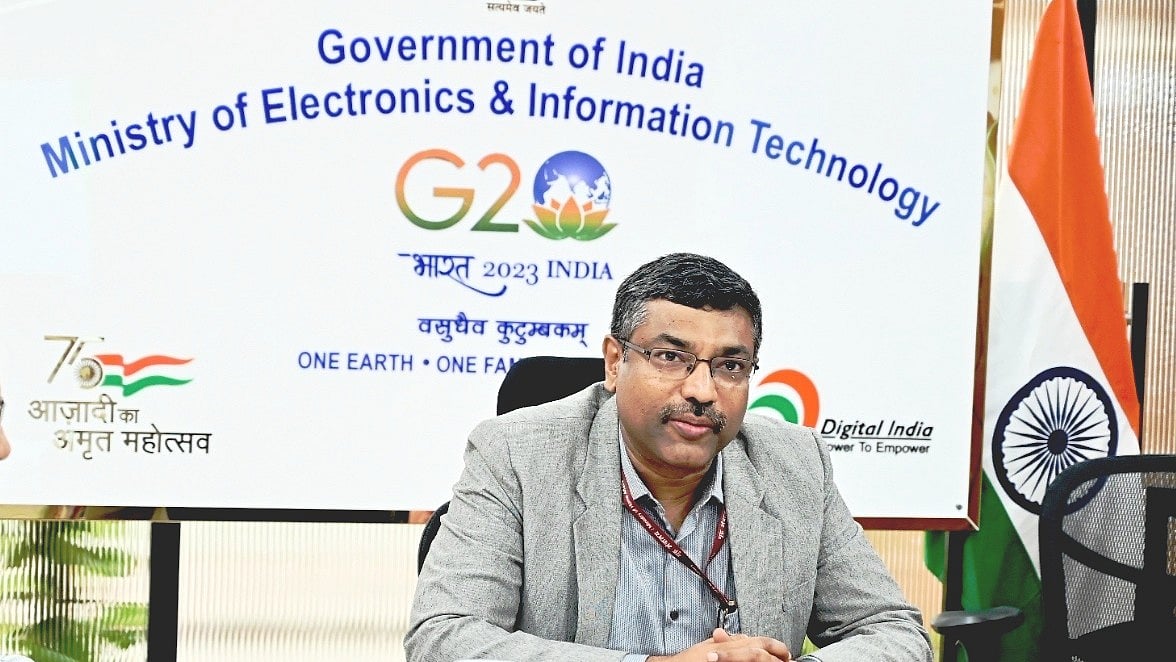
India is moving closer to establishing a dedicated regulatory framework for artificial intelligence, with IT Secretary S Krishnan indicating that existing laws may no longer be sufficient to address the evolving challenges posed by AI technologies.
Krishnan said that while current provisions under the Information Technology Act and related IT Rules have been used effectively to handle early concerns such as deepfakes and AI-generated synthetic content, there is now a growing recognition that a separate law or regulatory framework may be required.
He stated that discussions on AI regulation have already begun within the government. Both he and IT Minister Ashwini Vaishnaw have previously acknowledged the need to evaluate a dedicated regulatory approach when the time becomes appropriate.
According to Krishnan, “the time is getting right” to begin serious consideration of such legislation.
However, he clarified that drafting and finalising a law is a structured process. The ministry can prepare draft legislation, but the timeline for implementation depends on broader government and legislative procedures, which cannot be predicted at this stage.

Union Minister Ashwini Vaishnaw had earlier also highlighted that India’s existing IT law predates the rapid rise of artificial intelligence and may need to be updated or supplemented with a new framework.
He noted that consultations with industry stakeholders are ongoing, with the government aiming to strike a balance between fostering innovation and ensuring responsible regulation.
Globally, governments are grappling with the risks associated with generative AI, including deepfakes, misinformation, and online harms. India has already begun tightening its IT rules in response to these concerns.
In February this year, the government introduced stricter obligations for online platforms regarding AI-generated content.
Platforms such as X and Instagram are now required to remove deepfake or synthetic content within three hours if flagged by a competent authority or court order.
The IT Rules were also amended in 2021 to formally define AI-generated and synthetic content, covering audio, visual, and audiovisual material that is artificially created or altered to appear real.
However, routine editing, accessibility enhancements, and legitimate creative or educational use cases were excluded from this definition.
Additionally, the Centre has proposed stricter disclosure norms requiring AI-generated content to be clearly and continuously labelled throughout its display, ensuring users can easily identify synthetic material across digital platforms.

