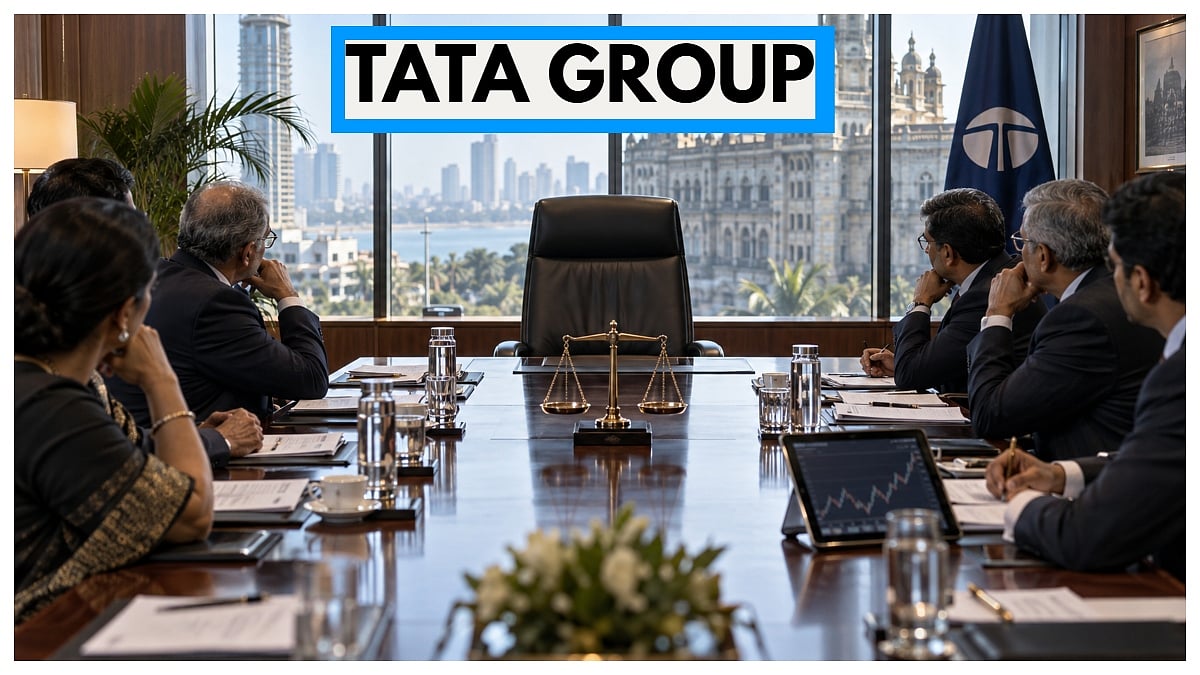
Mumbai: A serious leadership battle has erupted inside Tata Group, one of India’s oldest business empires. Tata Sons board has approved another five-year term for Executive Chairman N Chandrasekaran, reversing his earlier decision to step down when his current tenure ends in February 2027.
Why Did The Decision Change?
In August, Chandrasekaran said he would not seek reappointment. However, Tata Sons nomination and remuneration committee reportedly asked him in September to reconsider. He accepted the request at Thursday’s board meeting, where directors approved his new term by a reported 4-1 majority.
The reversal has triggered questions because Tata Trusts had already accepted his earlier decision and begun moving towards a succession process.
Why Is Noel Tata Opposing It?
Noel Tata, chairman of Tata Trusts and its nominee on the Tata Sons board, reportedly voted against Chandrasekaran’s reappointment. Tata Trusts, which owns around 66 percent of Tata Sons, has called the resolution 'illegal' and legally invalid.
The Trusts argues that Chandrasekaran’s decision not to seek another term had attained finality. The dispute could therefore move beyond the boardroom and face challenges at the shareholder or legal level.
Is The Listing Question Behind The Rift?
A major point of disagreement is the possible stock market listing of Tata Sons. Tata Trusts has long favoured keeping the holding company private and unlisted. However, a recent Reserve Bank of India decision has increased pressure on Tata Sons to move towards listing.
The RBI rejected the company’s request to surrender its non-banking financial company registration. Tata Sons was classified as an Upper Layer NBFC in 2022, a category carrying strict regulatory requirements, including mandatory listing norms.
Tata Sons had attempted to escape the requirement by repaying external debt and changing its position as a core investment company. The RBI’s decision appears to have closed that route.
What Else Is At Stake?
The leadership clash comes as several major Tata businesses face pressure. Air India continues to deal with losses, rising costs and integration challenges. Jaguar Land Rover has faced production disruption, weak Chinese demand and higher US tariffs. TCS is navigating slower technology spending amid global uncertainty.
At the same time, Tata Group is investing heavily in semiconductors, green energy, digital services and electric mobility. Its interests span steel, automobiles, aviation, power, retail, finance, insurance and technology.
What Happens Next?
Three issues will shape the next phase: whether Chandrasekaran’s extension survives opposition, how Tata Trusts pursues its objections, and whether Tata Sons proceeds with listing preparations.
The controversy is therefore bigger than one appointment. It is a struggle over control, succession and the future direction of a 158-year-old empire at a time when regulatory demands and business pressures are rising together across its vast global operations today.

