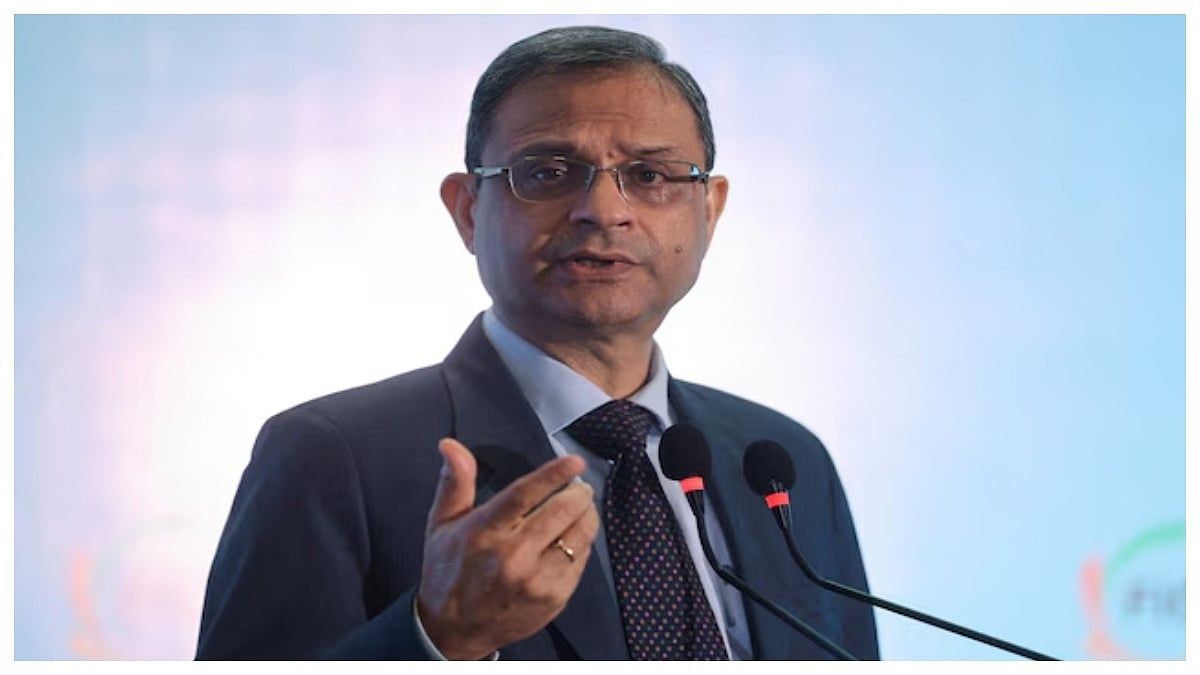
The supply chain disruption caused by the West Asia conflict is currently the biggest concern of the Reserve Bank of India, said Governor Sanjay Malhotra on Friday.
He said that weak monsoon and the impact of El-Nino will also be a significant concern for the central bank going ahead.
The RBI Governor was addressing a press conference after announcing the decision of the Monetary Policy Committee of maintain status quo on policy rates.
“Major concern is the (West Asia) unrest and uncertainty about how long will the supply disruption continues and what impact it has on prices,” he said when asked about the RBI’s biggest concerns for the economy.
Malhotra said that while availability of commodities was not a concern yet, price stability is currently a bigger factor.
“Availability (of commodities) is not so much of (a concern). As of now it is price. So that is what we are looking for that for how long it (supply disruption) remains. That, I think, is number one. After that, comes monsoon and El-Nino.”
The MPC on Friday decided to keep the benchmark repo rate unchanged at 5.25 percent.
The move signals that the central bank wants to continue supporting economic growth while closely watching global developments.
Retail inflation fell to 3.48 percent in April, staying below the RBI’s medium-term target of 4 percent. However, the RBI has increased its inflation projection for FY27 by 50 basis points from 4.6 percent earlier to 5.1 percent.
The central bank also reduced its real GDP growth projection for FY27 to 6.6 percent, down from the earlier estimate of 6.9%, reflecting concerns over the ongoing conflict in West Asia, elevated crude oil prices and weather-related risks.
The growth revision marks the second downward adjustment to the RBI’s forecast this year.
Global crude oil prices have increased sharply following tensions involving the US, Israel and Iran. Oil prices are currently around 30 percent higher than levels seen before the conflict.
Higher oil prices can increase transportation and production costs, eventually leading to higher prices for consumers.

