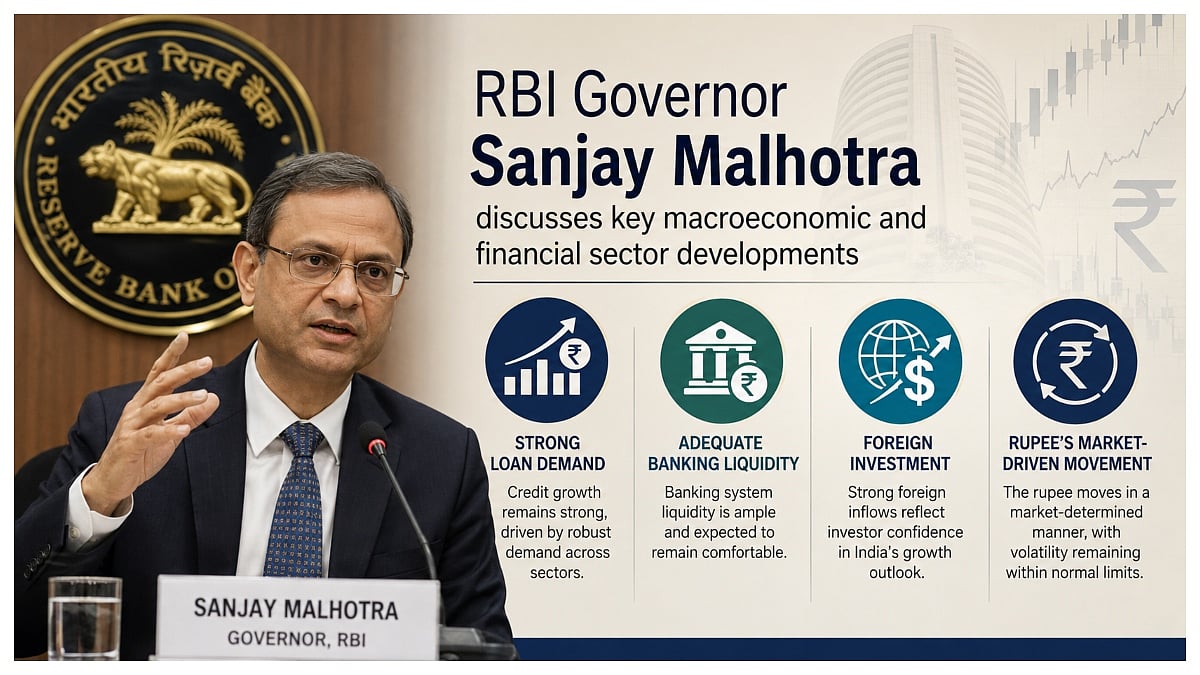
Mumbai: Reserve Bank of India Governor Sanjay Malhotra said loan demand remains strong and assured that the central bank will maintain enough liquidity in the banking system.
This means banks can continue lending to families and businesses when needed.
Rate Benefit Takes Time
Malhotra said the impact of repo rate changes during May and June reached borrowers slowly. Banks do not change their lending rates immediately after the RBI changes its rate.
However, demand for loans remains healthy across industry, business, housing, vehicles, agriculture and sectors. Investment and spending in the economy continue.
Liquidity To Remain Adequate
The RBI will ensure adequate liquidity in the banking system. When banks have enough funds, they can lend more easily. A shortage of money can make loans expensive and slow business activity.
External Position Strong
India's current account recorded a surplus of $2.8 billion during April and May. Strong services exports and money sent home by Indians working abroad supported the surplus.
Demand for Indian information technology, business and professional services remained healthy worldwide.
However, India's merchandise trade deficit widened to nearly $86 billion in the first quarter of FY27. Higher imports of crude oil, electronics and gold were major reasons. Services exports and overseas remittances helped reduce the overall pressure.
Foreign Investment Improves
Foreign direct investment remained strong. Foreign portfolio investment also improved in June and July, bringing nearly USD 7.1 billion into India. A large part of this money went into bonds and government securities.

Rupee To Follow Market
Malhotra said the rupee's value will be decided by market forces, including dollar demand, foreign investment, trade and global conditions. The RBI does not target any fixed exchange rate.
However, it will act if the rupee shows sudden or excessive movement. For borrowers, the message is positive: credit should remain available, although changes in borrowing rates may take time. Oil prices and imports will remain important risks for inflation, the rupee and economic growth.

