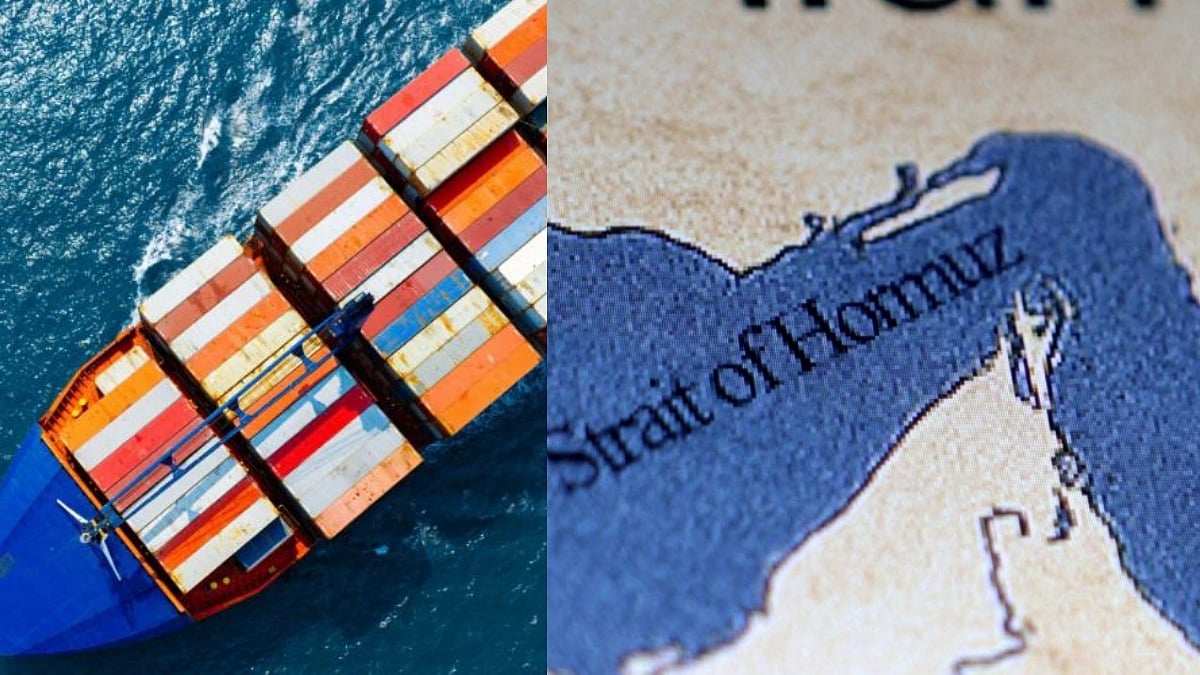
Traffic through the Strait of Hormuz, one of the world’s most important energy shipping routes, has nearly come to a halt after renewed US military action against Iran intensified concerns over the stability of the fragile ceasefire between the two countries.
According to a report by Bloomberg citing ship-tracking data, most observable vessel movements were taking place along a route closer to Iran’s side of the waterway, which requires approval from Iranian authorities.
Meanwhile, the corridor supported by the United States and Oman saw limited activity.
Among larger vessels, only a US-sanctioned supertanker leaving the Persian Gulf and an Iranian-flagged container ship were detected moving through the strait.

However, analysts noted that some vessels may have switched off their tracking systems, making it difficult to determine the full scale of shipping activity.
The slowdown followed a series of attacks on commercial vessels, which prompted US strikes on Iran. US President Donald Trump also said that the ceasefire arrangement with Tehran had ended, further increasing uncertainty around maritime security in the region.
Around 14 commodity-carrying vessels crossed the strait in both directions on Wednesday, marking the lowest daily movement since an interim peace agreement was reached in mid-June.
The decline represents a sharp reversal from the period following the temporary agreement between the US and Iran.
According to shipping data provider Kpler, an average of 34 commodity vessels crossed the waterway daily during the three weeks after the deal, with activity peaking at 59 crossings on June 24. During periods of conflict, daily crossings had generally remained below 20.
Liquefied natural gas (LNG) tanker movement through the strait also remained suspended. However, two empty vessels have recently entered the Gulf of Oman and were moving towards the eastern entrance of the waterway.
There were also indications of renewed electronic interference affecting maritime tracking systems.
Some vessels near Oman’s Limah area appeared to be travelling at unusually high speeds of over 30 knots, which could indicate the activation of defence systems designed to counter drone threats.
Such electronic disruptions can interfere with ship transponders and impact the accuracy of vessel tracking data.
The Strait of Hormuz handles a significant portion of global energy shipments, and prolonged disruption to traffic could create fresh concerns over crude oil supplies, shipping costs and global energy markets.

