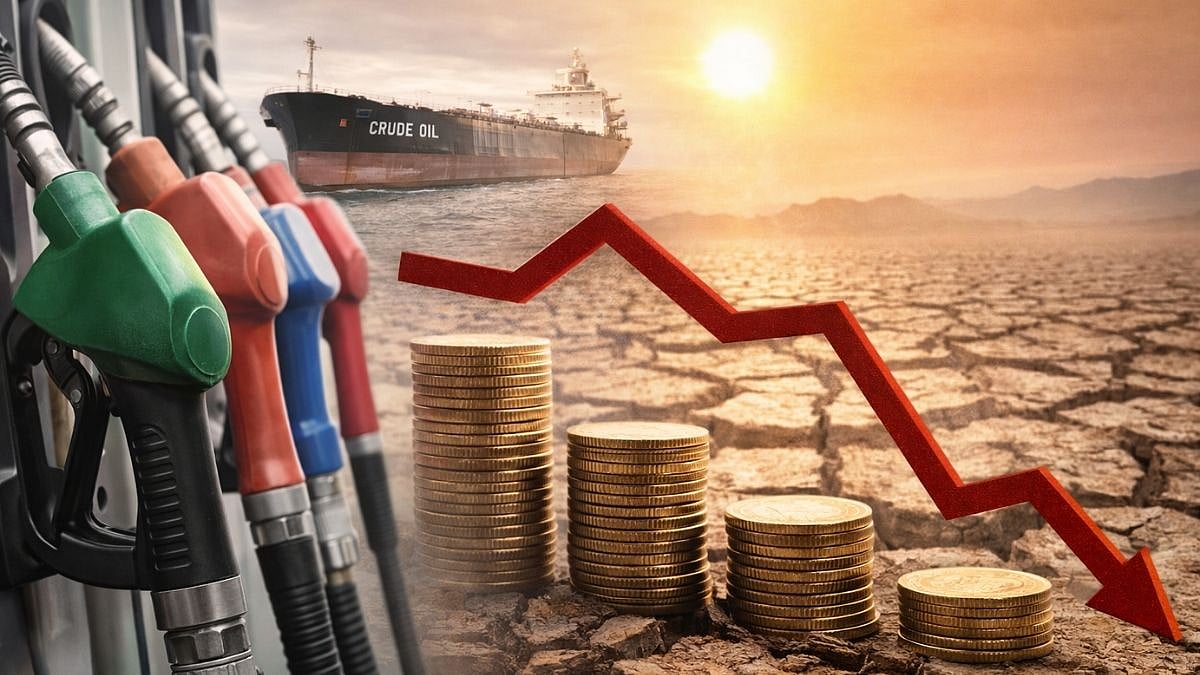
New Delhi: India’s state-owned oil marketing companies (OMCs) are facing huge financial pressure as they continue to shield consumers from rising global energy prices.
According to sources, Indian Oil Corporation (IOC), Bharat Petroleum Corporation Ltd (BPCL) and Hindustan Petroleum Corporation Ltd (HPCL) are together losing around Rs 1,600-1,700 crore every day.
Over the last 10 weeks, this has pushed their total losses beyond Rs 1 lakh crore.
These losses are called under-recoveries, which means the difference between the actual cost of fuel and the price at which it is sold to consumers.
Fuel Prices Remain Unchanged Despite Crude Surge
Even though global crude oil prices have risen by nearly 50 per cent, petrol and diesel prices in India have remained unchanged for almost two years.
Petrol continues to be sold at Rs 94.77 per litre, while diesel is priced at Rs 87.67 per litre.
Cooking gas LPG prices were raised by Rs 60 per cylinder in March, but they still remain below actual cost.
This has helped protect Indian consumers from the direct impact of the global energy crisis.
Why the Pressure Is Rising?
Oil companies depend on fuel sales revenue to buy crude oil, process it and maintain supply infrastructure.
With prices unchanged and input costs rising sharply, these companies are now under severe financial stress.
Sources say OMCs may soon need to borrow more money to meet their daily working capital needs.
This could also affect their future investments in refinery expansion, pipelines, biofuels and clean energy projects.
Government Also Bearing the Cost
The central government has also reduced excise duties to lower the burden on consumers.
Excise duty on petrol was cut to Rs 3 per litre from Rs 13.
For diesel, the duty was reduced to zero from Rs 10 per litre.
This decision is reportedly costing the government around Rs 14,000 crore every month.
Fuel Price Hike May Become Necessary
Experts say a fuel price hike now appears unavoidable.
However, since fuel prices are politically sensitive, the final decision will depend on the government.
Many countries, including Japan and the United Kingdom, have already raised fuel prices by up to 30 percent.
If crude prices remain high, India may also have to consider a calibrated increase to ease pressure on oil firms.

