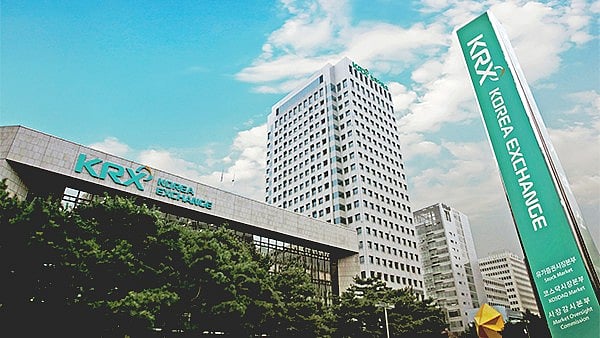
South Korea’s stock market suffered a sharp correction on June 23, with the KOSPI index plunging as much as 8% and triggering an automatic circuit breaker that halted trading for 20 minutes.
The sharp fall reflected heavy profit-taking after a strong rally driven largely by semiconductor stocks and sustained foreign inflows in recent weeks.
Once trading resumed, losses deepened further, with the benchmark falling nearly 10% to an intraday low of 8,203.84. The selloff was led by major chipmakers SK Hynix and Samsung Electronics.
SK Hynix dropped more than 10% during the session, while Samsung Electronics fell around 7.5%, dragging the broader index sharply lower.
The decline in Korean equities came amid a broader selloff across global markets. Asian stocks and oil prices weakened after reports that the US had waived certain sanctions on Iran, raising expectations of increased oil supply and influencing risk sentiment.

Investors were also cautious ahead of possible tighter monetary policy from the US Federal Reserve as inflation concerns persisted.
Regionally, MSCI’s Asia-Pacific ex-Japan index fell nearly 3%, while US equity futures also slipped.
S&P 500 futures declined about 1%, and Nasdaq 100 futures fell nearly 2%, indicating spillover weakness from US megacap technology stocks into Asian AI-related equities.
Other Asian markets also came under pressure. Japan’s Nikkei 225 dropped 3%, while Hong Kong’s Hang Seng Index extended its losses to more than 20% from its recent peak, officially entering oversold territory.
The Hang Seng China Enterprises Index fell up to 2.1%, weighed down by major technology stocks such as Tencent and Alibaba.
Mainland Chinese indices including the CSI 300 and MSCI China Index also declined, with the latter firmly in bear market territory.
Foreign investors reportedly sold over 4 trillion won ($2.6 billion) worth of KOSPI shares during the session, even as domestic retail investors added positions, according to Bloomberg.
The market correction followed a strong run-up earlier in the month, when the KOSPI had surged to record highs above the 9,000 level, driven by optimism in tech and AI-related stocks.
However, sentiment turned fragile amid concerns about stretched valuations, global geopolitical developments, and upcoming earnings from semiconductor giant Micron Technology.

