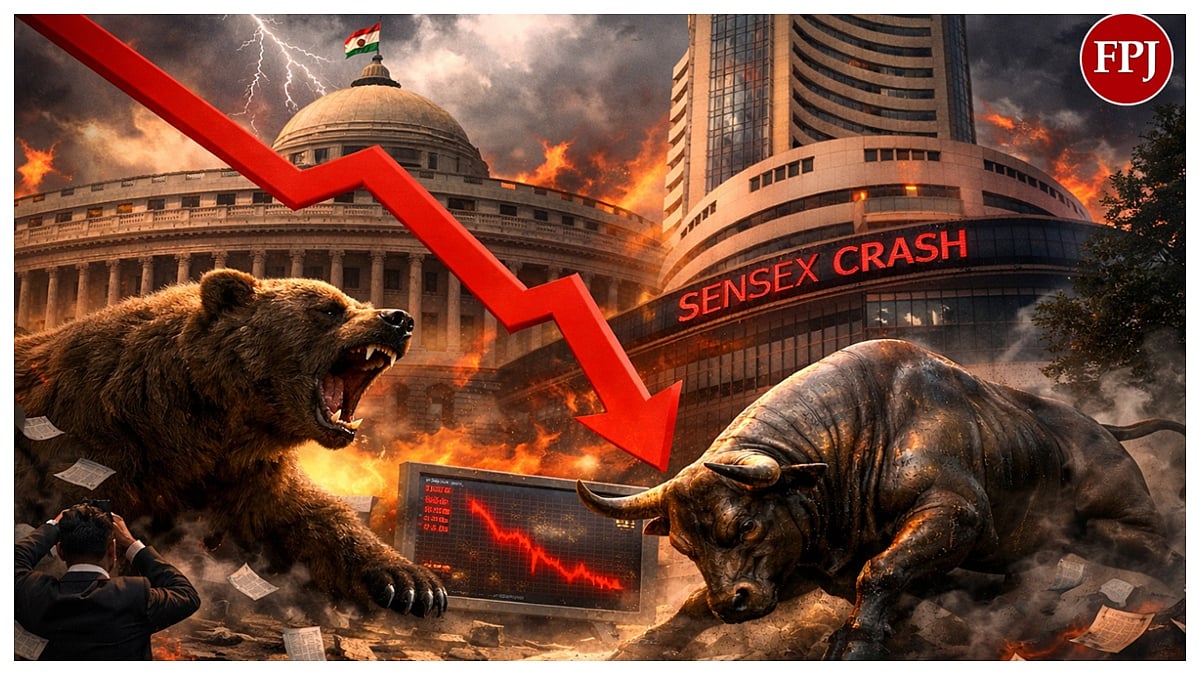
Mumbai: Indian stock markets came under intense selling pressure on Wednesday afternoon, with benchmark indices falling more than 2 percent.
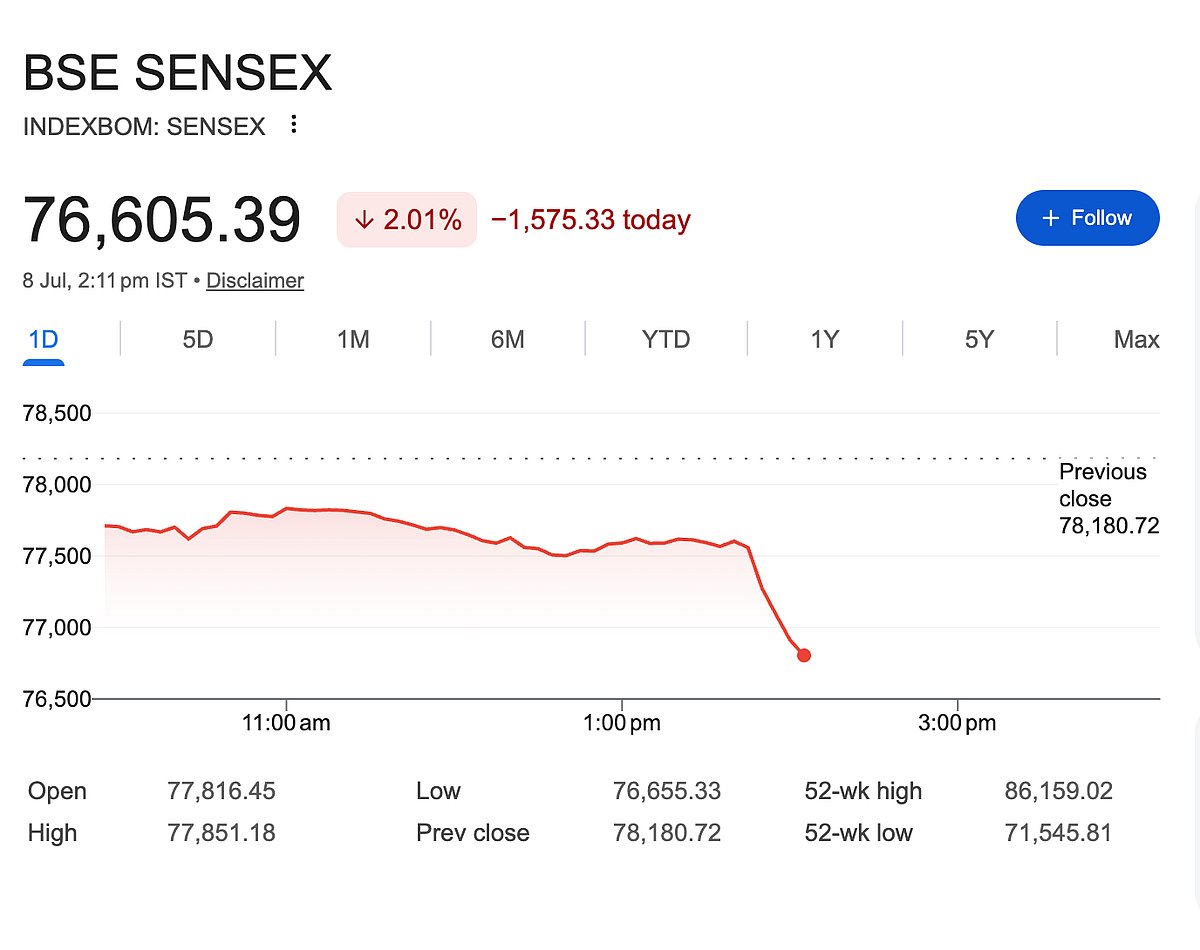
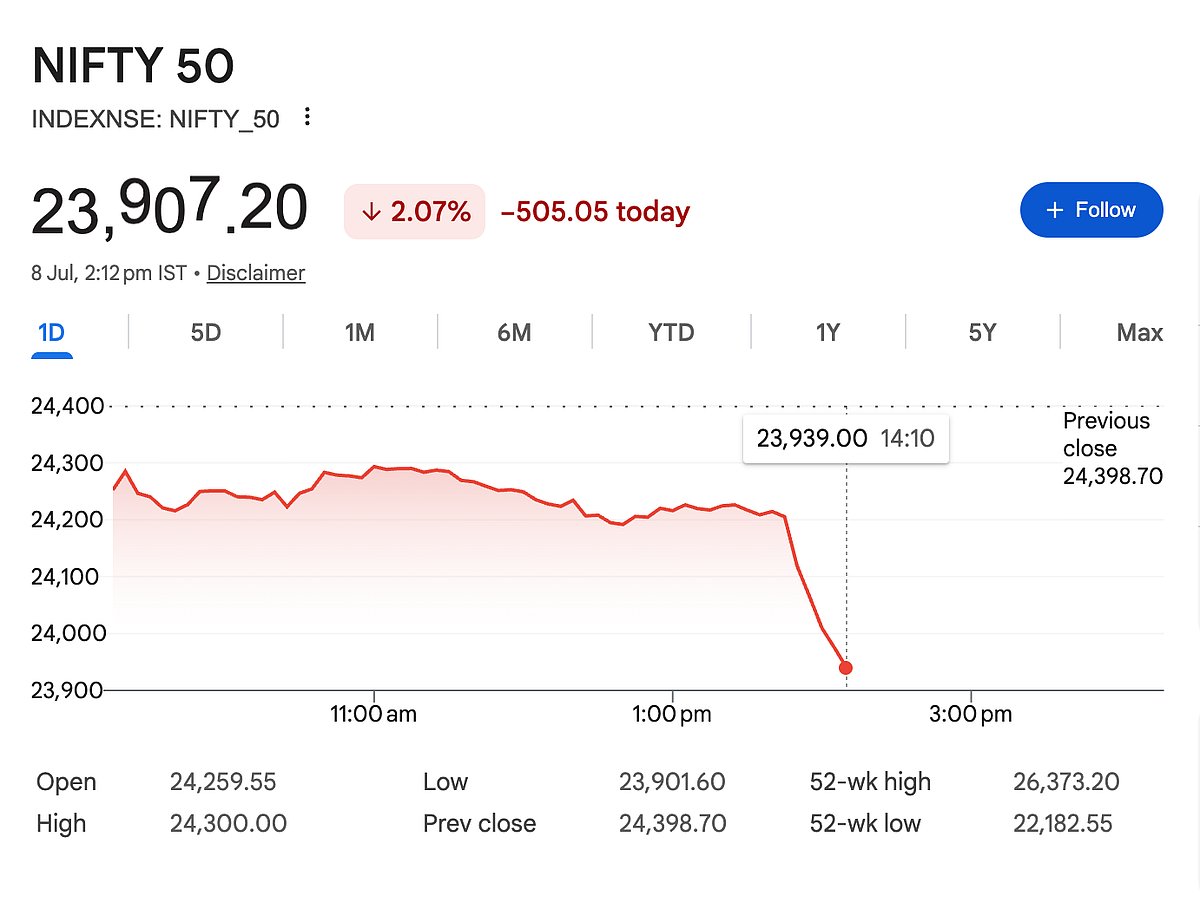
At around 2:15 pm, the BSE Sensex was down 1,575 points (2.01 percent) at 76,605, while the Nifty 50 dropped 505 points (2.07 percent) to 23,907.
The decline wiped out a large part of the gains made during the recent rally and reflected nervousness among investors.
Global worries hit sentiment
The biggest reason behind today's fall is growing concern over fresh US tariff announcements and the possibility of a wider global trade conflict.
Investors fear that higher tariffs could slow global economic growth, reduce exports and affect corporate earnings across many sectors.
Weakness in Asian markets also added to the negative mood, prompting traders to reduce risky positions.
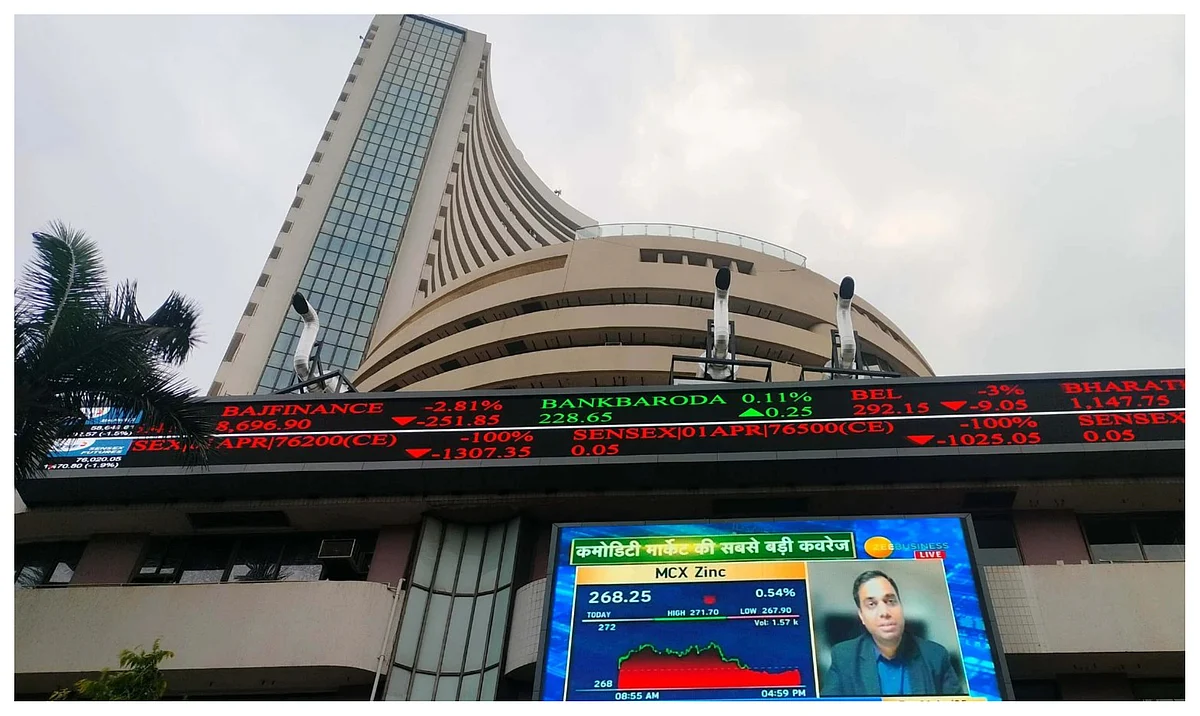
Heavyweight stocks drag indices
Selling was seen across banking, financial, auto, metal and capital goods stocks.
Large-cap stocks carried the biggest weight on the indices, causing the Sensex and Nifty to fall sharply. Profit booking after the recent rally also accelerated the decline.
Market participants preferred to lock in gains instead of taking fresh positions amid rising uncertainty.
Foreign investors turn cautious
Another factor weighing on the market is cautious activity by foreign institutional investors (FIIs).
Global funds are closely watching international trade developments, interest rate expectations and currency movements. This has reduced risk appetite in emerging markets like India.
The stronger US dollar has also kept investors cautious.
Broad-based selling across sectors
The fall was not limited to a few stocks.
Most sectoral indices traded in the red, showing that selling pressure was widespread. Mid-cap and small-cap stocks also witnessed sharp declines as investors shifted towards safer assets.
The broader market remained under pressure throughout the session, with declines outnumbering advances on the exchanges.
What should investors watch?
Market experts believe volatility could remain high in the coming sessions.
Investors will closely monitor:
Developments related to US trade tariffs.
Global market trends and bond yields.
Foreign institutional investor flows.
Corporate earnings for the June quarter, which begin this week.
Any fresh signals from major central banks on interest rates.
While today's fall looks sharp, analysts say long-term investors should focus on company fundamentals rather than react to short-term market volatility. The upcoming earnings season and global policy developments will play a key role in deciding the market's next direction.

