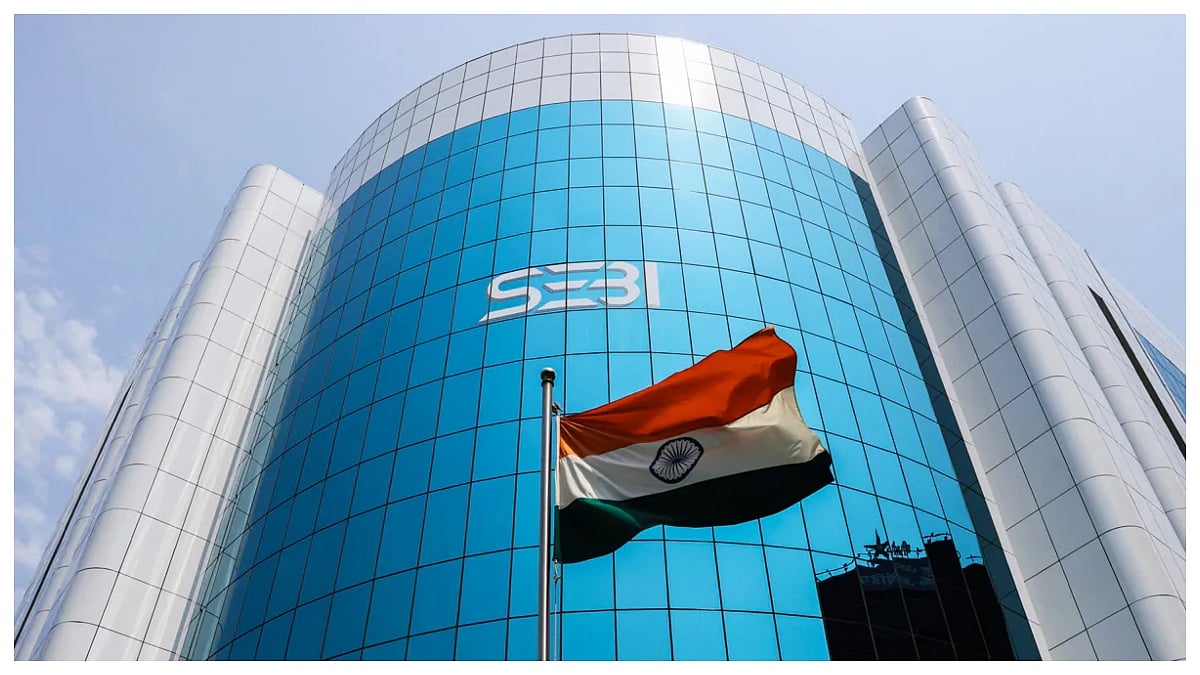
New Delhi, May 21: Market regulator Securities and Exchange Board of India (Sebi) on Thursday proposed changes to the price discovery mechanism through call auction sessions for IPOs and re-listed stocks to improve price discovery and reduce artificial price suppression.
Under the proposal, Sebi has suggested revising the methodology for determining the base price of re-listed stocks. If trading revocation takes place within six months of suspension, the latest closing price available within six months on the same exchange, or another exchange, would be used.
In the absence of recent market prices, the lower of valuations provided by two independent chartered accountants or valuation agencies would be considered, Sebi said in its consultation paper.
For revocations after six months of suspension, the base price would be determined solely on the basis of valuation certificates from two independent valuers, not older than three months.
Dummy price band mechanism likely to continue
The regulator has also proposed continuing the dummy price band mechanism, but with a more uniform and automated flexing process across exchanges.
As per the proposal, the dummy band would automatically expand by 10 per cent whenever the indicative equilibrium price comes within 10 per cent of either boundary.
Further, if orders are present only at the upper or lower band, exchanges may automatically flex the range after validating orders from at least five PAN-based unique investors.
Sebi has additionally proposed that the flexing mechanism should continue even during the random closure period between 9.35 am and 9.45 am, unlike the current system where no band expansion takes place during that window.
To strengthen price discovery, the regulator proposed that a call auction session would be considered successful only if orders are received from at least five PAN-based unique buyers and sellers.
In cases where price discovery fails on the first day for re-listed stocks or corporate restructuring cases, the call auction mechanism would continue on subsequent trading days until a valid equilibrium price is discovered.
However, for IPOs, if no equilibrium price is discovered, the stock would move to the normal market at the issue price.
Sebi cites concerns over artificial price suppression
This comes after the regulator received representations highlighting that the current framework for re-listed scrips often results in “artificially suppressed price discovery”, followed by continuous buying pressure in the normal market and repeated hits on upper circuit limits.
Sebi noted that in one instance involving a re-listed stock, nearly 90 per cent of buy orders during the call auction session were rejected because they were outside the prescribed dummy price bands.
At present, exchanges use dummy price bands as a risk mitigation tool during pre-open call auctions. For IPOs, the initial band is set at minus 50 per cent to plus 100 per cent of the base price, while for re-listed scrips, it is fixed at minus 85 per cent to plus 50 per cent.
SME IPOs currently operate within a band of minus 90 per cent to plus 90 per cent without any flexing mechanism.
The regulator said the existing system, particularly for re-listed companies suspended for over a year, often leads to unrealistically low base prices as the benchmark is generally the lower of book value or face value, subject to a minimum of Re 1 per share.
Also Watch:
The regulator said the proposals were discussed with the Secondary Market Advisory Committee in November 2025, which recommended continuation of dummy price bands with improvements in the flexing mechanism and more realistic valuation methods for re-listed stocks.
Sebi has sought public comments on the proposals till June 11.
(Disclaimer: Except for the headline, this article has not been edited by FPJ's editorial team and is auto-generated from an agency feed.)

