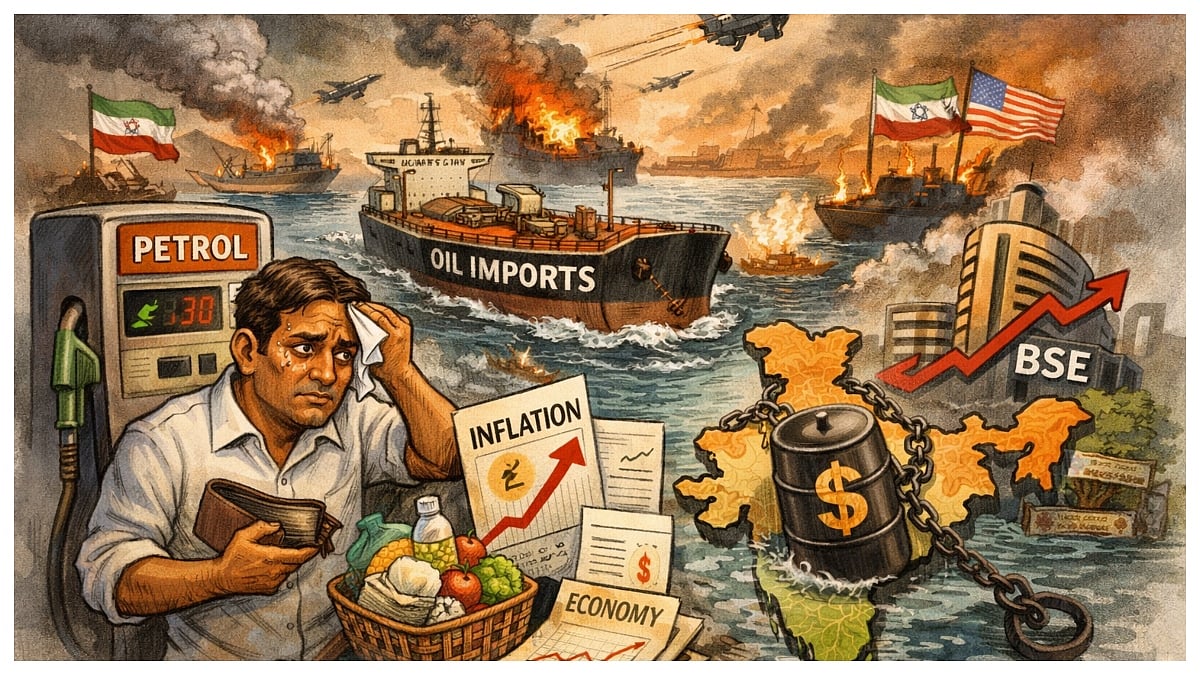
Mumbai: Inflation rarely arrives with a dramatic announcement. More often it creeps quietly into everyday life — through the petrol pump, the vegetable market, and the humble cooking gas cylinder in the kitchen.
Modest Rise Masks Dramatic Shift in Global Environment
India may now be approaching such a moment. Fresh government data released on Thursday show retail inflation rising to 3.21% in February, compared with 2.74% in January. At first glance, the increase appears modest. Yet the global environment surrounding India’s economy has changed dramatically in recent weeks.
The intensifying confrontation between Iran, the United States and Israel has transformed the energy markets into a theatre of uncertainty. Missile strikes, threats to shipping routes, and fears of wider regional conflict have pushed oil traders into a state of nervous anticipation.
For India, the implications are stark. The country remains one of the world’s largest oil importers.
Nearly nine out of every ten barrels of crude consumed in India arrive from abroad. Any sustained rise in global oil prices therefore travels swiftly through the domestic economy.
First Domino: Petrol and Diesel Prices Set to Climb
The first impact would be visible at petrol pumps. Diesel, the backbone of India’s transportation system, would become costlier. Trucks carrying food across the country’s highways would pass those higher costs directly to consumers.
The second shock could strike the household kitchen.
LPG prices, a politically and economically sensitive issue, could again begin to rise if global energy costs surge. For millions of Indian families, especially in rural and lower-income households, cooking gas represents one of the most immediate and unavoidable monthly expenses.
Food inflation may follow soon after. Vegetables, milk, grains and cooking oil could all feel the ripple effects of higher transport and energy costs.
Even the rupee may not remain immune. A surge in crude prices typically weakens the Indian currency, making imports costlier and amplifying inflationary pressures across multiple sectors.

RBI and Government Face Tough Balancing Act
For policymakers, the dilemma would be uncomfortable. The Reserve Bank of India must balance inflation control with economic growth, while the government must manage fiscal pressures without burdening consumers excessively.
The present inflation numbers may still appear reassuring. Yet the global backdrop tells a more anxious story.
If the war in West Asia intensifies — or if oil supplies face even a brief disruption — India’s carefully maintained price stability could face its sternest test in years.
For millions of households, the distance between geopolitics and the kitchen stove may soon shrink dramatically.
To get details on exclusive and budget-friendly property deals in Mumbai & surrounding regions, do visit: https://budgetproperties.in/

