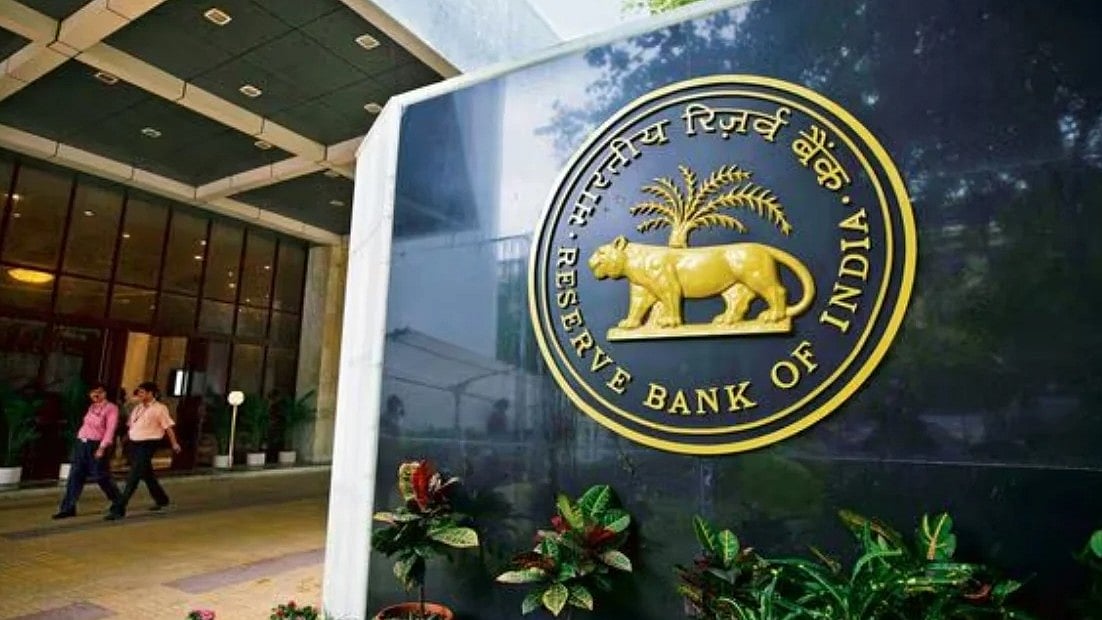
The Reserve Bank of India (RBI) has filed a review petition in the Supreme Court challenging its judgment that invalidated Yes Bank's ₹8,415 crore Additional Tier 1 (AT-1) bond write-off.
According to the Supreme Court's website, the central bank submitted its petition on Nov 13.
The development follows Yes Bank's decision to seek reconsideration of the Oct 15 judgment under Article 137 of the Constitution.
The Supreme Court had upheld the Bombay High Court's ruling against the March 2020 write-off and dismissed appeals filed by Yes Bank, the RBI and the Union government.

The dispute centres on two AT-1 bond issuances: ₹3,000 crore in December 2016 carrying 9.5% interest and ₹5,415 crore in October 2017 carrying 9%.
These instruments are designed to absorb losses when banks encounter financial difficulties.
Yes Bank wrote off the bonds during its RBI-led reconstruction in March 2020 amid mounting bad loans and governance concerns.
However, the Supreme Court ruled that the bank's administrator lacked authority to write down the instruments after the final reconstruction scheme took effect on March 13, 2020.
The government had removed the provision permitting the write-off from the approved scheme.
Axis Trustee Services challenged the decision on behalf of bondholders in May 2020 and secured a favourable Bombay High Court ruling in January 2023.
The Supreme Court also held that annual coupon payments must follow the respective bond information memorandums.
Following the judgment, Axis Trustee Services sought restoration of the bonds, associated rights and relevant depository and exchange records.
The trustee also indicated that it could pursue contempt proceedings over alleged non-compliance.
Yes Bank previously estimated that reinstating the principal could reduce its Common Equity Tier 1 (CET1) capital ratio by approximately 250 basis points, based on June 2026 figures.
However, the lender indicated that its overall Tier 1 capital ratio would not be affected in the same manner.
The review petitions seek reconsideration of the judgment, with the dispute remaining before the Supreme Court.
Level up your brain the fun way. Play daily games and quizzes on FPJ Smart!

