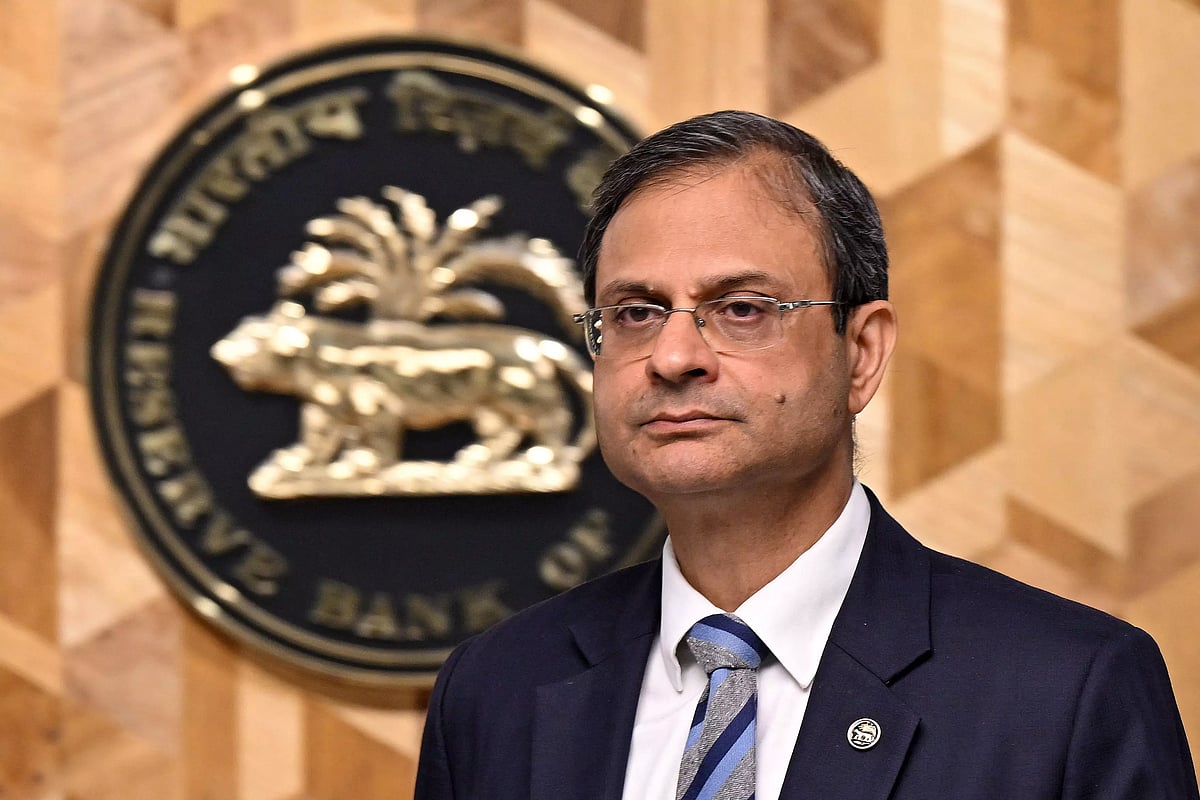
The Reserve Bank of India (RBI) Governor Sanjay Malhotra on Wednesday said that it was “pleasant news” to hear about the cessation of attacks in the Gulf region.
However, the banking regulator was not in the mood to lower its guard as Malhotra pointed out that the situation was volatile and the Monetary Policy Committee’s decision in the next meeting will depend upon the conditions prevailing at that time.
The Governor was speaking at a press conference in Mumbai after the announcement of policy rates in the morning.

“It is for the Monetary Policy Committee to decide, to take a call. These are the factors that go into it, how they are going to play out over a period of time. We will take a call,” he said when asked if the MPC would hike policy rates in the second half of the financial year. The question arose as there is a tapering down of the growth target in H2FY27 while inflation estimation has been raised.
“Things are evolving so drastically, so frequently every day. At 5:30 AM, we got pleasant news, maybe not a complete surprise. We have to be prepared. So we will not be in a position to say what the MPC is going to do in the next meeting,” Malhotra said.
The impact of the West Asia crisis was the central point of the Governor’s post-MPC speech.
From high energy prices to shortages of inputs for various industries, the Governor touched upon every aspect in which the conflict may impact the Indian economy.
He said that before the outbreak of the conflict, the macroeconomic indicators of the domestic economy were reflecting confidence of buoyant growth and low inflation.
However, the situation turned adverse in March with the widening of the conflict zone. Malhotra warned that global growth was at stake due to the sharp rise in energy prices and inflation fears.
The Monetary Policy Committee on Wednesday unanimously decided to keep the repo rate unchanged at 5.25 percent.
Malhotra cited upside risks to inflation and weakened growth prospects as the key reasons behind the decision.

