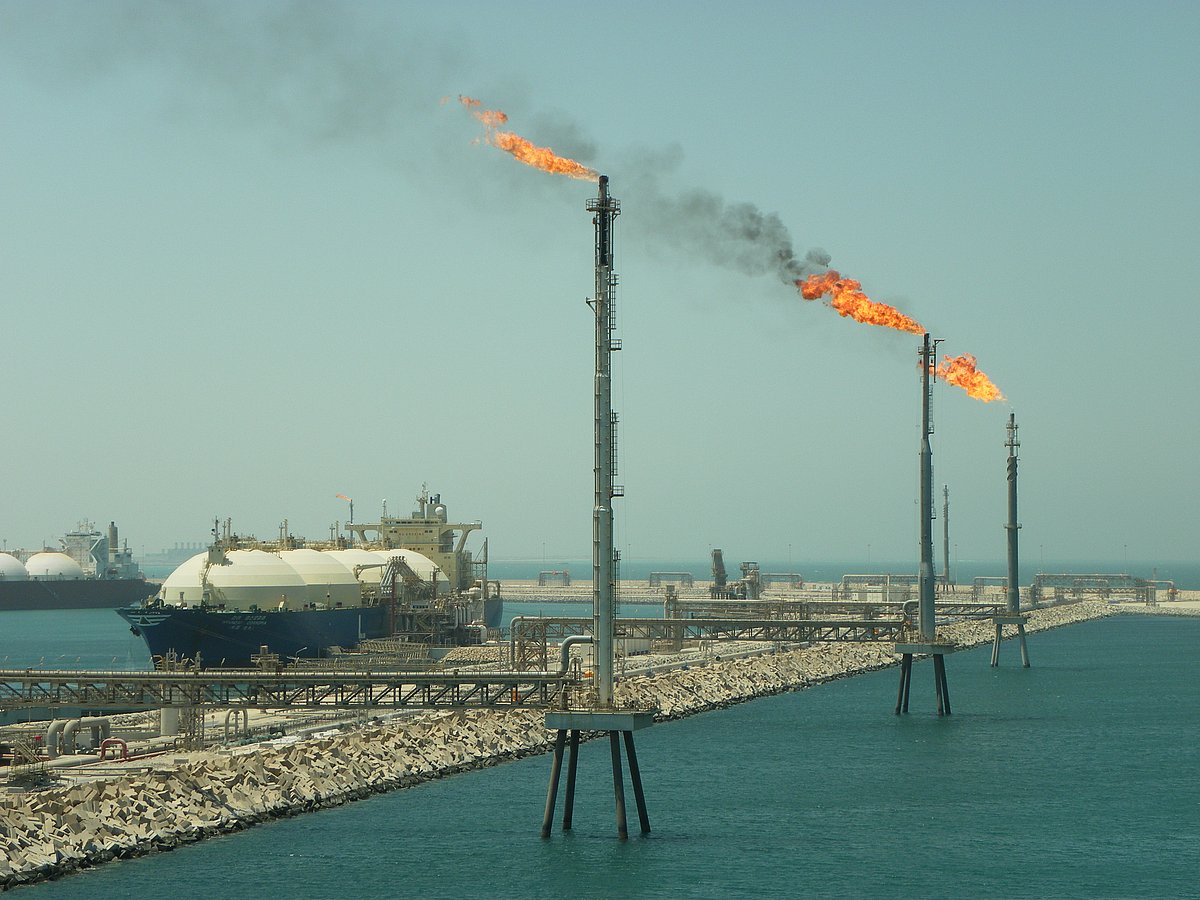
Qatar is preparing for a swift revival of liquefied natural gas (LNG) production once safe passage through the Strait of Hormuz is restored, with plans to bring most of its export capacity back online within two months, according to a report by Bloomberg.
QatarEnergy, which operates the country’s massive LNG infrastructure, has informed buyers that output is expected to rise to around 50% of full capacity within one month of normal shipping conditions resuming.
Production is then projected to reach approximately 80% within two months, the report said.
However, full recovery will take longer. The remaining production capacity—equivalent to two major processing trains—has been damaged by Iranian missile strikes in March and may take years to fully restore.
The Ras Laffan LNG complex, the world’s largest such facility, was shut during the early phase of the conflict after an attack disrupted operations and forced cancellations.
The facility, which accounts for nearly one-fifth of global LNG supply, has remained largely inactive for over three months due to restricted shipping through the Strait of Hormuz.
Despite the disruption, Qatar has been preparing for a rapid restart since April. QatarEnergy has been testing equipment, conducting maintenance, and operating some production trains at reduced capacity.
This has allowed limited shipments to nearby destinations while ensuring the facility can quickly scale up output when conditions allow.
The planned recovery timeline—restoring half of output within a month—is faster than many market analysts had anticipated.
However, uncertainty remains over the reopening of the Strait, with differing views among global leaders and shipping stakeholders about how quickly safe passage will be fully restored.
The resumption of Qatari LNG exports is expected to significantly ease global supply tightness, especially in Europe and Asia, where gas prices remain elevated despite easing geopolitical tensions.
While Qatar has managed to send limited shipments by masking vessel locations for safety, export volumes remain far below normal levels.

