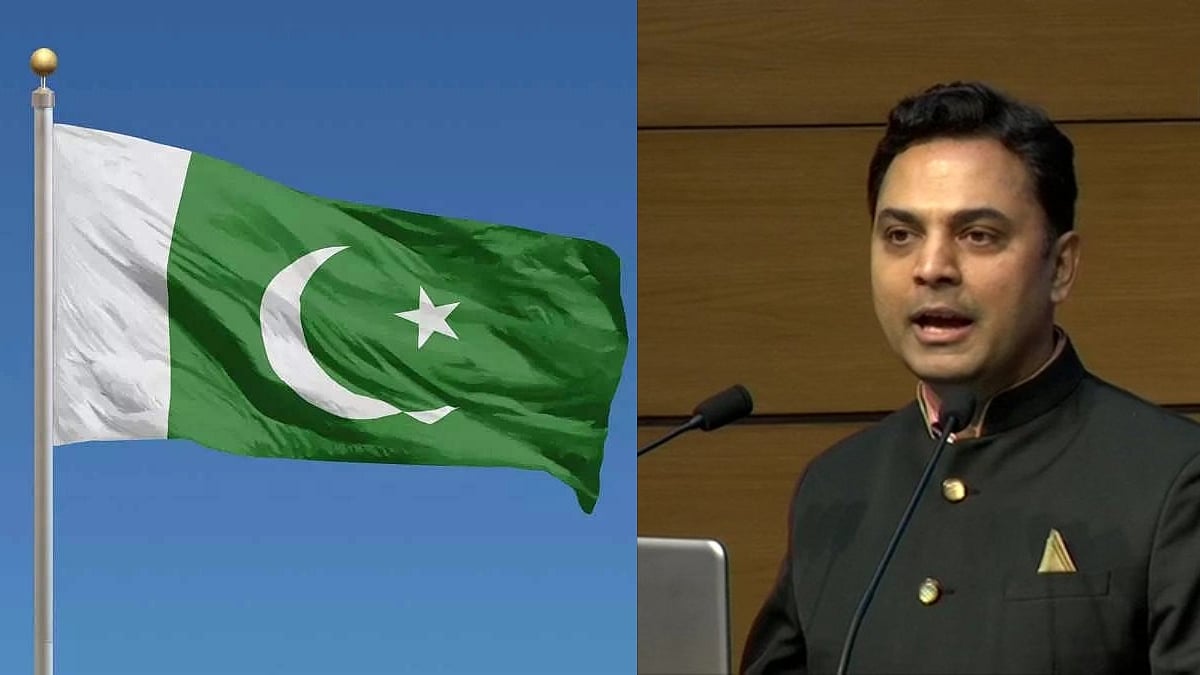
Former International Monetary Fund (IMF) Executive Director Krishnamurthy V Subramanian has questioned Pakistan's portrayal of its 2027 IMF-World Bank chairmanship as a major diplomatic achievement, describing the position as ceremonial rather than influential.
In a post on X, Subramanian argued that chairing the annual gathering of the two financial institutions does not provide substantial authority over their decisions.
He said the responsibility rotates among member countries annually and should not be confused with leadership of global economic policymaking.
Pakistan Hails IMF-World Bank Chairmanship As Historic
Pakistan has been selected to chair the Boards of Governors of the IMF and World Bank Group in 2027, returning to the position for the first time since 1953.
The country's Ministry of Economic Affairs announced that Economic Affairs Minister Ahad Khan Cheema, who also represents Pakistan as a World Bank governor, would assume the responsibility.
Islamabad described the selection as a historic milestone that could strengthen its participation in international economic discussions.
Officials said the role would provide opportunities to encourage dialogue among member countries on financial and development issues.
However, Subramanian disputed suggestions that the appointment represented a return to the highest levels of global financial leadership.
He pointed to the rotating nature of the position, citing Paraguay and Cabo Verde as other recent chairs.
Subramanian Contrasts Pakistan's Role With India's G20 Presidency
In another social media post, Subramanian rejected comparisons between Pakistan's appointment and India's leadership of the G20 and BRICS groupings.
He argued that India's presidencies involved shaping agendas for international economic cooperation, whereas Pakistan would preside over an annual meeting.
The exchange comes as Pakistan continues relying on IMF assistance to address economic pressures.
Islamabad is participating in a $7 billion Extended Fund Facility (EFF) and a $1.4 billion Resilience and Sustainability Facility (RSF).
The programmes support economic reforms, balance-of-payments stability and measures addressing climate-related risks.
Pakistan could also receive approximately $1.2 billion following a staff-level agreement on programme reviews.
However, the proposed disbursement remains subject to approval by the IMF Executive Board.

