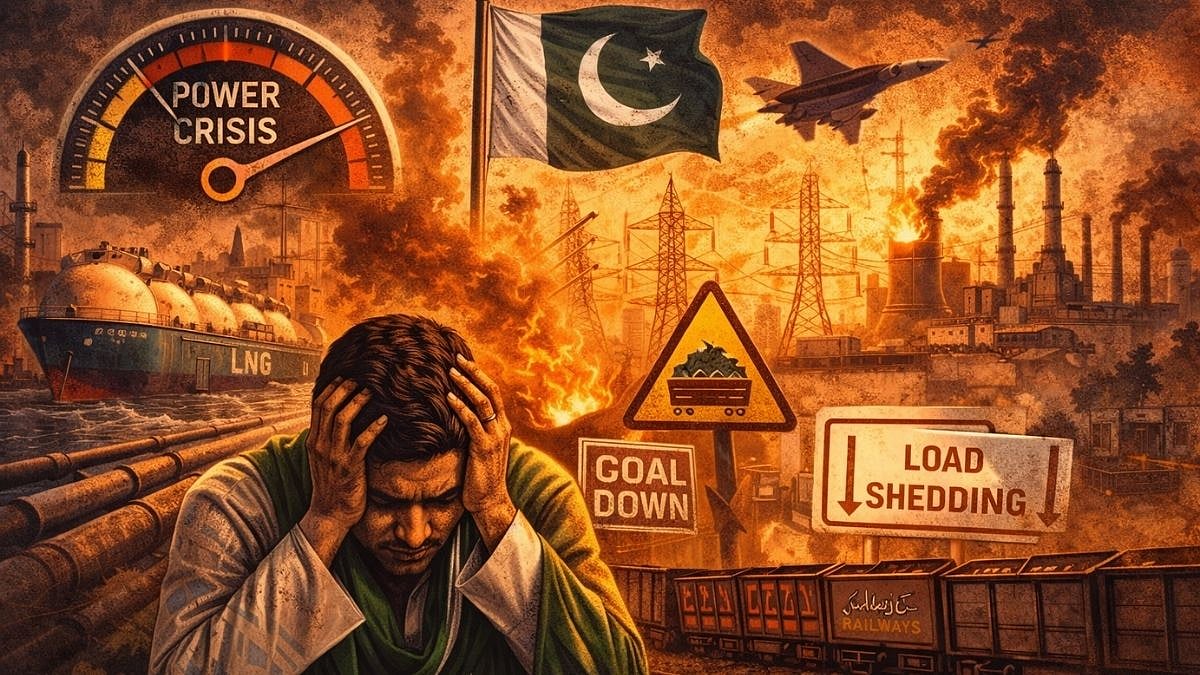
New Delhi, April 3: Pakistan’s LNG supplies are expected to fall to near zero from next month, removing a source that contributes more than one-fifth of total power generation, while coal availability is also under pressure, jointly affecting close to 30 per cent of supply, an article in the local media said.
Energy supply disruptions deepen crisis
The fallback option, furnace oil, comes at a steep cost, with generation expenses significantly higher than gas- or coal-based alternatives. These are structural shocks that no policy can fully offset in the short term, according to an article in the Karachi-based Business Recorder.
Load-shedding and tariff hikes planned
The Pakistan government plans to go in for two to three hours of daily load-shedding, higher tariffs, and conservation measures, but the effectiveness of this approach will depend less on its design and more on its execution, it stated.
Simple steps such as mandating early market closures or restricting high-consumption commercial lighting are neither novel nor difficult to implement. They have been used in the past with measurable impact.
Their omission from the core strategy suggests that the burden of adjustment may fall disproportionately on households and industry rather than on inefficient consumption patterns, the article lamented.
Domestic mismanagement adds to strain
It points out that domestic mismanagement is exacerbating the crisis, as disputes between Pakistan Railways and key coal-fired power plants have placed 1,500 to 1,800 megawatts of generation at risk. This is not an external shock; it is an entirely avoidable disruption.
Coal transport bottlenecks, refusal to load wagons, and delays in logistical coordination are undermining plants that are critical for grid stability. The fact that these issues persist in the middle of a supply crunch points to deeper administrative weaknesses.
Rising costs and broader impact
Reduced coal supply threatens additional load-shedding beyond what is already planned, while also increasing reliance on more expensive fuels. At the same time, Pakistan Railways stands to lose a significant portion of its freight revenue, creating a situation where inefficiency damages multiple parts of the system simultaneously, the article pointed out.
Also Watch:

Need for balanced response
The immediate crisis may have been triggered by external developments, but its severity will ultimately be determined by domestic choices. Managing demand intelligently and eliminating avoidable disruptions are as important as securing fuel supplies. Without that balance, the system will remain reactive, and the cost of each crisis will continue to rise, it observed.
(Disclaimer: Except for the headline, this article has not been edited by FPJ's editorial team and is auto-generated from an agency feed.)

