
MUMBAI: In the choreography of modern economics, inflation seldom storms the stage with theatrical drama. It usually enters quietly—through small increments in everyday necessities—until households realise that something fundamental has changed. India may be nearing such a turning point.
Official data released this week show retail inflation inching up to 3.21% in February from 2.74% in January. In isolation, the numbers appear benign, comfortably within the Reserve Bank of India’s tolerance band. Yet the calm surface of these statistics conceals a far more unsettled global landscape. Across West Asia, geopolitical tensions have once again placed energy markets on edge. Confrontations involving Iran, Israel, and the United States have transformed vital oil shipping corridors into potential flashpoints. Missile strikes, threats to maritime routes, and the spectre of broader regional escalation have injected a fresh layer of uncertainty into crude markets.
File Image |
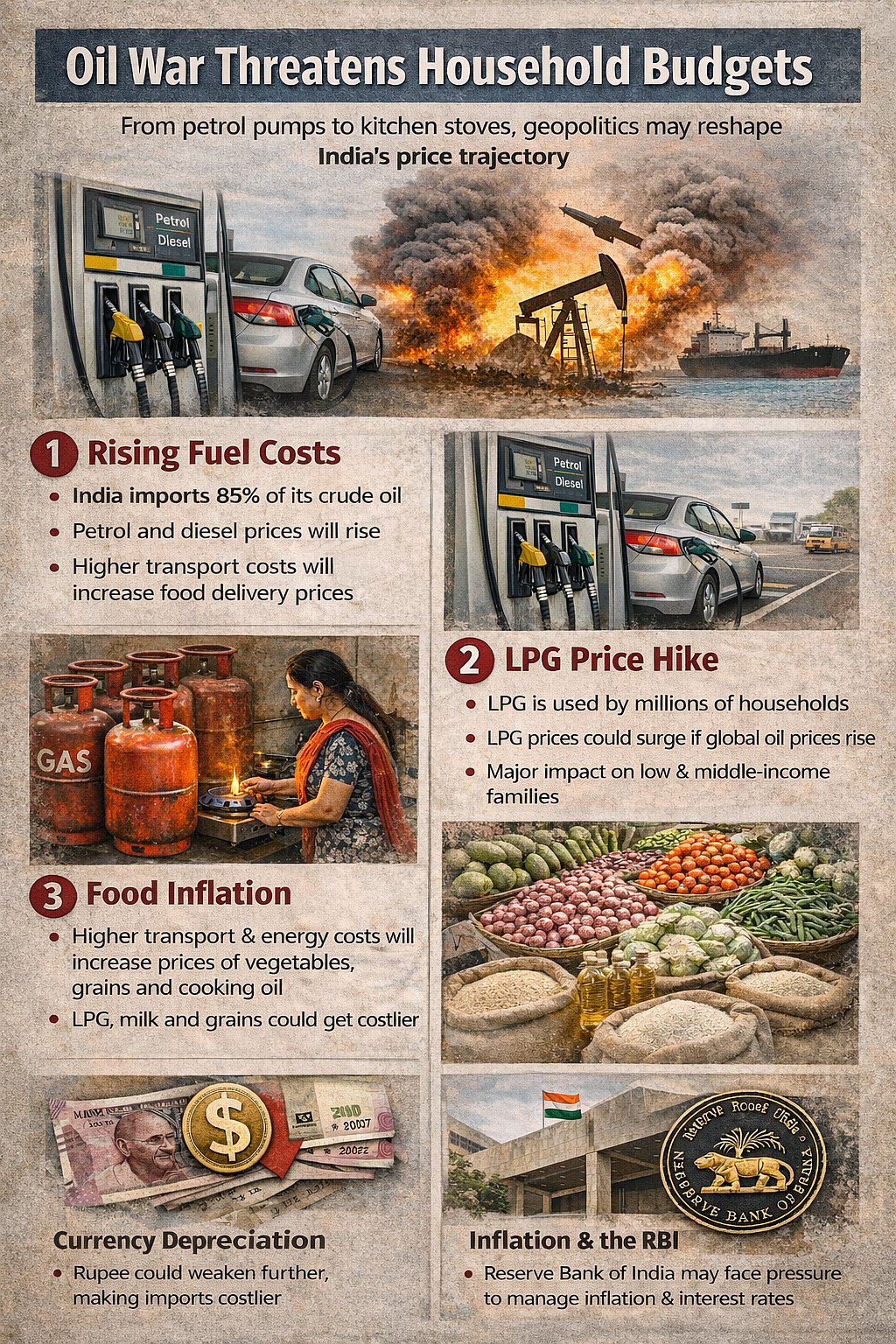
For India, such developments carry consequences that travel far beyond diplomatic headlines. The country imports nearly 90% of its crude oil requirements, making its economy unusually sensitive to swings in global energy prices. When oil rises, inflationary pressures rarely remain confined to refineries or fuel depots; they ripple outward through transport networks, food supply chains, and household energy consumption.
The most immediate signal would appear at the petrol pump. Diesel, the lifeblood of India’s vast logistics system, underpins the movement of goods from farms to urban markets. Higher diesel prices, therefore, function like a quiet tax on the entire economy. Every truck that carries vegetables, grains, or milk across the country’s highways embeds fuel costs into the final price consumers pay. The second pressure point lies inside the Indian kitchen.
Liquefied petroleum gas, a politically delicate commodity, has become central to household life through government-supported cooking programmes. Should global energy prices rise sharply, LPG cylinders may once again become more expensive, placing an immediate strain on millions of family budgets—particularly among rural and lower-income households. Food inflation could then follow with familiar inevitability. Transport costs feed directly into the price of staples. Vegetables, edible oils, dairy products, and grains often respond quickly to energy-driven logistics pressures.

Financial markets would not remain insulated either. Historically, surges in crude prices tend to weaken the Indian rupee, widening the import bill and reinforcing inflationary forces across sectors ranging from fertilisers to manufacturing inputs. All of this arrives at a delicate moment for policymakers. The Reserve Bank of India’s Monetary Policy Committee, scheduled to meet from April 6 to 8, faces the complex task of safeguarding price stability without choking economic momentum. Higher interest rates may tame inflation expectations, yet they risk dampening investment and growth at a time when India remains one of the world’s most dynamic major economies.
Meanwhile, the government must weigh fiscal realities against the political sensitivity of fuel and cooking gas prices. For now, inflation appears contained. But economic history suggests that oil shocks often move swiftly once geopolitical tensions disrupt supply expectations. Should the West Asian confrontation intensify—or even briefly threaten maritime energy routes—the quiet stability of India’s price environment could face its most serious test in years. In that sense, the distance between geopolitics and the household kitchen may soon become remarkably small.

