
The National Payments Corporation of India (NPCI) has reportedly received requests from merchant associations, fintech companies and payment firms to postpone the implementation of the Unified Payments Interface (UPI) merchant discount rate (MDR) until January 2027.
According to a Moneycontrol report citing sources, NPCI could decide on the proposed deferment within two days following discussions with the Finance Ministry.
The requests come ahead of the scheduled Oct 15, 2026, implementation, with industry participants raising concerns about unclear fee structures and operational readiness.
Merchants seek UPI MDR postponement until January 2027
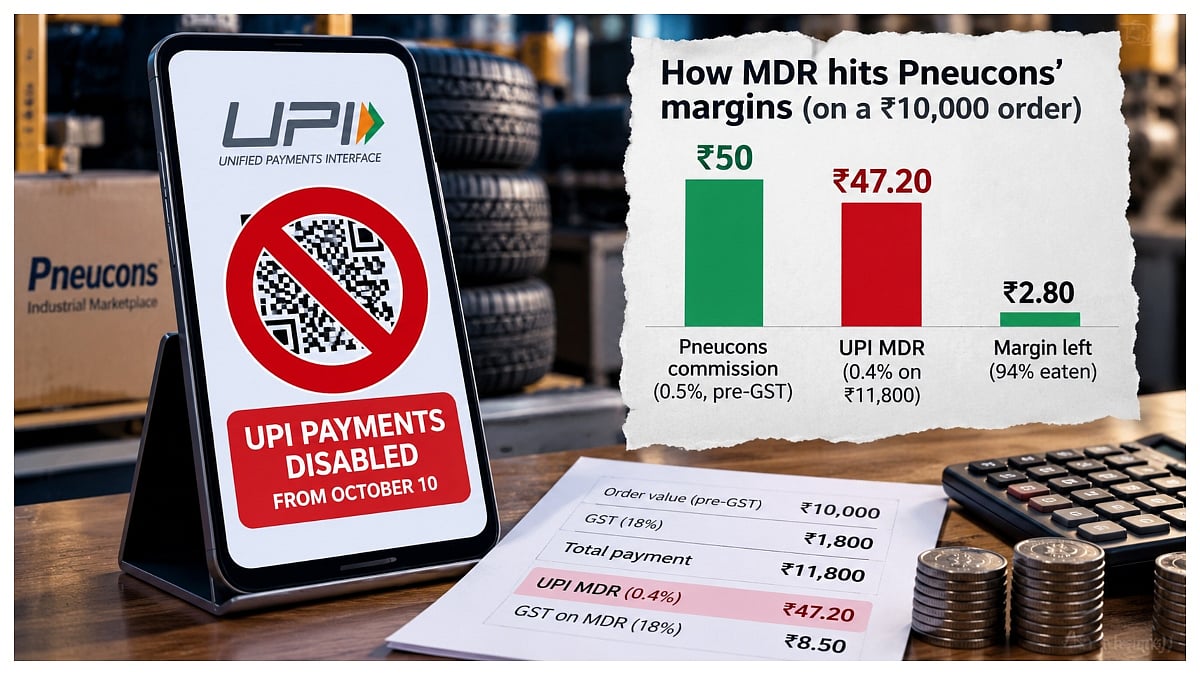
The UPI Steering Committee last month approved an MDR of 0.4%, equivalent to 40 basis points, on transactions exceeding Rs2,000.
MDR is the processing fee merchants pay banks for accepting digital payments.
At the proposed rate, merchants would pay Rs8 on a Rs2,000 transaction and Rs40 on a Rs10,000 payment, although the threshold would determine applicability.
Industry representatives have reportedly requested additional time because different transaction categories attract varying charges.
Sources cited by Moneycontrol said merchants were particularly concerned about introducing the fee during the festive shopping season.
The government is also reportedly worried that additional transaction costs could affect businesses already facing inflationary pressures.
Another concern is that merchants might recover MDR expenses by increasing prices for consumers, potentially weakening demand during festive sales.
NPCI had not immediately responded to the publication's request for comments.
Different UPI charges create confusion for payment firms
Unlike card payments, which generally follow relatively uniform pricing structures, UPI has proposed different MDR rates for categories including utility bills, loan repayments and capital market transactions.
Payment companies have raised questions about how these charges will apply across merchant categories and transaction types.
Some transactions covered by UPI's proposed pricing framework cannot be processed through credit cards under Reserve Bank of India (RBI) rules.
For instance, credit cards cannot be used for loan repayments or capital market transactions.
Before UPI gained widespread adoption, customers commonly used net banking, Immediate Payment Service (IMPS), National Electronic Funds Transfer (NEFT) and Real Time Gross Settlement (RTGS) for such payments.
Although these channels carried transaction charges, their fee structures differed from card-based MDR arrangements.

