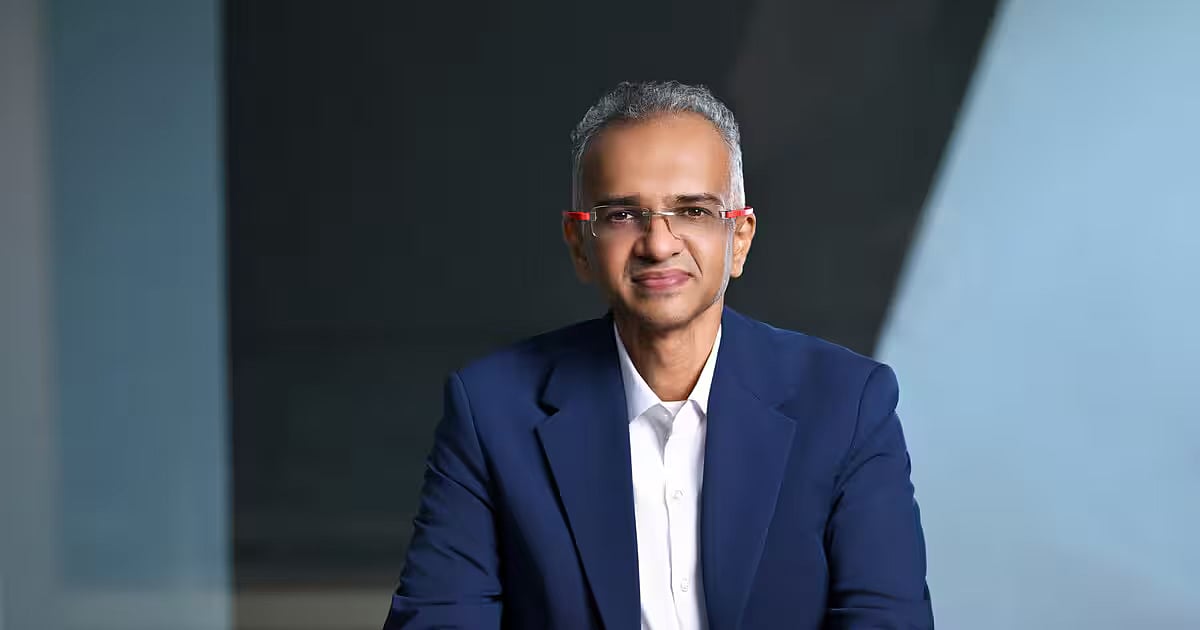
National Payments Corporation of India (NPCI) Managing Director and CEO Dilip Asbe on Wednesday said the organisation is engaging with businesses to clear concerns and misinformation surrounding the revised Merchant Discount Rate (MDR) framework for UPI transactions.
Speaking at the SBI Banking and Economics Conclave, Asbe said a majority of UPI payments would remain unaffected, as 96% of transactions are below ₹2,000.
He added that around 75% of transaction volumes would not come under the new MDR structure.

NPCI seeks to clarify MDR impact on merchants
“I believe there is huge miscommunication and misinformation in the system. The NPCI ecosystem and the government are trying to provide clear information… we have done some part of the outreach, whatever it is, in our limited capacity,” Asbe said.
He noted that merchants who do not currently accept credit card payments, accounting for around 10% of transaction value, could face challenges if they attempt to pass on MDR costs to customers.
Credit card transactions generally attract MDR charges between 1.5% and 2.5%, while debit card MDR is capped between 0.40% and 0.90%, depending on merchant turnover.
Asbe said most MDR-related costs would apply to existing credit card-accepting merchants who already pay such charges.
UPI ecosystem to benefit from MDR revenue
“About 75 percent of UPI merchants out of 60 million have never seen a transaction above Rs 2,000. If you look at this, 96 percent of the volume will not touch MDR. The 10 percent of merchants who might not accept credit cards… the ecosystem will have to ensure that the charges are not passed back to the customers,” he said.
NPCI introduced a revised MDR framework earlier this month, under which person-to-merchant UPI transactions above ₹2,000 will attract a 0.4% MDR from October 15. The charge will be capped at ₹300 for transactions of ₹75,000 and above.
Some merchants had started refusing UPI payments above ₹2,000 following the announcement.
Asbe said revenue generated through MDR or cost recovery would be deployed to strengthen the payments ecosystem, including merchant acceptance tools such as soundboxes and consumer technologies involving artificial intelligence and voice-based payments.

