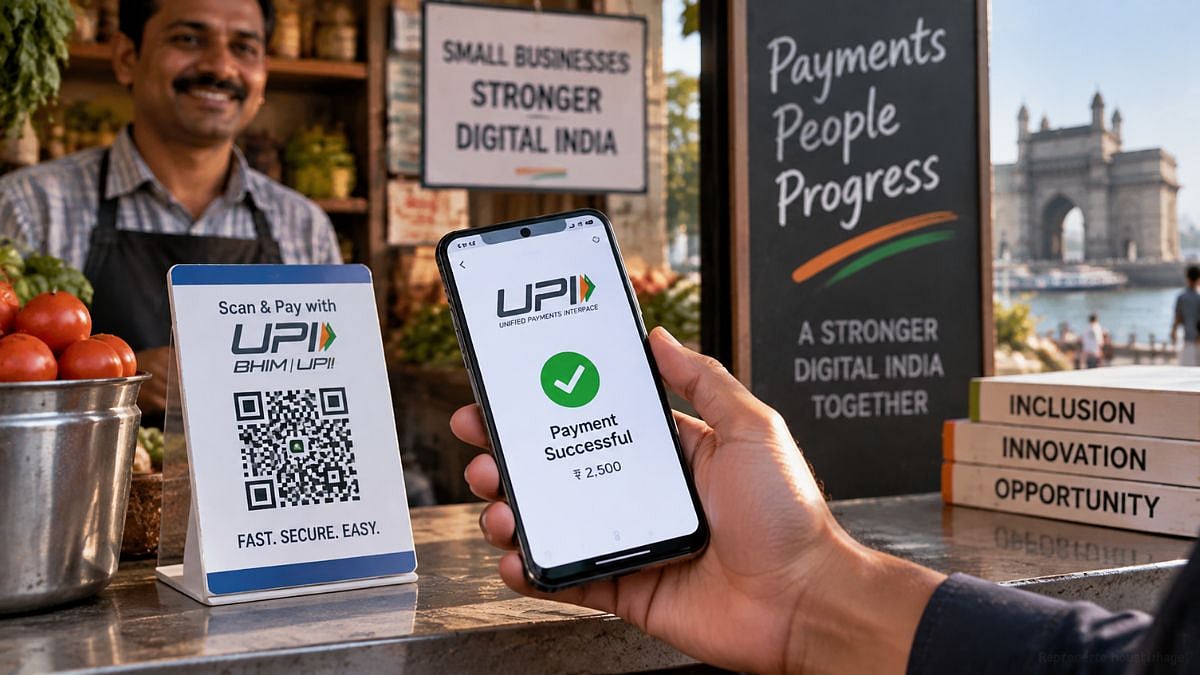
New Delhi: The government has introduced a new UPI framework, but most users will not have to pay any additional charges. All person-to-person transfers and nearly 96 percent of merchant transactions will remain free.
Here are five types of UPI transactions that will continue without any charge-
Money Sent To Individuals
All person-to-person UPI transfers will remain completely free, regardless of the amount. Users can send money to family members, friends or others without paying transaction or platform fees.
Money Received From Individuals
Receiving money through person-to-person UPI transactions will also remain free. Together, such transfers account for around 70 percent of the total value of UPI transactions.
Merchant Payments Up To Rs 2,000
Customers can continue making UPI payments of up to Rs 2,000 to merchants without any charge. These transactions will remain outside the Merchant Discount Rate, or MDR, framework.
Payments To Small Merchants
Street vendors, neighbourhood shops and other small merchants receiving up to Rs 1 lakh per month through UPI QR codes under the P2PM category will continue to enjoy zero MDR on every transaction.
Unlimited Personal UPI Usage
Individuals will continue to get unlimited free UPI usage without monthly quotas, transaction-volume restrictions or tiered free limits. UPI applications cannot impose platform fees or hidden charges.
Where MDR Will Apply?
A 0.4 percent MDR will apply to specified merchant transactions above Rs 2,000. It will be capped at Rs 300 for transactions worth Rs 75,000 or more.
Payments exceeding Rs 2,000 in essential sectors such as railways, fuel, insurance, telecommunications and agricultural inputs will attract a flat MDR of Rs 5.
Capital market payments involving mutual funds, securities, stockbrokers and dealers will face an MDR of 0.02 percent, capped at Rs 300.
However, customers will not pay this fee. MDR will be borne within the merchant-payment ecosystem and shared among banks, payment providers and UPI applications. Banks have been advised to prevent merchants from passing it to customers.

