
Mumbai: Shares of New India Assurance Company Ltd. continued their strong rally on Monday, rising for the seventh straight trading session and touching a fresh 52-week high.
The stock climbed as much as 6.6 percent during intraday trade to hit Rs 215.59 per share. Over the last seven trading sessions, the stock has surged nearly 47 percent.
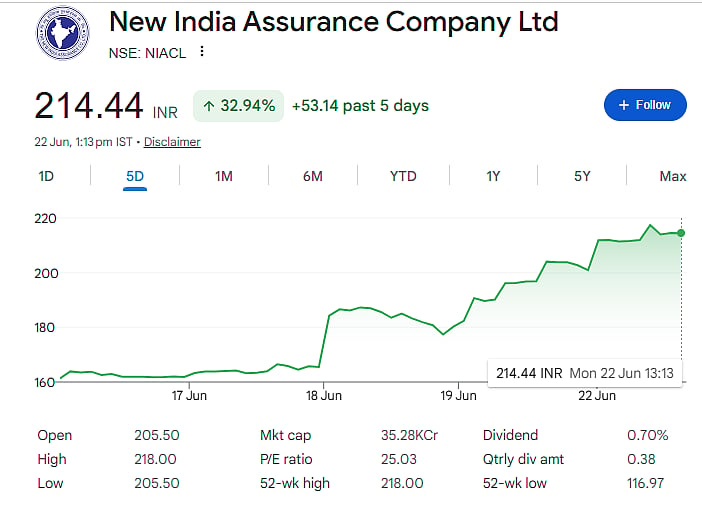
This is the company’s longest winning streak since November 2024, when the stock gained for 12 consecutive sessions.
NSE IPO Trigger Boosts Sentiment
The biggest reason behind the sharp rally is the upcoming IPO of National Stock Exchange.
New India Assurance recently featured among the selling shareholders in NSE’s draft red herring prospectus (DRHP), filed last week ahead of the exchange’s mega public issue.
As per the filing, the insurer plans to sell up to 1.05 crore NSE shares with a face value of Rs 1 each.
This development has significantly improved investor sentiment around the stock.
Huge Profit Potential From Share Sale
Market participants are focusing on the massive profit the insurer could make from the share sale.
The acquisition cost of New India Assurance’s NSE shares is only Rs 0.32 per share, according to the DRHP.

This means the company could generate a major windfall when the IPO takes place, boosting its financial position.
Investors see this as a strong positive trigger for the stock.
Low Free Float Adds to Rally
Another factor supporting the rally is the stock’s limited free float.
According to the March quarter shareholding pattern, the Government of India holds an 85 percent stake in the company, well above the 75 percent minimum public shareholding requirement.
Among public shareholders, Life Insurance Corporation of India owns 8.67 percent, while General Insurance Corporation of India holds 1.31 percent.
This leaves only a small portion of shares available for trading, which can amplify price moves when buying demand rises.
Even after the recent rally, the stock remains nearly 50 percent below its bonus-adjusted IPO price of Rs 400.
Disclaimer: Stock market investments are subject to market risks. Investors should carefully check company fundamentals and consult financial experts before investing decisions.

