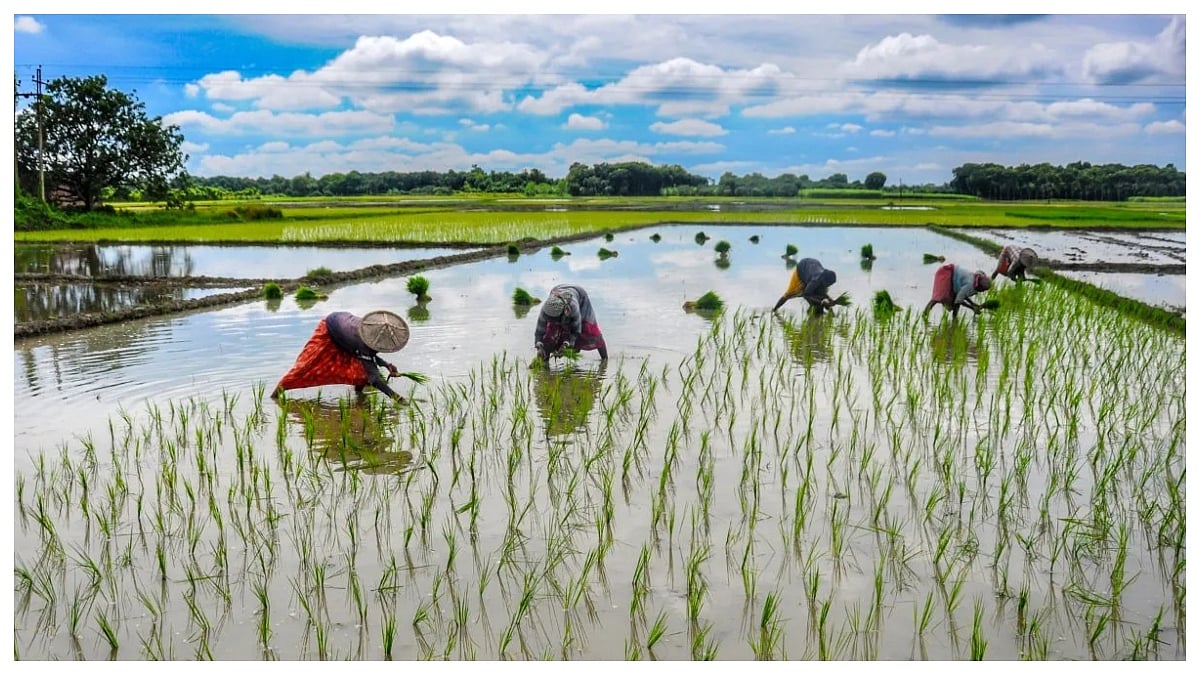
India’s southwest monsoon has picked up pace after a slow start, with the overall rainfall deficit narrowing to 12% as of July 7, raising hopes of a relatively stable kharif season despite expectations of a weak to moderate El Nino during the monsoon months.
A high-level review meeting chaired by Principal Secretary to the Prime Minister PK Mishra assessed the progress of the monsoon, agricultural preparedness and measures to minimise possible disruptions caused by changing weather patterns.
According to the Prime Minister’s Office (PMO), officials from the India Meteorological Department (IMD) informed the meeting that rainfall activity has improved significantly in recent days.
Although the monsoon arrived nearly 10 days late in states including Gujarat, Madhya Pradesh, Chhattisgarh and Maharashtra, the situation has improved following stronger rains in the first week of July.
The IMD presentation noted that the all-India rainfall deficit had reduced to 12% by July 7, with the first week of July recording above-normal rainfall. It also projected a weak to moderate El Nino influence during July and August.
The government highlighted that El Nino does not always result in poor rainfall and said historical trends show that an El Nino year can still witness normal or above-normal precipitation.
The review assumes importance as July is a critical month for the southwest monsoon, contributing more than 30% of seasonal rainfall and playing a major role in crop sowing and agricultural output.

The Agriculture Ministry informed officials that regular Crop Weather Watch Group meetings are being conducted with state governments to monitor rainfall patterns, reservoir storage, crop progress, availability of agricultural inputs, market conditions and possible pest-related challenges.
The ministry also said District Agriculture Contingency Plans have been updated for 262 vulnerable districts. Meanwhile, the Indian Council of Agricultural Research (ICAR) has issued standard operating procedures through its Krishi Vigyan Kendras to help farmers manage potential El Nino-related risks.
Officials noted that India’s foodgrain production has remained resilient despite uneven rainfall in recent years due to improved farming technology, climate-resilient crop varieties and better agricultural practices.
The government also reviewed preparedness in other sectors. The Department of Animal Husbandry and Dairying was asked to assess fodder availability, while the Department of Drinking Water and Sanitation was directed to strengthen monitoring and planning in vulnerable districts.

