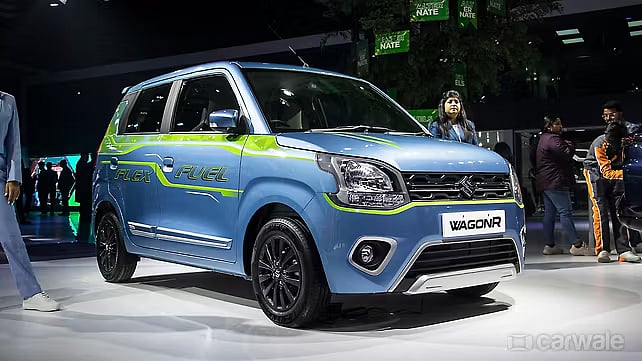
Maruti Suzuki India, the country’s largest carmaker, has launched the WagonR Flex Fuel at an ex-showroom price of ₹7.24 lakh, marking the first flex-fuel passenger vehicle to be introduced in the Indian market.
The model is currently available in a single variant, ZXI+ MT FFV.
The flex-fuel version is priced nearly ₹85,000 higher than the standard WagonR ZXI+ MT petrol variant, which costs ₹6.39 lakh (ex-showroom).
According to Maruti Suzuki’s official specifications, the WagonR Flex Fuel is designed to operate on ethanol-petrol blends ranging from E20 to E100.
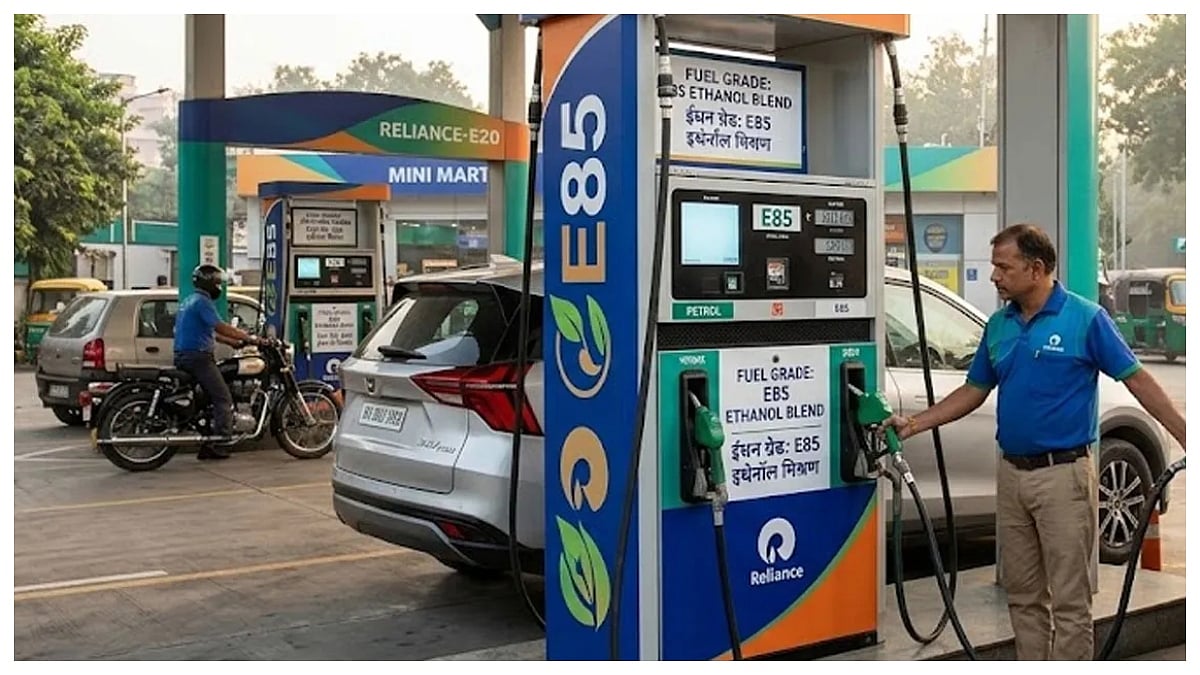
However, under existing Indian regulations, the vehicle is homologated for E85 fuel, which consists of 85% ethanol and 15% petrol.
Mechanically, the WagonR Flex Fuel retains the same K12N 1.2-litre, four-cylinder engine used in the standard model.
It delivers identical performance figures of 90.9 PS power and 113.7 Nm torque, paired with a 5-speed manual transmission.
Unlike the regular WagonR, the flex-fuel version does not currently offer an AMT (automatic) option.
The company has equipped the model with advanced ECU calibration technology, allowing the engine to adjust to different ethanol concentrations.
With this launch, Maruti Suzuki becomes the first Indian automaker to offer a complete range of powertrains, including electric, hybrid, petrol, CNG, and flex-fuel vehicles.
Being based on the top-spec ZXI+ variant, the WagonR Flex Fuel comes with a full set of features.
Exterior highlights include halogen headlamps, fog lamps, body-coloured bumpers, ORVMs with integrated turn indicators, and body-coloured door handles.
Inside, it offers a 7-inch touchscreen infotainment system, multifunction steering wheel, air conditioning, front and rear power windows, and 60:40 split-folding rear seats.
Safety equipment includes six airbags (standard across the WagonR range), ABS with EBD, electronic stability control, and hill hold assist.
The WagonR remains one of India’s best-selling cars, with around 1.80 lakh units sold in FY26, and was the country’s top-selling car for four consecutive years from FY22 to FY25.

