Mumbai: India’s life insurance sector is entering a critical inflection point, where delivering consistent service is no longer enough to secure customer loyalty. The latest findings from Hansa Research’s Life Insurance Customer Experience Score (CuES) 2026 report underline a subtle yet significant shift—customer satisfaction may be stable, but true “delight” is fading, and with it, strong advocacy.
Termed as “delight dilution”, the trend captures the industry’s growing struggle to convert acceptable service into memorable, high-impact experiences. While insurers have strengthened operational efficiency and ensured consistency across touchpoints, the report suggests that brands are increasingly blending into one another, limiting their ability to stand out in a competitive market. A key concern emerging from the study is the rise of passive customers—nearly 30% of policyholders fall into this category. These customers are satisfied but not enthusiastic enough to recommend their insurer, creating a latent risk for long-term growth.

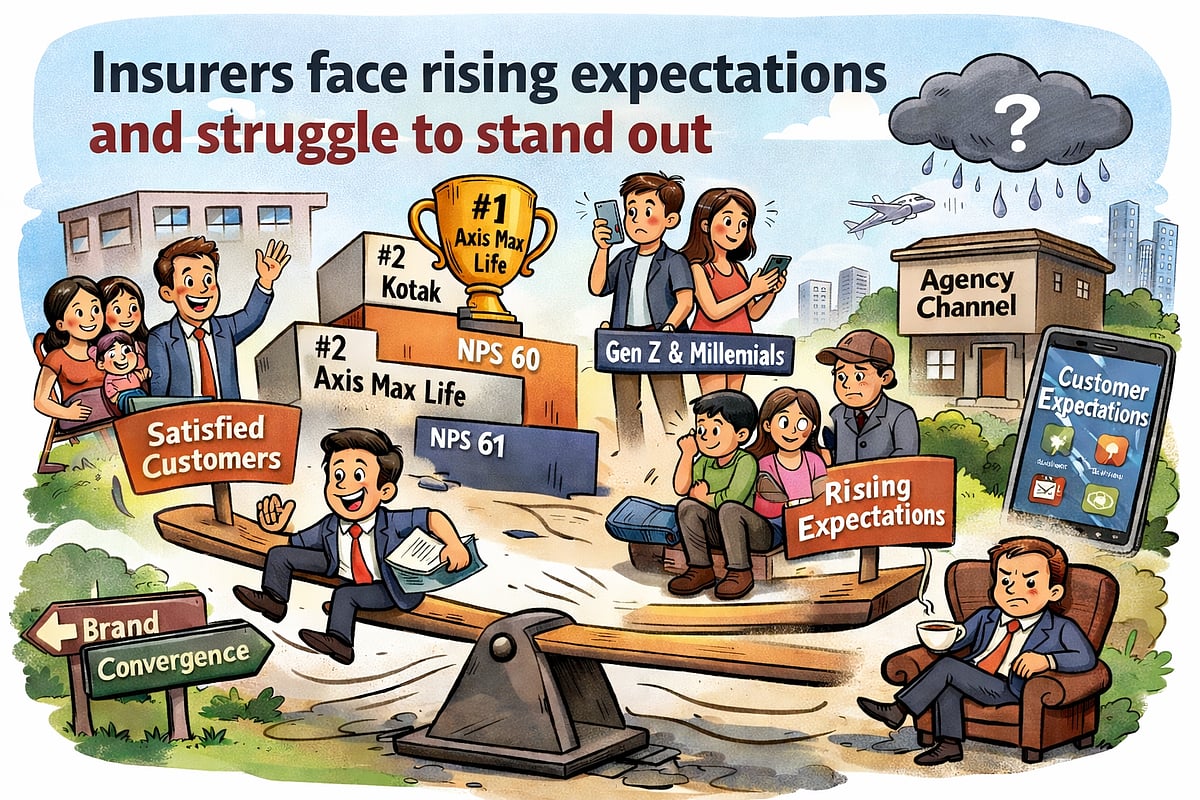
At the top of the rankings, Axis Max Life Insurance leads with a Net Promoter Score (NPS) of 61, closely followed by Kotak Life Insurance at 60, both demonstrating strong customer advocacy and performance across purchase, onboarding, and communication touchpoints. Other major players such as HDFC Life, ICICI Prudential Life, and Tata AIA Life Insurance also remain among top performers, highlighting a competitive yet converging landscape.
However, structural challenges persist. The agency channel—still dominant in non-metro markets—is emerging as an engagement bottleneck. Customer interaction often peaks during policy purchase but declines sharply thereafter, weakening long-term brand relationships. Limited digital adoption and reliance on intermediaries further exacerbate this disconnect.
“Most life insurance companies have improved operational performance, but experience delivery has stabilised with limited headroom to drive customer delight, leading to brand convergence and weaker differentiation,” said Praveen Nijhara, CEO, Hansa Research. Demographic shifts are adding another layer of complexity. Gen Z and Millennials, now entering the insurance ecosystem, are more demanding and less forgiving. They expect seamless digital journeys, transparency, and personalisation, yet report lower satisfaction across pricing, product range, and digital experience compared to older cohorts.
Meanwhile, premium customers are increasingly seeking high-touch, personalised engagement, while non-metro consumers continue to rely heavily on agents, with uneven service quality across regions. The report signals that the next phase of growth for life insurers will depend on their ability to move beyond transactional efficiency and build deeper emotional connections. In a market where expectations are shaped by best-in-class experiences across industries, insurers must rethink engagement strategies to transform satisfaction into sustained advocacy.

