A three-and-a-half-decade corporate war over control of Kolkata-headquartered Peerless Group—one of eastern India’s most prominent business conglomerates—reached a decisive moment at the Supreme Court.
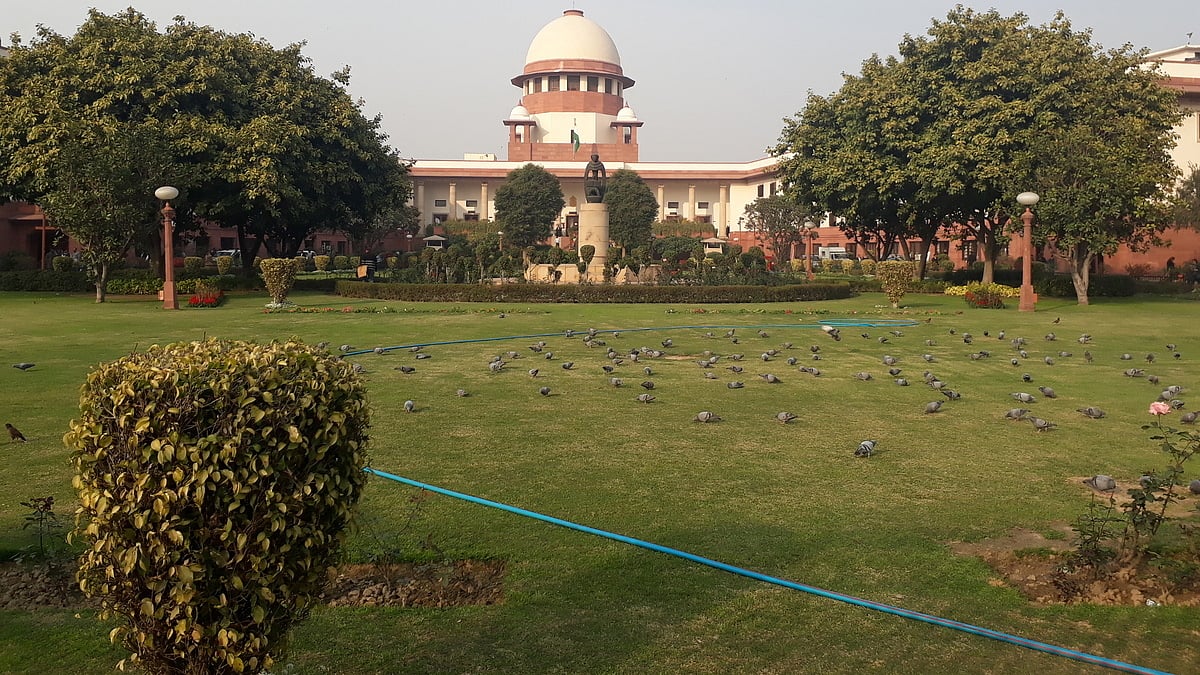
On Tuesday, a Supreme Court bench comprising Justices PS Narasimha and Alok Aradhe dismissed an appeal filed by minority shareholder Bhagwati Developers Private Limited (BDPL) against Peerless General Finance and Investment Company Limited (PGFI).
The judgment brings an end to a legal battle that began in the late 1980s, affirming corporate transactions that shaped the modern leadership of the financial-services-to-hospitality group.
Significantly, the case worked its way through the Indian judicial system over 35 years.
Who are the key players in the dispute?
The central entity in this legal conflict is Peerless General Finance and Investment Company Limited, a historic enterprise with business interests spanning healthcare, hospitality and real estate. Managing Director Jayanta Roy and the Roy family serve as the controlling promoters of the firm.
Opposing the promoters is Bhagwati Developers Private Limited, a minority shareholder led by Kolkata-based businessman Parasmal Lodha. Lodha, who claims to hold approximately 23 per cent stake in Peerless, took over the prosecution of the case from the original petitioners to challenge decisions made by the board of Peerless during the late 1980s.
In the Supreme Court, senior advocate Harish Salve represented Peerless, assisted by advocates Arunabha Deb and Ashika Daga. Senior advocate Gopal Subramaniam represented Bhagwati Developers, assisted by advocate Faraz Anees.
What triggered the initial legal warfare?
The seeds of the conflict were planted during the 1987–88 financial years. Facing a need to fortify its capital base, Peerless carried out a private placement of 30,000 equity shares—a measure approved by its board of directors and shareholders.
Around the same time, 15,626 shares were transferred by existing investors, including a transfer involving Lodha to entities linked to the Roy family. What appeared on paper as a routine corporate capital drive soon turned hostile.
In 1991, legal proceedings were initiated under Sections 397 and 398 of the Companies Act, 1956. Challengers alleged that the equity issuances were engineered specifically to transfer management control of Peerless to the Roy family and involved the illegal diversion or routing of corporate funds.
Although the initial petitioners later attempted to withdraw the suit, Bhagwati Developers was granted court permission to step in and press forward with the allegations, a report by LawTrend said.
How the case moved through courts and tribunals?
The dispute followed a long path through the Calcutta High Court and the Supreme Court over several decades before transitioning into the modern tribunal structure.
On July 18, 2022—more than 30 years after the challenged transactions took place—the Calcutta bench of the National Company Law Tribunal (NCLT) ruled in favor of Bhagwati Developers, declaring both the share issue and the sales void. At the time of that NCLT ruling, Lodha claimed his stake in the company was as high as 47 per cent.
Peerless appealed the NCLT order to the National Company Law Appellate Tribunal (NCLAT). On April 16, 2026, the NCLAT completely overturned the NCLT verdict.
After examining historical corporate records and contemporaneous filings, the appellate body determined that the share allocations were backed by proper corporate authorisations, clearing Peerless of all allegations of financial misconduct.
Unhappy with the appellate ruling, Bhagwati Developers mounted its appeal before the Supreme Court.
Why did the Supreme Court reject the appeal?
The Supreme Court bench found no reason to disturb the NCLAT ruling, declining to interfere with the appellate tribunal’s findings. By dismissing the appeal, the top court confirmed that the share issuances and transfers carried out in 1987–88 were conducted in good faith, in compliance with statutory norms, and in the commercial interest of the institution.
In a statement carried by The Telegraph, Arunabha Deb, managing partner at Avijit Deb Partners, said that a few corporate decisions survive 35 years of active legal challenges, making the dismissal a complete judicial validation of the company's past actions.
What does the judgment mean for Peerless and Bhagwati Developers?
For the Roy family, the ruling secures their long-standing management control over Peerless and clears decades of legal uncertainty hovering over the company's capital structure.
In a public statement following the verdict, Jayanta Roy expressed gratitude that decisions made in the institution’s best interest were upheld, remarking that the conclusion allows Peerless to turn its attention fully to future operations.
However, Parasmal Lodha expressed strong disagreement with the outcome and signaled that his fight might not be entirely finished.
Speaking after the verdict, Lodha asserted that the Supreme Court decision does not mark the end of litigation, stating that multiple legal avenues remain open and indicating that a review petition is likely to be filed.

