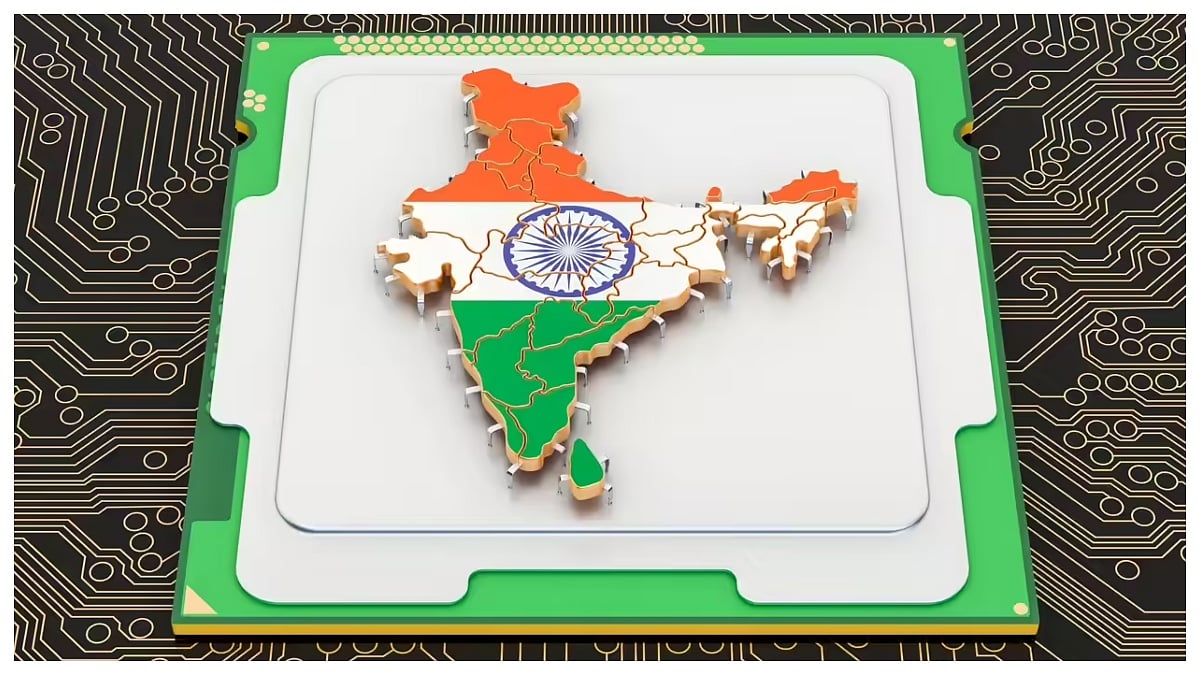
New Delhi: Huge investments and strategic global partnerships have positioned India as a competitive hub in the global chip supply chain, according to a new report.
Backed by government schemes offering up to 50 per cent fiscal support, India’s semiconductor market is projected to grow from $45-50 billion in 2024-25 to $100-110 billion by 2030, said the report in India Narrative. The India Semiconductor Mission (ISM), which operates under the Ministry of Electronics and Information Technology, runs several schemes including the Semiconductor Fabs Scheme, Display Fabs Scheme, Compound Semiconductors and ATMP/OSAT Scheme, and the Design Linked Incentive (DLI) Scheme.

Semiconductor Fabs Scheme and Display Fabs Scheme offer up to 50 per cent financial aid for projects falling under their respective domains. DLI scheme offers incentives up to Rs 15 crore per chip design startup or MSME and 22 chip design projects have been funded till date. The government has sanctioned four new semiconductor projects in Odisha, Punjab, and Andhra Pradesh this month, elevating total approved projects to 10.
Prime Minister Narendra Modi, in his 79th Independence Day address from the Red Fort, declared that Made-in-India semiconductor chips will be available in the market by the end of 2025. Industry giants like Tata Electronics, Micron, and Foxconn are establishing facilities in Gujarat, Uttar Pradesh and Assam, fostering job creation and reducing import dependency.
The 2025 SEMICON India Exhibition is expected to attract 300+ exhibitors from 18 countries, cementing India’s reputation as an emerging global semiconductor destination. The semiconductor industry is central to communications, healthcare, transportation, defense, and space technologies and is a matter of economic security and strategic autonomy for India.
A few countries - Taiwan, South Korea, Japan, China, and the US - currently dominate the global chip industry. Recent global supply chain disruptions proved the risk of such concentration, prompting India to invest heavily in supply chain diversification. Global partnerships with Lam Research, IBM, Purdue University, and Applied Materials enhance technology transfer. Several training programs in India aim to skill 85,000 engineers in semiconductor specialisation by 2032.
Disclaimer: This story is from the syndicated feed. Nothing has changed except the headline.

