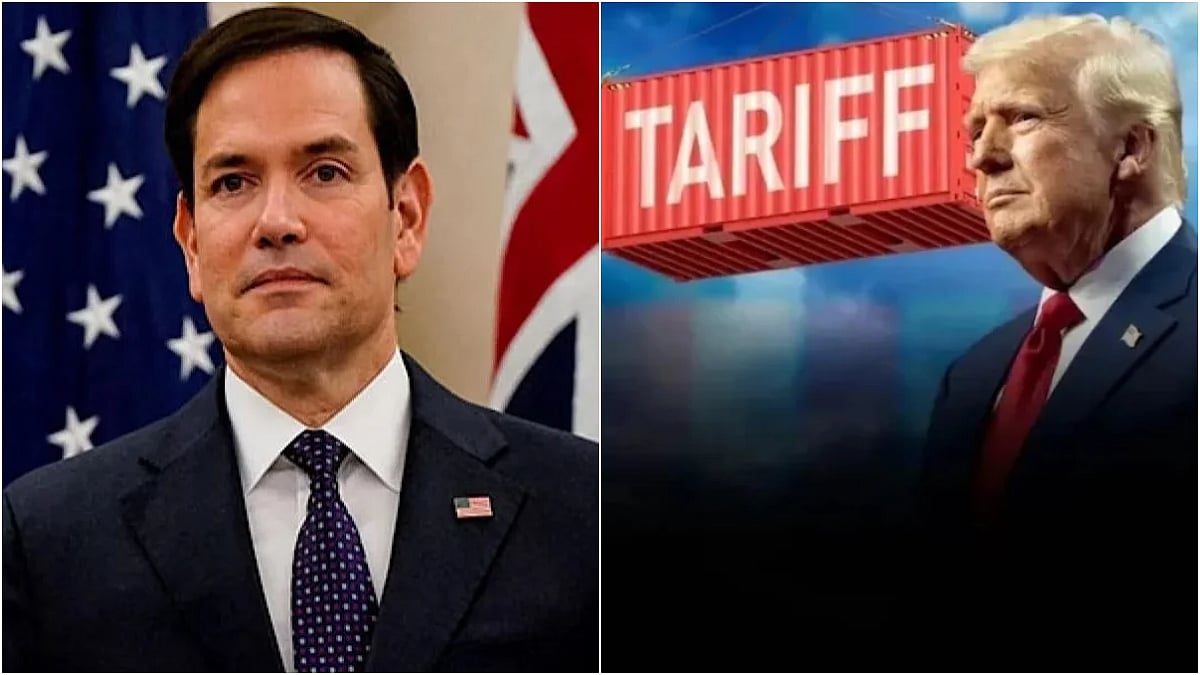
US Secretary of State Marco Rubio has said that Washington considered its ongoing trade negotiations with India while deciding to waive certain sanctions linked to Russian oil purchases.
Speaking at a press conference in Uzbekistan on Monday, Rubio indicated that the United States was balancing geopolitical concerns with global energy security and bilateral economic relationships.
His comments came ahead of his scheduled visit to Mumbai on Oct 20, where he is expected to meet External Affairs Minister S Jaishankar.
The remarks followed Washington's reported decision to pause sanctions provisions under the Lindsey O Graham Sanctioning Russia and Iran Act of 2026.
Trade Deal Close To Conclusion
Rubio said negotiations between India and the United States were approaching completion.
"We're trying to finalise a trade deal with India right now. We're very close to doing that," he said.
He acknowledged that the progress of bilateral trade discussions was among the considerations influencing Washington's sanctions decisions.
The two countries have reportedly reached a broad understanding on several tariff-related issues.
However, proposed US tariffs linked to India's Russian oil purchases had remained a major obstacle.
The reported easing of the threat of 100% tariffs could create additional room for negotiations, although no final agreement has been announced.
US Weighs Global Energy Prices Against Russia Sanctions
Rubio said sanctions policy must account for energy shortages, rising fuel costs and the difficulties some countries face in securing alternative supplies.
He noted that diesel prices remained elevated internationally and that Washington needed to consider the economic consequences of further restrictions.
Rubio also emphasised that US foreign policy towards Russia could not be determined solely by the Ukraine conflict.
India's Ministry of External Affairs has maintained that energy security remains a priority, with sourcing decisions guided by changing market conditions.
New Delhi has also raised concerns with Washington about the potential implications of sanctions legislation.
Meanwhile, India and other G20 countries recently pledged action against structural industrial overcapacity in sectors including automobiles, batteries, chemicals, semiconductors and solar panels.
The developments come as both governments seek to resolve outstanding trade differences while managing broader strategic and energy-related concerns.

