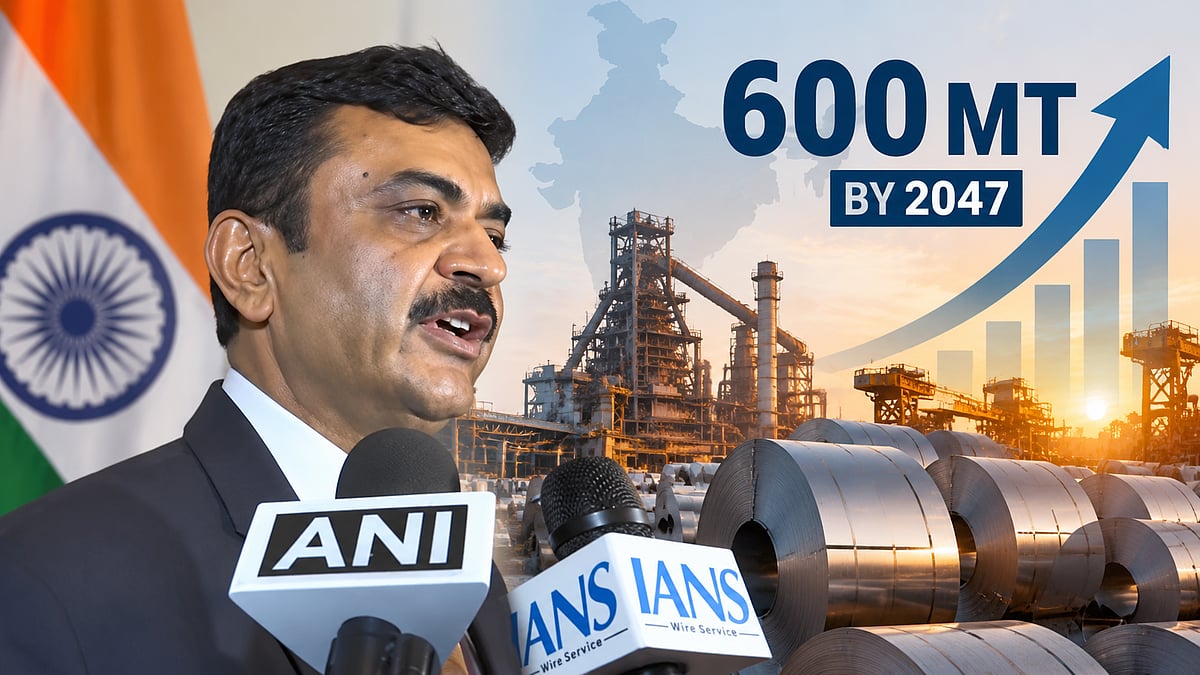
India's new steel policy aims to increase steelmaking capacity to 600 million tonnes by 2047, providing a roadmap for the next two decades, Steel Secretary Sandeep Poundrik said on Tuesday.
The draft policy, reviewed by Reuters, is expected to be released in the public domain soon. It also proposes measures to reduce emissions from the sector and strengthen access to key raw materials such as iron ore and coking coal to meet anticipated demand.
The Union Ministry of Steel did not immediately respond to a Reuters email seeking comment.
India was a net importer of finished steel between April and August, importing 3.5 million tonnes of the alloy, 29.5% more than a year earlier. China accounted for 31.8% of these imports, making it the largest exporter of finished steel to India during the period.
India's steelmaking capacity stood at 220 million tonnes in fiscal 2026.
Raw materials, exports pose challenges
Availability of raw materials and exports remain major challenges for the steel sector, particularly as countries increase trade barriers, Poundrik told reporters on the sidelines of an event.
Indian steel prices are expected to rise further in the coming weeks as a post-monsoon revival in infrastructure and automotive demand tightens the market. Higher coking coal costs are also expected to increase production expenses for steel mills, executives and analysts told Reuters.
Policy targets lower emissions
The draft policy aims to reduce the sector's average carbon emission intensity to around 1.54 tonnes of carbon dioxide per tonne of crude steel by 2047, from the current 2.54 tonnes.
The target is aligned with India's goal of achieving net-zero emissions by 2070, according to the draft document.
The Steel Ministry expects iron ore demand to reach 772 million tonnes and plans to secure access to high-grade reserves by pursuing overseas assets and joint ventures, the document said.
Also Watch:
Government plans to diversify coking coal supply
Coking coal demand is expected to reach 214 million tonnes, according to the draft.
The government plans to diversify its sources through “strategic global outreach” and acquire overseas assets to strengthen supplies, the document said.

