
India needs to reduce its reliance on imports by developing competitive domestic manufacturing capabilities as global supply chains become more uncertain and trade restrictions increase, Pramod Kumar Mishra, principal secretary to Prime Minister Narendra Modi, said while speaking at the 13th SBI Banking and Economics Conclave 2026 in Mumbai on Wednesday.
Mishra highlighted concerns over India’s merchandise trade deficit and stressed the importance of producing goods within the country.
“We have a significant merchandise trade deficit. We must make things at home and competitively,” Mishra said.
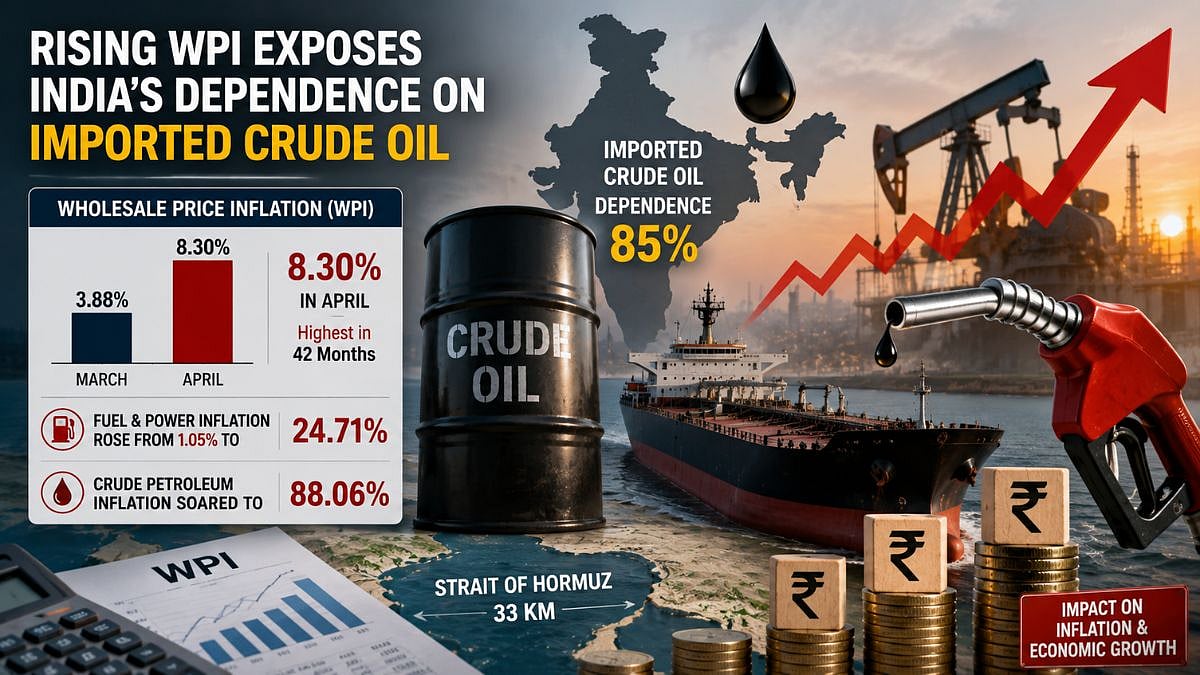
India faces rising global trade challenges
According to commerce ministry data, India’s merchandise trade deficit increased to $147.09 billion during April-August of FY27, compared with $123.88 billion in the same period a year earlier.
Mishra said that despite strong economic fundamentals, India needs to remain alert to risks emerging from global developments.
“Supply chains are being used as weapons. Capital can be switched on and off. Trade barriers, both tariff and non-tariff, are rising again. We cannot count on a friendly trade agreement,” he said.
He called for improvements in manufacturing, workforce skills and foreign direct investment (FDI) inflows. He also emphasised the need for predictable tax policies, reliable logistics systems and smoother approval processes.
“That calls for stability of tax policy, contracts that states enter into, logistics that can be relied on, and clearances that actually clear,” he said.
Financial system must support future growth
Mishra also pointed to artificial intelligence as a major emerging challenge requiring preparation.
“Artificial intelligence is developing at a fast pace. We do not yet know its full shape. We need to prepare for it,” he said.
He said India’s financial system must shift from merely expanding access to actively enabling economic growth. While banks will continue to play a key role, India will require stronger bond markets, institutional investors and infrastructure funds to finance future needs.
Mishra also advocated greater adoption of cash-flow-based lending for small businesses to reduce barriers such as documentation delays, collateral requirements and lengthy approval processes.

