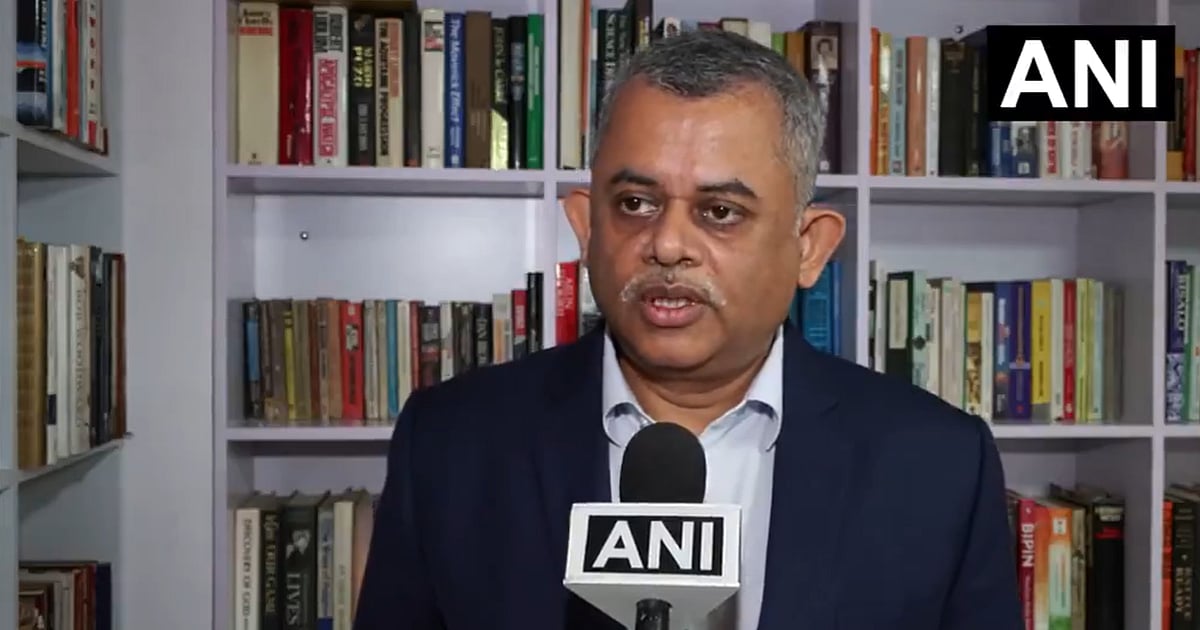
India could record stronger economic growth than the Reserve Bank of India currently expects, according to Neelkanth Mishra, India's newly appointed Executive Director at the World Bank.
The RBI on Friday lowered its GDP growth forecasts, projecting growth of 6.6 percent for FY26, down from 6.9 percent earlier, and 6.3 percent for FY27, compared with its previous estimate of 6.7 percent.
However, Mishra believes the central bank's projections underestimate the strength of the economy. He said internal assessments suggest India's economy expanded at close to 8 percent during February and March, according to a report by ANI.

"I think RBI's forecasts are too conservative. The economy is doing much better than what they are factoring in," Mishra said, adding that central banks often tend to adopt a cautious stance while making official forecasts.
Mishra also defended the RBI's decision to leave interest rates unchanged and maintain its current policy stance. According to him, there is no evidence of persistent inflationary pressures that would require higher borrowing costs.
He argued that temporary inflation driven by rising crude oil prices should not automatically lead to rate hikes unless oil prices remain significantly elevated, suggesting that a sustained move above USD 130 per barrel would be a more serious concern.
Mishra also criticised the idea of using interest-rate increases to support the rupee during periods of market volatility. He said such measures are costly for economic growth and often fail to prevent currency weakness.

"Without any signs of sticky inflation, raising rates would have been unwise," he said. "Using rate hikes to manage currency-market panic is a costly tool and often does not work effectively."
On the fiscal front, Mishra said it is still too early to make firm predictions about nominal GDP growth or potential changes in government finances. He noted that much will depend on trends in GST collections and corporate tax revenues in the coming months.
With only two months of the current financial year completed, he said more data is needed before drawing conclusions about the economy's overall performance.

