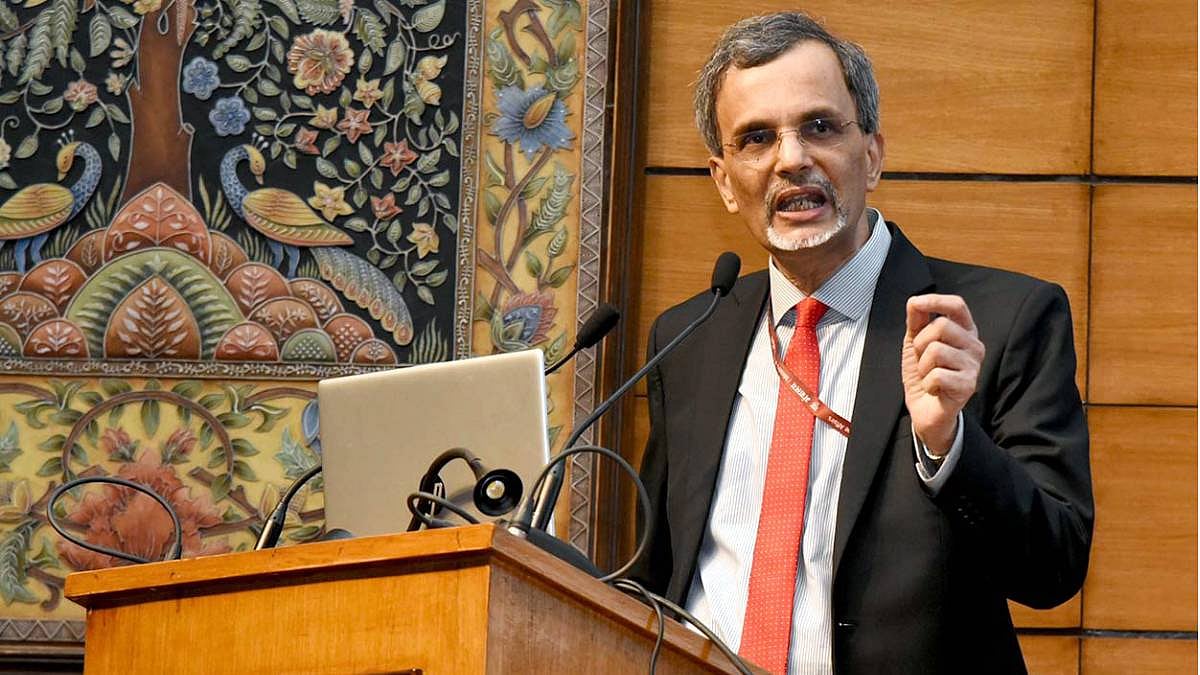
India's limited exposure to the global artificial intelligence (AI) investment boom could emerge as an economic advantage if investor enthusiasm for the technology weakens, Chief Economic Advisor V Anantha Nageswaran has said.
Speaking at the SBI-Amundi India Investor Seminar on Thursday, Nageswaran suggested that global investors currently overlooking Indian equities could return as they seek growth opportunities beyond AI-related businesses.
He also cautioned that the rupee, which has faced depreciation pressure and moved towards record lows, could remain under strain.

India could gain if AI investment boom slows
Nageswaran acknowledged that the absence of major AI-focused investment opportunities in Indian equities has contributed to weaker foreign investor interest.
However, he argued that this apparent disadvantage could become a strength within a year if the global AI investment cycle encounters difficulties.
He described the AI boom as a borrowing-driven investment story and suggested that a correction could redirect international capital towards economies offering sustainable growth.
India, he said, could benefit from its position as a later adopter of AI technologies.
According to Nageswaran, investors seeking alternatives to AI-dependent growth may eventually reconsider India's economic fundamentals.
Rupee faces global headwinds
The Chief Economic Advisor identified four external factors affecting foreign capital flows and the Indian currency.
These include strained relations with the United States, limited exposure to the AI investment trade, rising oil prices linked to the West Asia conflict and monetary tightening by global central banks.
As a major oil importer, India remains vulnerable to increases in international crude prices.
Nevertheless, Nageswaran highlighted several domestic strengths that could support investor confidence.
He pointed to India's ability to sustain economic growth above 7% despite repeated international disruptions.
Other positive factors include a manageable current account deficit, a well-capitalised banking system and relatively low corporate borrowing.
The increasing movement of household savings into domestic capital markets has also strengthened India's financial position.
Nageswaran maintained that these underlying indicators present a healthier picture of the economy than movements in the rupee alone.
He expressed confidence that India's growth prospects would eventually attract renewed international investment interest.

