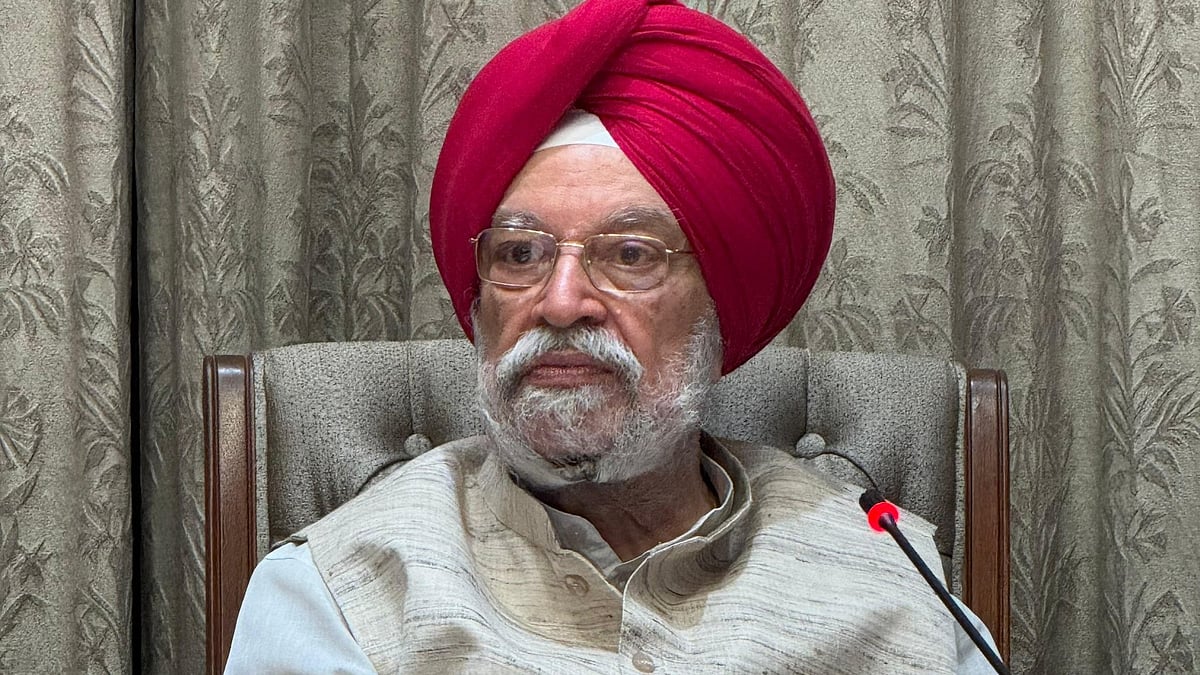
Hardeep Singh Puri said on Thursday that increases in petrol and diesel prices in India have remained “very, very minor” compared with most countries despite global geopolitical disruptions.
He also outlined the government's roadmap for the nationwide rollout of flex-fuel vehicles and ethanol infrastructure.
India Maintains Fuel Price Stability
Speaking at the launch of the Maruti Suzuki Wagon R Flex-Fuel in New Delhi, Puri said India ranks among the countries with the lowest increase in fuel prices globally.
"In my calculation, India comes after Japan as the country which has the lowest increase in fuel prices amongst all the 193 countries in the world," he said.
“In India, the prime minister on his own took the decision to reduce the central duties on petrol and diesel by Rs 10 which led to a budgetary (loss) of Rs 1 lakh crore. The petrol and diesel price increases are very very minor,” Puri said.
The minister attributed the relative stability in fuel prices to India's broader energy strategy, which focuses on diversifying fuel sources, reducing dependence on imported crude oil and increasing the use of domestically produced biofuels.
Flex-Fuel Rollout Gains Momentum
Puri said flex-fuel vehicles (FFVs) are poised for rapid expansion after E85, a fuel blend containing up to 85% ethanol, was identified as the mono-fuel standard under Bureau of Indian Standards (BIS) specifications.
"I think success is ensured," he said, referring to the government's phased rollout plan for flex-fuel vehicles across different segments.
According to the minister, the supporting fuel infrastructure is also being expanded. The government plans to start with around 50-100 ethanol dispensing stations across the Delhi-NCR and Mumbai-Pune-Nagpur corridors and increase the number to 500 by December this year.
Ethanol Infrastructure Expansion Planned
The ethanol dispensing network is expected to expand significantly over the coming months, with thousands of outlets planned across major cities by the end of next year.
Puri said the shift from conventional fuels to ethanol-based alternatives would contribute to cleaner mobility, strengthen India's energy security and support rural incomes.
"This is not merely a product launch. This is the beginning of a new chapter in India's energy transition," he said.
The minister noted that India has more than 30 crore two-wheelers and around 37 lakh passenger vehicles on its roads, making the adoption of flex-fuel technology in mass-market vehicles a significant step towards reducing fossil fuel consumption.

