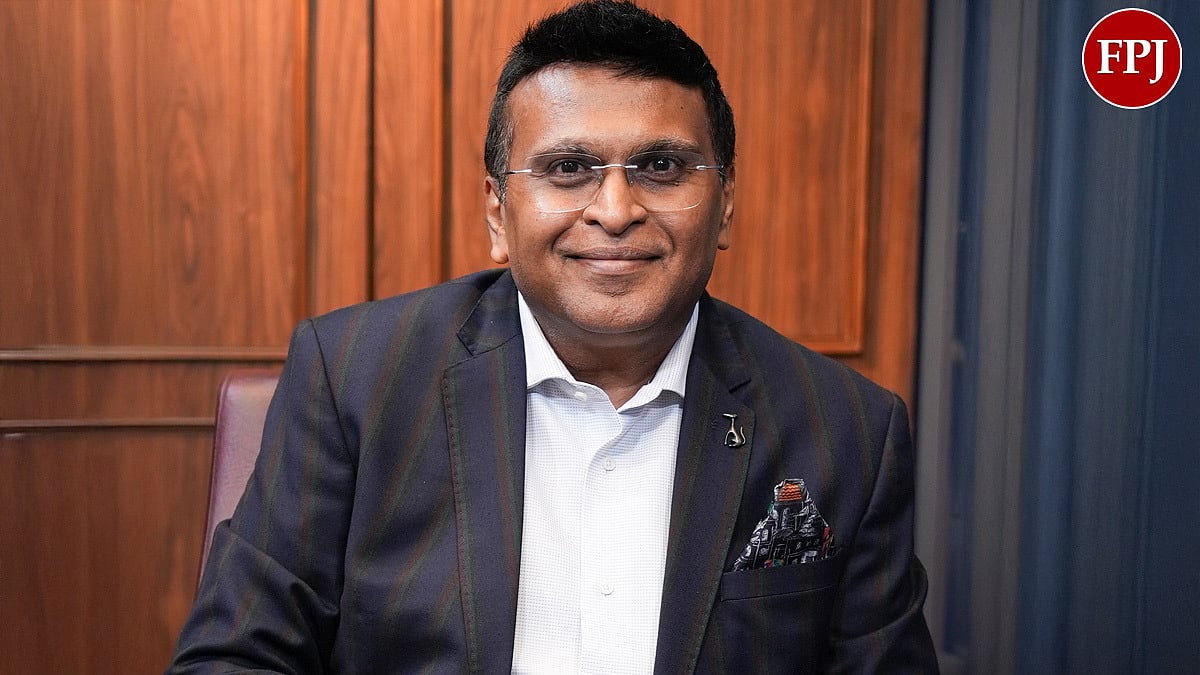
In an exclusive conversation with Sheryll D’Souza, Business Editor-Consulting, The Free Press Journal, Devang Mehta, Deputy Managing Director & CIO – Equity, Spark Capital Private Wealth Management, decodes market cycles, investor behaviour and India’s long-term growth potential. He explains why investor psychology often outweighs short-term market volatility, highlights the rising influence of domestic capital, and underscores the importance of disciplined investing in quality businesses to build sustainable wealth amid evolving market conditions.
You have spent more than two decades in financial markets. How has your investing journey evolved?
My investing journey started very early, around the age of 14, when my father introduced me to IPO investing. That early exposure helped me understand businesses and long-term wealth creation. Over the years, I have worked across leading financial institutions, and one lesson has remained constant—investing is not just a profession; it is a lifelong passion. Markets reward those who stay patient and disciplined.
Having witnessed multiple market crashes, what is the biggest lesson market cycles teach?
Every market cycle teaches humility. The trigger behind every crash changes—1992 had the scam, 2000 had the dot-com bubble, 2008 had the subprime crisis, and 2020 had Covid. But one thing remains constant: human behaviour. Greed and fear drive markets. I always say, you do not lose when markets panic; you lose when you panic.
Can investors apply lessons from past crashes to future cycles?
Yes, but mainly on the behavioural side. No one can predict the exact trigger of the next crisis. What investors can control is their response. Focus on what is within your control—portfolio quality, asset allocation and risk management—not headlines or global noise.
Many first-time investors entered after Covid. Has investor behaviour changed?
Absolutely. Earlier, people asked for one stock idea that could change their lives. Today, investors ask whether they should continue SIPs during volatility. That is a major sign of maturity. Domestic investors now understand compounding better and are investing with a longer horizon.

How important are domestic investors in today’s market?
Extremely important. Earlier, markets were heavily dependent on foreign portfolio investors (FPIs). That has changed significantly. Domestic investors, mutual funds and retail participation now provide strong support to markets. This reduces dependence on foreign capital and makes Indian markets more resilient.
There is a lot of debate around AI. Where does India stand in the AI race?
India is not purely an artificial intelligence trade; India is a real intelligence trade. Many global markets are driven by AI-related themes, but India’s growth story is broader and more fundamental. Our strength lies in consumption, infrastructure and financialisation.
What sectors or themes excite you the most in India?
I call them the three Cs. First is Consumption, because rising income and aspirations are driving demand. Second is Capex, as infrastructure spending on roads, ports, railways and logistics is creating long-term growth. Third is Credit Growth, supported by rising financial participation and wealth creation.

You have often been cautious on IT. Why?
IT remains a strong sector, but we prefer businesses with a much larger growth runway. We focus on opportunity size. If a sector can grow 5x or 10x over time, it becomes more attractive. Many niche sectors currently offer stronger growth visibility than traditional IT.
Why are mid-cap and small-cap companies attracting investors?
Because the quality of companies has improved significantly. Corporate governance standards are better, management quality has improved and many niche businesses operate in fast-growing industries. But investors must remember one thing—do not treat all mid-caps and small-caps the same. Proper due diligence is essential.
Your final message to investors?
Think long term. Give yourself at least five years in the market. You will make mistakes—that is part of investing—but avoid costly mistakes. Stay realistic, stay disciplined and trust the power of compounding. India offers a strong wealth-creation opportunity for patient investors.

