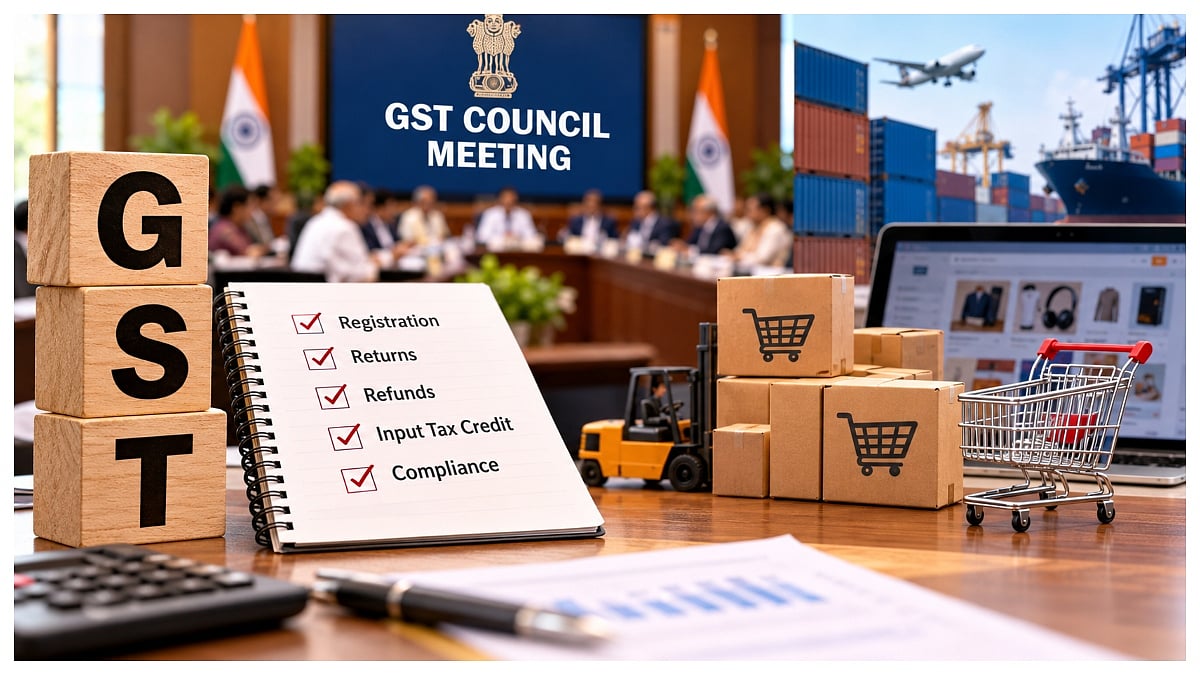
New Delhi: E-commerce companies, industries and traders could get major compliance relief as the GST Council considers proposals to simplify registration, returns, refunds and input tax credit rules.
While no major change in headline GST rates is proposed, several measures aimed at reducing compliance hurdles and disputes could be considered. Relief may also be extended to goods delivery services, exporters, Global Capability Centres (GCCs) and treatment linked to seven rare diseases.
Big Relief For E-Commerce?
One key proposal seeks to remove the need for e-commerce businesses to obtain separate GST registrations in every state.
The Council may also consider reducing GST on goods delivery services to 5 per cent from the existing 18 per cent. Waiver of late fees and reduction in penalties are among other proposals.
Exporters and GCCs could also receive relief. Supplies of products for testing and sampling may be exempted from the current 18 per cent GST.
Wider ITC Benefits For Industry
Businesses could get a wider scope for claiming Input Tax Credit (ITC). The proposals include allowing ITC on certain expenses related to employee insurance and vehicles.
ITC benefits may also be extended to expenses incurred on setting up plant and machinery, towers and pipelines.
Another proposal seeks to allow ITC claims even for goods that have become damaged or expired, potentially reducing losses for businesses.
Supplier Default May Not Block Refund
An important proposed change concerns refunds. Currently, buyers can face difficulties when suppliers fail to file their returns.
Under the proposed relaxation, a buyer's refund would not be held up merely because the seller failed to file a return. This could prevent buyers from bearing the consequences of a supplier's non-compliance.
Faster Refunds For Traders
The Council may consider a tighter refund timeline for traders, with approval proposed within 10 days and payment within 17 days.
Relief from GST show-cause notices arising from mismatches in returns is also under consideration, potentially reducing compliance disputes.
Arrest, Tax Evasion Rules May Change
Changes to enforcement provisions could also be considered. One proposal seeks to restrict the power of officials to make arrests, requiring approval from an enforcement officer before an arrest can be made.
The threshold for launching prosecution in tax-evasion cases may also be raised substantially from the existing Rs 1 crore to Rs 5 crore.
Proposals also seek relief in 24 offences and the complete removal of nine offences from the framework.
If approved, these measures could simplify GST compliance and reduce procedural pressure on businesses, even without a major change in tax rates.

