
A sharp decline in gold demand has been reported in India following a significant increase in import duty and a steep correction in global prices, with buyers becoming increasingly cautious in the precious metals market.
Gold demand in the Indian market has fallen by more than 70% after the government raised customs duty on gold from 6% to 15% on May 13, Secretary of the India Bullion and Jewellers Association (IBJA) Surendra Mehta told Moneycontrol.
This policy move came shortly after Prime Minister Narendra Modi urged citizens to postpone gold purchases for a year, further impacting consumer sentiment.
Mehta said that demand has remained subdued since the appeal, as households and investors continue to avoid fresh purchases.
At the same time, many Indian consumers are opting to sell old gold jewellery, while potential buyers are waiting on the sidelines due to expectations of further price declines.
He estimated that sales of old gold during April to June 2026 could reach nearly 50 tonnes, which is more than 50% higher compared to the same period last year. This reflects a growing trend of liquidation rather than accumulation in the market.
The sharp price correction has also encouraged increased gold-backed borrowing. Gold loan demand has surged as borrowers look to take advantage of high valuations even as sentiment remains weak.
Despite the correction, gold prices are still significantly higher than last year’s levels of around ₹95,600 per 10 grams.
Gold had surged to a record high of over ₹1,80,000 per 10 grams in January 2026 before entering a correction phase. Since then, prices have fallen nearly 30%, sliding to around ₹1,40,000 by June 30, 2026.
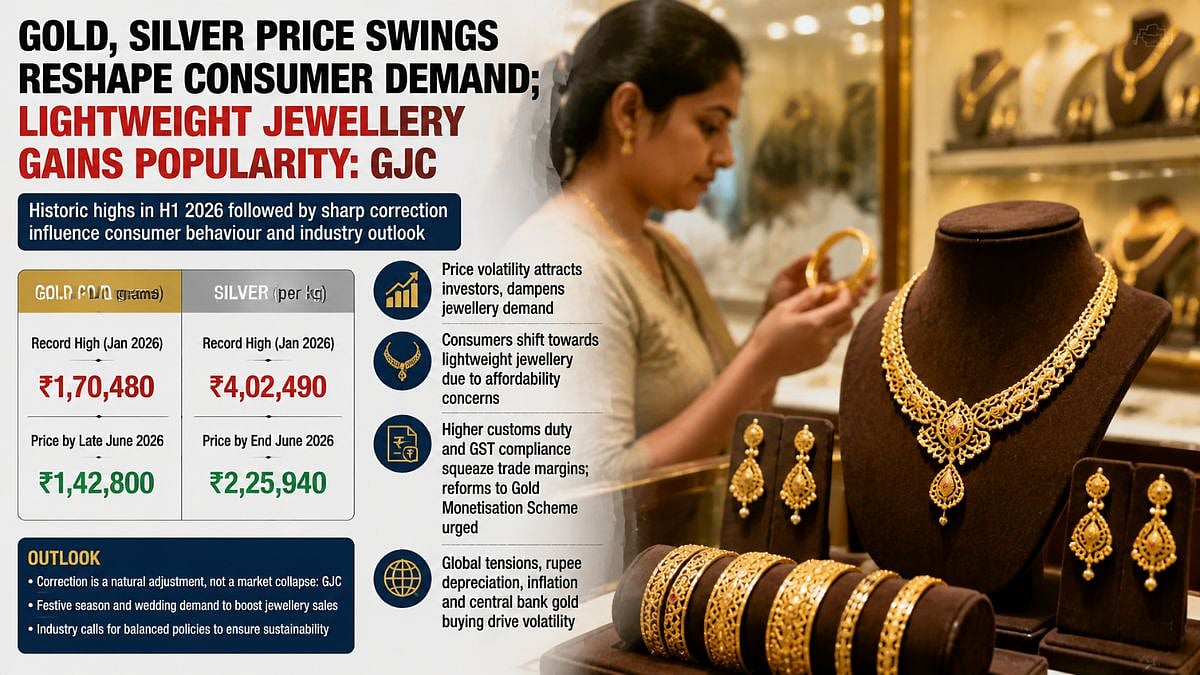
Mehta noted that overall market sentiment remains weak, with both investors and consumers increasingly selling gold in anticipation of further downside.
A report from Augmont Bullion added that gold recently slipped below the $4,000 mark, hitting an eight-month low and marking its fourth consecutive monthly decline.
The fall is attributed to geopolitical tensions in West Asia and expectations of higher US interest rates.
The report highlighted that gold has declined over 12% in the current month and nearly 15% in the quarter, marking its steepest quarterly drop since 2013.
Technically, a breakdown below key levels could push prices further toward $3,600, though a short-term relief rally is also possible given oversold conditions.

