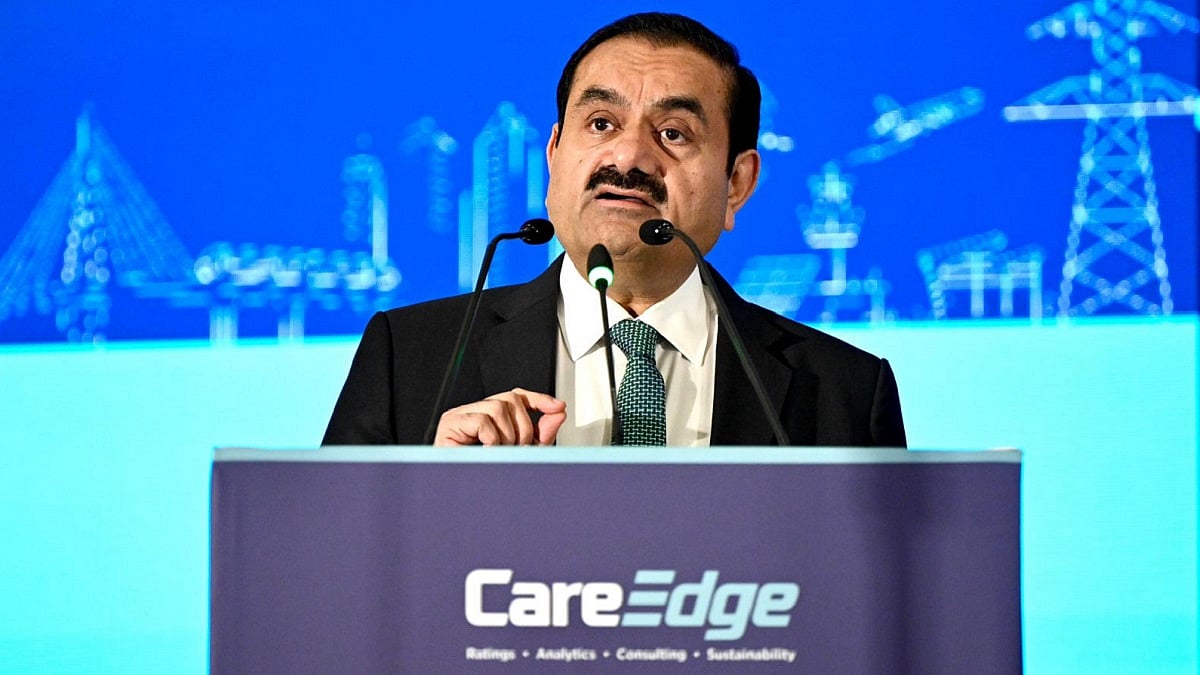
Gautam Adani, Chairman of Adani Group, addressed the CareEdge Group Annual Summit in Mumbai on August 31, 2026. In his keynote address, Adani spoke about India's economic transformation and the changing nature of infrastructure, while calling for rating frameworks to evolve with the country's growing ambitions. He said India does not need lower standards but needs wider lenses to assess the risks and possibilities of large infrastructure projects.
Adani highlighted examples from his own infrastructure journey, including Mundra Port in Gujarat, Vizhinjam Port in Kerala and the renewable energy platform at Khavda in the Rann of Kutch. He argued that traditional financial models may not fully capture the wider economic and strategic value created by such infrastructure platforms.
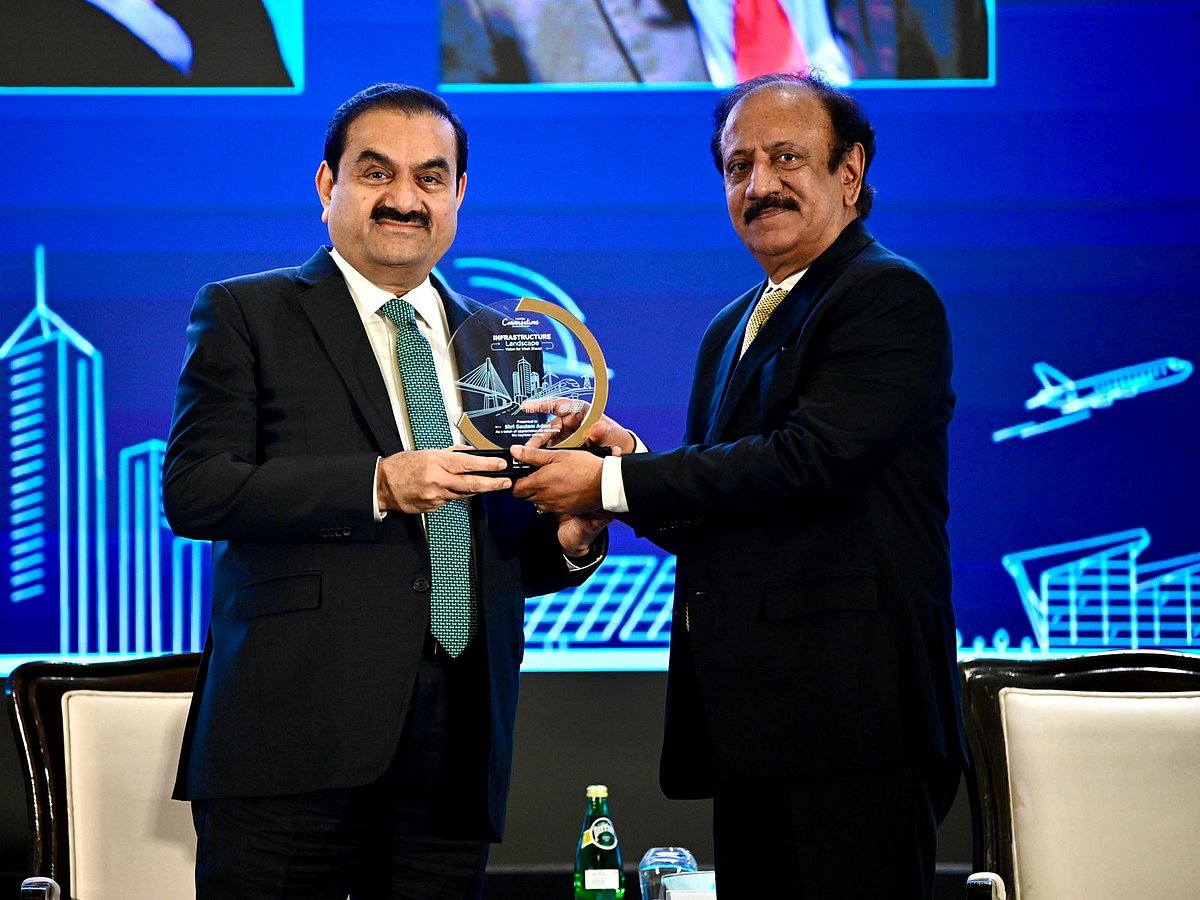
He also discussed the growing connection between infrastructure and artificial intelligence, saying that AI ultimately depends on physical infrastructure such as energy, data centres, cooling, transmission networks and land. Adani further challenged CareEdge to develop what he described as the world's first comprehensive credit framework for integrated platform infrastructure.
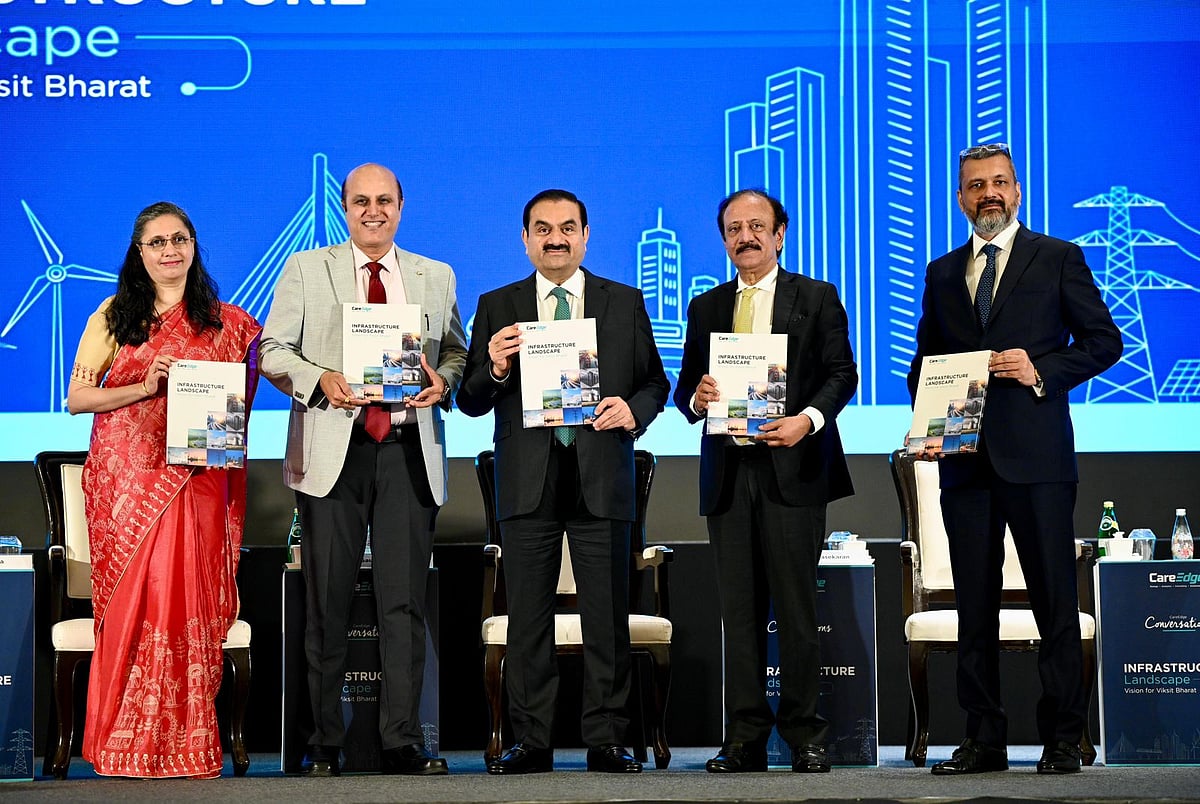
Here is Gautam Adani's full keynote address, reproduced exactly as delivered in the supplied transcript:
Keynote Address by Mr Gautam Adani
Chairman, Adani Group
CareEdge Group Annual Summit
31 Aug 2026, Mumbai
Mr Chandrashekharan, Chairman, CareEdge Group
Mr Mehul Pandya, Managing Director and CEO, CareEdge Group
Distinguished guests, and
My dear friends,
Namaskar and good evening.
It is a privilege to be here with all of you today.
I want to begin by congratulating CareEdge Group for completing more than three decades of immense contribution to India's economic journey.
Our relationship with CareEdge Group now stretches to almost 20 years. Today, that relationship extends to over ₹3 lakh crore of rated assets across 100+ entities.
And, there is indeed a fascinating parallel in our journeys. CareEdge Group was established in 1993, at the beginning of India’s economic transformation. It was a time when a new generation of entrepreneurs were emerging, new opportunities were opening and India was beginning to believe in its own possibilities.
I was also beginning my own entrepreneurial journey around that period. Like every entrepreneur, I had ambition, I had ideas, I had dreams.
But I learnt very early that ideas alone do not build institutions.
Ideas need credibility.
Credibility creates trust.
Trust unlocks capital.
And capital turns ambition into reality.
Institutions like CareEdge Group sit precisely at this intersection.
Therefore, I wanted to speak about something essential in today’s day and age:
And that is:
How do we ensure that the frameworks which measure India’s risks are also capable of recognising India’s possibilities?
My dear friends,
As rating analysts, you hold immense power in your hands. Because, behind every rating you assign is not just a project, a balance sheet or a number. There is a human consequence to that judgement.
A rating you give to a port project means people from villages around that port can find employment.
A rating you give to a renewable energy project means a child in rural India can study under reliable light.
A rating may be expressed in a letter or a number, but its impact is measured in the dreams it enables and the opportunities it creates.
That is why your responsibility is so significant.
And, that responsibility becomes even more significant when we reflect on the scale of transformation taking place around us as we go through one of the most remarkable uplifting periods in India's economic history.
My dear friends,
A generation ago, when I started building, India's infrastructure ambitions were constrained by three things — limited resources, limited capability, and limited confidence.
Today, India has resources. India has demonstrated capability. But more importantly, India has discovered something even more powerful — a belief in its own potential. Because, ultimately, the future of a nation changes when its belief in what it can achieve begins to change.
जब भारत अपने सामर्थ्य पर करे अटूट विश्वास,
तभी वह स्वयं लिखता है अपने भविष्य का इतिहास।
Look around you. Our roads are expanding at unprecedented speed. Our ports are transforming. Our airports are connecting more nations than ever before. Our renewable energy capacity is growing faster than any other nation on earth. Our digital infrastructure is reaching hundreds of millions.
But, as the scale of our ambition grows, so does the importance of the frameworks that judge it. Transformational infrastructure can be constrained not only by a lack of ambition or capital, but also by the frameworks through which its risks are assessed.
This is not a call for less scrutiny.
It is not a call for easier ratings.
And, it is not a call to compromise independence.
My point is exactly the opposite.
India does not need lower standards.
India needs wider lenses.
I believe many of our analytical frameworks were developed for an age in which infrastructure evolved incrementally, demand was relatively visible and the boundaries of an asset were easier to define.
They were typically built on siloed single-asset Discounted Cash Flow models that price risk by isolating an asset from its environment.
India has now entered a very different period. The nature of infrastructure has changed, and the sophistication of our rating frameworks must evolve alongside the sophistication of what India is building.
Let me walk you through three experiences from my own journey. Each one shows something critical about where traditional rating frameworks may not fully capture the India that is actually emerging.
My first story is about our port in Mundra, in Gujarat, and now, by far India’s largest port.
When we began developing Mundra three decades ago, a traditional rating assessment might have looked like this.
A marshy coastline with no industrial ecosystem. Speculative demand from customers that did not exist yet. Execution risk in a region with limited infrastructure. A 30-year cash flow model built on assumptions that no spreadsheet could validate.
Today, Mundra is easily one of India's most important commercial gateways. But more importantly Mundra has created an ecosystem multiple times the size of the port.
It is a port connected to rail. Rail connected to logistics centres. Logistics connected to power plants. Power connected to industrial zones. Industrial zones connected to traders and manufacturers all across India.
Mundra proved that platform infrastructure operates as a multi-layer network where each new layer cross-subsidizes, feeds, and de-risks the other, creating an economic compounding flywheel that linear financial models mostly fail to capture.
If we build only for the demand we can see today, India will always be late for the opportunities of tomorrow.
जो आज की सीमा से आगे देखे वही करते कल का निर्माण,
जो आने वाले भारत को गढ़े समय करता उसी का सम्मान।
Let me now talk about the second story. Our Vizhinjam port in Kerala.
For decades, India recognised a strategic problem it had. We sat just 10 nautical miles from the world's busiest shipping routes, yet we could not handle our own container cargo. We had to tranship through Singapore, Dubai and Colombo.
For decades, Indian commerce paid a direct sovereignty tax to foreign ports simply because domestic infrastructure was deemed too risky for institutional capital.
And, for twenty-five years, nobody could build a solution.
Tender after tender failed. The engineering was deemed "too complex." The breakwater was "too deep." The capital risk was "too immense." Even with a large Viability Gap Funding, traditional frameworks struggled to justify the project. Vizhinjam was strategically compelling, yet unprofitable when measured through conventional financial tests.
We built it anyways.
Within eighteen months, it became the fastest Indian port ever to achieve two million TEUs.
But here is what I want us to understand.
The greatest risk was never in building Vizhinjam.
The greatest risk was India continuing to believe that it could not.
Conventional credit models correctly measure execution risk.
But, in strategic infrastructure, we must also learn to recognise the economic value of sovereign resilience.
Because, projects that transform nations often look impossible — until somebody builds them.
जो सागर की लहरों में भी राष्ट्रहित का ध्वज लहराए,
वही असंभव को संभव करे और नए भारत को पार लगाए।
My third story is set in the Rann of Kutch — an area regarded as the most barren land in India.
It is here that we are building something extraordinary, a 30-gigawatt renewable energy platform visible even from space.
When you look at Khavda through a traditional framework, you see extreme isolation, harsh desert, execution risk, and demand that is uncertain. These are real challenges — and the caution is justified.
But what is missed is that Khavda is not a renewable energy project. Or, more accurately, renewable energy is only one part of a much larger vision.
Khavda is a platform where energy, artificial intelligence, manufacturing, digital infrastructure and industrial capability converge at an unprecedented scale.
It can provide the clean electrons required to power India’s future compute infrastructure.
It is the foundation for India’s AI manufacturing ecosystem.
It can become part of the foundation upon which India’s AI economy is built.
Measured simply as a power project, Khavda will be under rated for decades. But when measured as a transformational platform, it will be one of India’s most important strategic assets.
This is why I say that:
तपते रण को बना दिया ऊर्जा का वरदान,
सूर्य-पवन की शक्ति से जगमगाए हिंदुस्तान।
My dear friends,
Rating frameworks often measure individual assets. But we must realise that the real value in today’s age is being created at the intersection, where ‘energy + data + manufacturing’ converge.
It is here that I want to acknowledge a reality which every rating professional in this room understands deeply.
Your responsibility is a difficult one because you sit at the intersection of ambition and accountability.
On one side, you carry the responsibility to protect capital, to question assumptions, to recognize execution challenges and to ensure that risks are properly quantified.
That responsibility is essential.
But there is another equally important responsibility and that is understanding and rating the larger transformation taking place around us.
The challenge is often having to choose between caution and ambition.
The role of an institution like CareEdge Group is to ensure that ambition is not constrained by fear and that risk is not ignored in the path to progress.
Allow me to elaborate the way I see it.
There are three kinds of infrastructure.
First, is replacement infrastructure — expanding what already exists, maintaining proven assets, replacing aging capacity. Traditional rating frameworks work well here.
Second, is growth infrastructure — adding capacity in established sectors where demand is visible and economics are broadly understood. Here, existing frameworks should evolve to capture ecosystem effects and multiplier value, not just standalone cash flows.
Third, is platform infrastructure. These are assets like Mundra, Vizhinjam and Khavda that create entirely new capabilities, combine multiple infrastructure layers, and reshape the economics around them.
Platforms like Mundra, Vizhinjam and Khavda do not just satisfy existing demand.
They create new demand.
They create new ecosystems.
They create new capabilities.
They change the economics around them.
And therefore, they require an analytical framework capable of measuring not just standalone cash flows, but also ecosystem multipliers, strategic resilience and adjacency value.
Because, the most defining infrastructure of the future will not only integrate to move people, goods or energy, but will amplify the intelligence and the productivity of entire economies.
And it is precisely this shift from the type of infrastructure that moves the economy to the new type of infrastructure that makes the economy smarter which brings me to AI.
At Adani, we are seeing this convergence first hand, across our own energy, data-centre and digital infrastructure initiatives.
AI may look like software.
But, ultimately, AI runs on infrastructure.
Algorithms will improve.
Models will change.
Software will evolve.
But every AI model ultimately needs electrons.
It needs data centres.
It needs cooling.
It needs transmission networks.
It needs land.
And increasingly, it needs clean, reliable energy at enormous scale.
Therefore, the competitive advantage in AI may ultimately lie not only in who writes the best code but also in who can build the infrastructure that allows intelligence to scale.
That is why assets such as Khavda should not be viewed only as power-generation capacity. Their strategic value lies in the ecosystems they can enable compute, advanced manufacturing, digital infrastructure and industrial capability, all of which are foundational infrastructure for the AI economy.
Let me be clear about what I am stating.
We do not need lower standards but we need wider lenses. I am not asking you to compromise your independence or say yes to unviable ambition. I am asking you to use your independence to build dynamic models that recognize the compounding power of national platforms.
Because, in the years ahead, decisions made by people in rooms like this will influence which infrastructure platforms receive capital, which ideas are able to scale and which national capabilities India is able to build for itself.
So today, I would like to place a challenge before the CareEdge team.
Why should the world’s first truly comprehensive Credit Framework for Integrated Platform Infrastructure not come from India?
Why should CareEdge not lead it?
Develop a framework capable of evaluating multi-dimensional infrastructure.
A framework that recognises ecosystem multipliers.
A framework that recognises adjacency value.
And perhaps, one day, emerging economies around the world will use a framework developed here in India as their benchmark.
And so, my dear friends,
As I wrap up, let me leave you with a few concluding thoughts.
Over the past three decades of building infrastructure, I have seen my share of successes and setbacks. But one lesson has stayed with me, that the true value of what we build is rarely captured only in financial statements. The real measure is found in the lives transformed.
And this is the lesson I have learnt as I took my journey of building infrastructure. That the greatest infrastructure is not a monument to those who built it, but is a foundation upon which a nation builds its future.
And this is what your work enables. Because every national capability begins as an idea that someone must first have the confidence to back.
Therefore, a rating is not just a letter or a number. It is a judgement of trust. The decisions you make will influence which ideas receive confidence, which platforms receive capital and which capabilities India is able to build.
That is a tremendous responsibility.
So, as CareEdge Group continues its journey, I offer both my gratitude and my belief in your role:
To protect trust.
To strengthen discipline.
To continuously evolve.
And to ensure that India's ambitions are supported by institutions equal to the scale of its aspirations.
Because the India of 2047 will not be built by ambition alone.
It will be built when ambition earns trust, when trust unlocks capital and when capital builds national capability.
जहाँ हर भारतीय के सपनों को मिले ऊँची उड़ान,
जहाँ आत्मविश्वास बने भारत की नई पहचान,
जहाँ सामर्थ्य और संकल्प बढ़ाएँ राष्ट्र का सम्मान,
वही भारत बनेगा विकसित समर्थ और महान।
That is the India, my friends, we must build together.
My friends,
Thank you.
Jai Hind.

