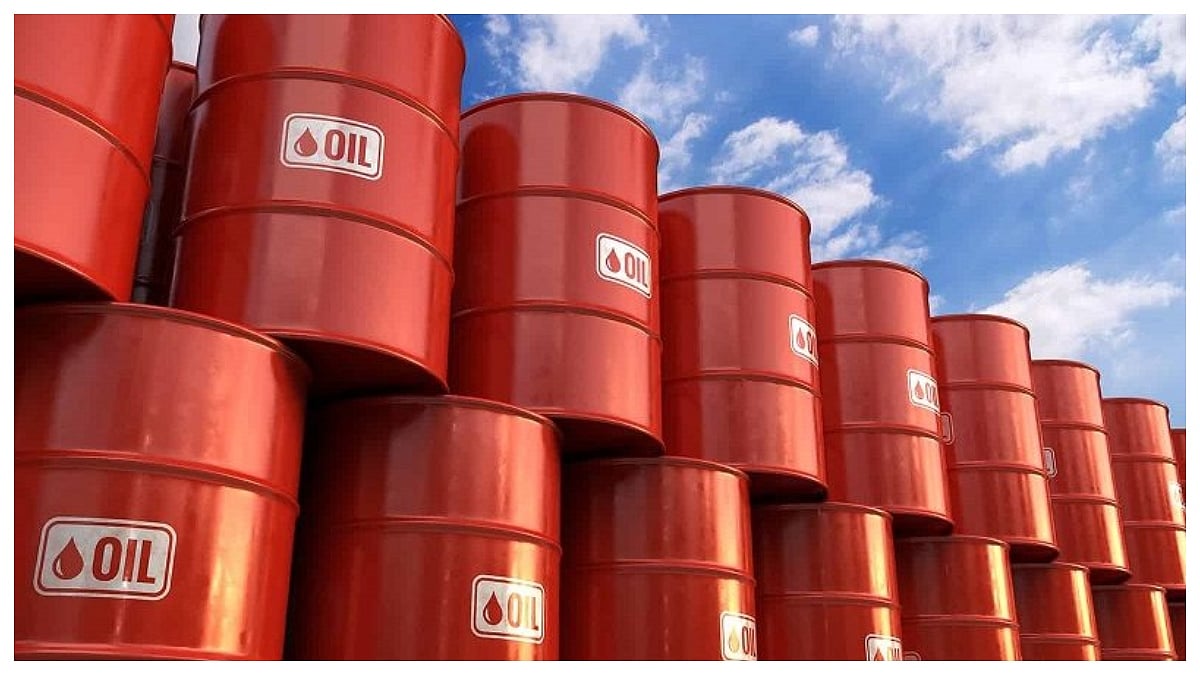
New Delhi: Crude oil prices pared early losses to trade nearly 2 per cent higher at Rs 9,061 per barrel in futures trade on Friday, tracking gains in global energy benchmarks amid geopolitical uncertainty in West Asia. On the Multi Commodity Exchange (MCX), crude oil for the April delivery opened lower at Rs 8,820 per barrel, but later reversed losses to trade higher by Rs 143, or 1.59 per cent, to Rs 9,142 per barrel.
Similarly, the May contract also recovered losses and climbed Rs 142, or 1.63 per cent, to Rs 8,866 per barrel on the MCX. Crude oil prices have traded back and forth during the week, and are currently hovering around Rs 8,900 levels in the domestic markets, Aamir Makda, Commodity & Currency Analyst at Choice Broking, said. In international markets, West Texas Intermediate (WTI) crude for the May contract gained USD 1.12, or 1.19 per cent, to USD 95.60 per barrel, while Brent Crude for the June delivery edged up by 1.13 per cent to USD 103.04 per barrel in New York.
Makda said crude oil prices remained volatile due to a lack of resolution in the Iran conflict and contradictory statements by US President Donald Trump. Ongoing tensions have disrupted exports through the Strait of Hormuz, pushing storage tanks to critical levels and raising concerns over potential output cuts if shipping constraints persist. In addition, around 40 per cent of Russia's oil exports have reportedly been halted following Ukrainian drone attacks on major pipelines, adding to supply concerns, he said.
Trump on Thursday said he would extend his pause on potential military strikes against Iran's energy infrastructure by 10 days until April 6, claiming progress in talks with Tehran. However, Iran dismissed earlier claims of negotiations, keeping markets on edge. The price of Brent crude dropped after Trump's latest announcement, but later bounced back after the White House and the Pentagon were considering sending at least 10,000 additional combat troops to the Middle East in the coming days, further intensifying the conflict in the region.
According to reports, Iran has strengthened its defences around Kharg Island, a key oil export hub handling nearly 90 per cent of its crude shipments, further intensifying geopolitical risks. The United Arab Emirates has told allies that it would participate in a multinational maritime task force intended to reopen the Strait of Hormuz as it lobbies to form a coalition to ensure shipping can pass through the vital waterway, as per the reports. Analysts said continued uncertainty surrounding geopolitical developments is likely to keep crude oil prices volatile in the near term.
Disclaimer: This story is from the syndicated feed. Nothing has been changed except the headline.
