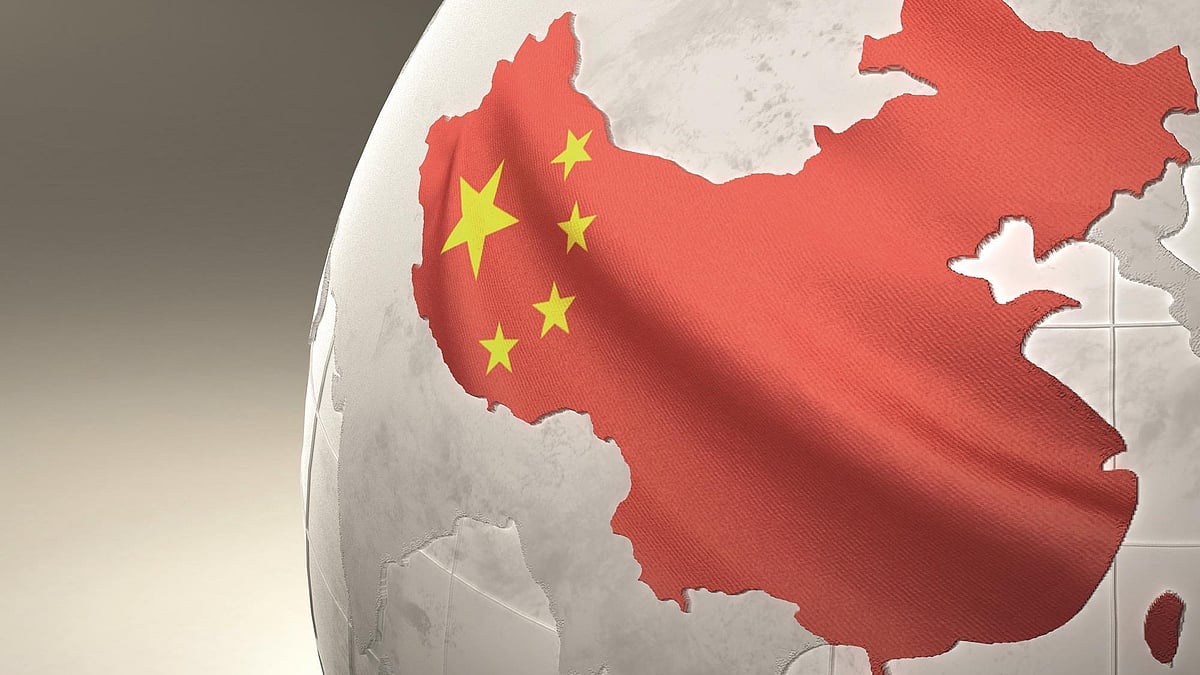
China's economy expanded faster than expected in the third quarter of 2026, strengthening prospects of achieving Beijing's annual growth target despite persistent weakness in property investment and domestic demand.
Gross domestic product (GDP) rose 4.5% year-on-year, compared with 4.3% in the previous quarter, according to data released by the National Bureau of Statistics on Monday.
The figure exceeded the 4.4% median forecast in a Bloomberg survey of economists.
Economic growth reached 4.6% during January-September, placing China within its official annual target range of 4.5-5%.
Industrial Output, Retail Sales Show Improvement
Industrial production increased 5.5% year-on-year in September, matching economists' expectations.
Retail sales growth accelerated to 1.1%, compared with 0.4% in August.
Excluding automobile purchases, retail sales rose 3.9%, marking their strongest expansion since October 2025.
However, fixed-asset investment declined 7.2% during the first nine months, matching the contraction recorded through August.
According to a report by Bloomberg, Australia & New Zealand Banking Group Senior China Strategist Xing Zhaopeng attributed improvements in investment and consumption partly to increased government spending.
He cautioned that the recovery remained vulnerable because of fiscal uncertainty and potential downside risks in 2027.
The surveyed urban unemployment rate improved to 5.2% in September from 5.3% in August.
Property Crisis Persists
China's property sector continued struggling, with real estate investment falling 20.6% during January-September.
This represented a deterioration from the 19.9% decline recorded in the first eight months.
Despite these weaknesses, stronger quarterly growth could allow policymakers to delay additional monetary easing.
Banks face narrow profit margins, while local governments remain under fiscal pressure.
Following the GDP announcement, China's 10-year government bond yield increased one basis point to 1.65%.
The offshore yuan strengthened 0.1% to 6.6829 against the US dollar.
The currency has gained more than 4% this year, supported by exports and the central bank's acceptance of a stronger exchange rate.
China's economic performance continues to reflect contrasting trends.
Exports have benefited from global artificial intelligence investment, while household consumption and property activity remain subdued.
Authorities recently introduced targeted support measures after initially relying on existing policies.
The latest figures offer policymakers some flexibility, although structural challenges continue to cloud the outlook.

